21 May Men’s Smart Jackets How to Choose, Style & Wear Them

A smart jacket is the most versatile piece a man can own. Throw one over a T‑shirt and jeans and the whole outfit steps up. Wear it with tailored trousers and you’re boardroom‑ready without a suit. It’s the garment that does the heaviest lifting in your wardrobe – and unlike a full suit, it crosses the line between dressed and casual without any awkwardness.
But the smart jacket market is vast. Cuts, fabrics, weights, constructions, and price points vary enormously – and the wrong choice is easy to make if you’re buying on impulse or going purely by what looks good on a hanger. The jacket that photographs well in a lookbook may be completely wrong for your frame, your climate, or the occasions you actually dress for.
This guide covers everything: what to look for when you’re trying jackets on, how to match cut to body type, how to build outfits across different occasions, what fabrics and linings to choose by season, and which brands to trust for which purpose. Use it as a reference before you buy, and bookmark it when you’re styling what you already own.
1. What to Look For in a Smart Jacket
Most men who buy a smart jacket that doesn’t work for them don’t have bad taste. They have the wrong checklist. They’re looking at colour, at brand, at price – and those things matter, but they’re secondary. The things that determine whether a jacket actually works are structural, and they’re assessed in the fitting room, not online.
There are four points of fit that separate a jacket you’ll wear for years from one that ends up on eBay after three outings. Get all four right and everything else – colour, brand, lining, buttons – becomes a matter of personal preference. Get them wrong and none of the rest of it matters. Here’s what you’re looking for, in order of importance.
It’s worth noting that some of these points are alterable and some are not. A tailor can take in a waist, shorten sleeves, or nip in the body – but they cannot move a shoulder seam without effectively rebuilding the jacket from scratch. Know which battles are worth fighting in the fitting room and which ones a tailor can fix for you afterwards. We’ve noted this against each point below.
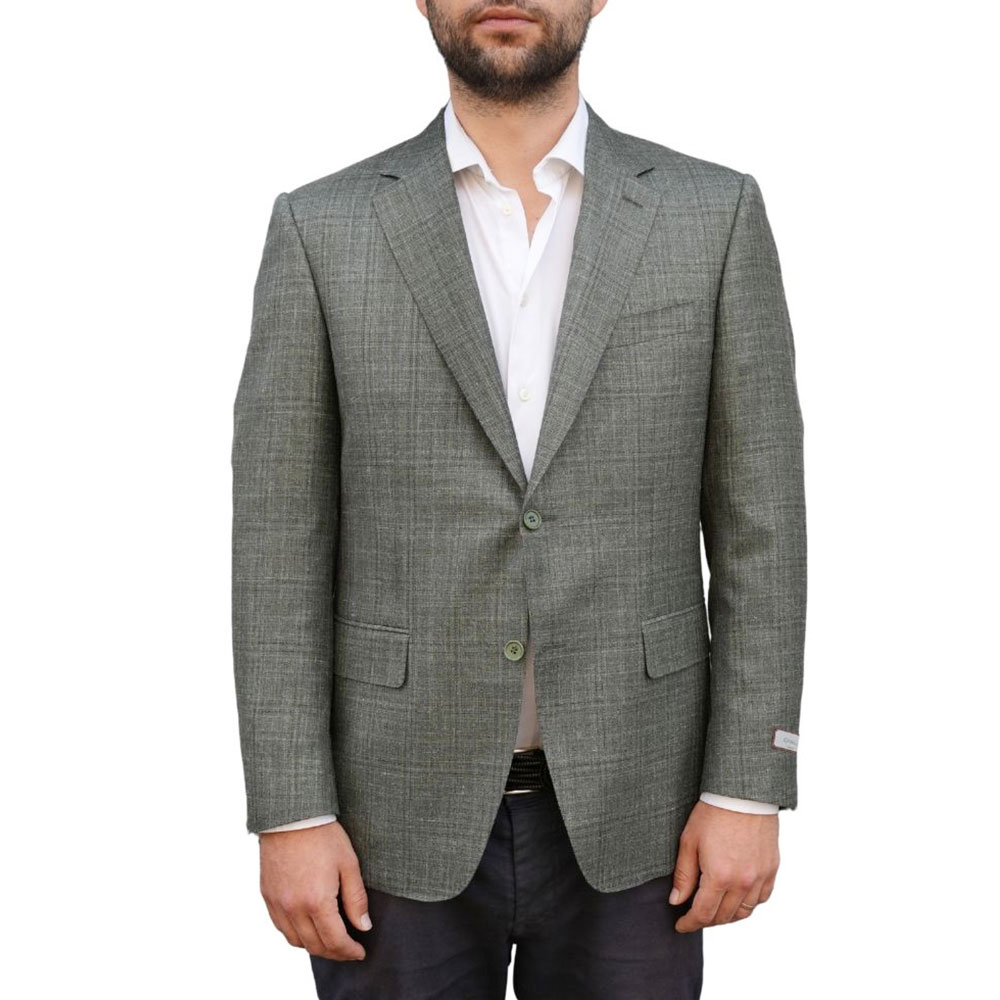
CANALI Silk, Wool and Linen Green Check Jacket
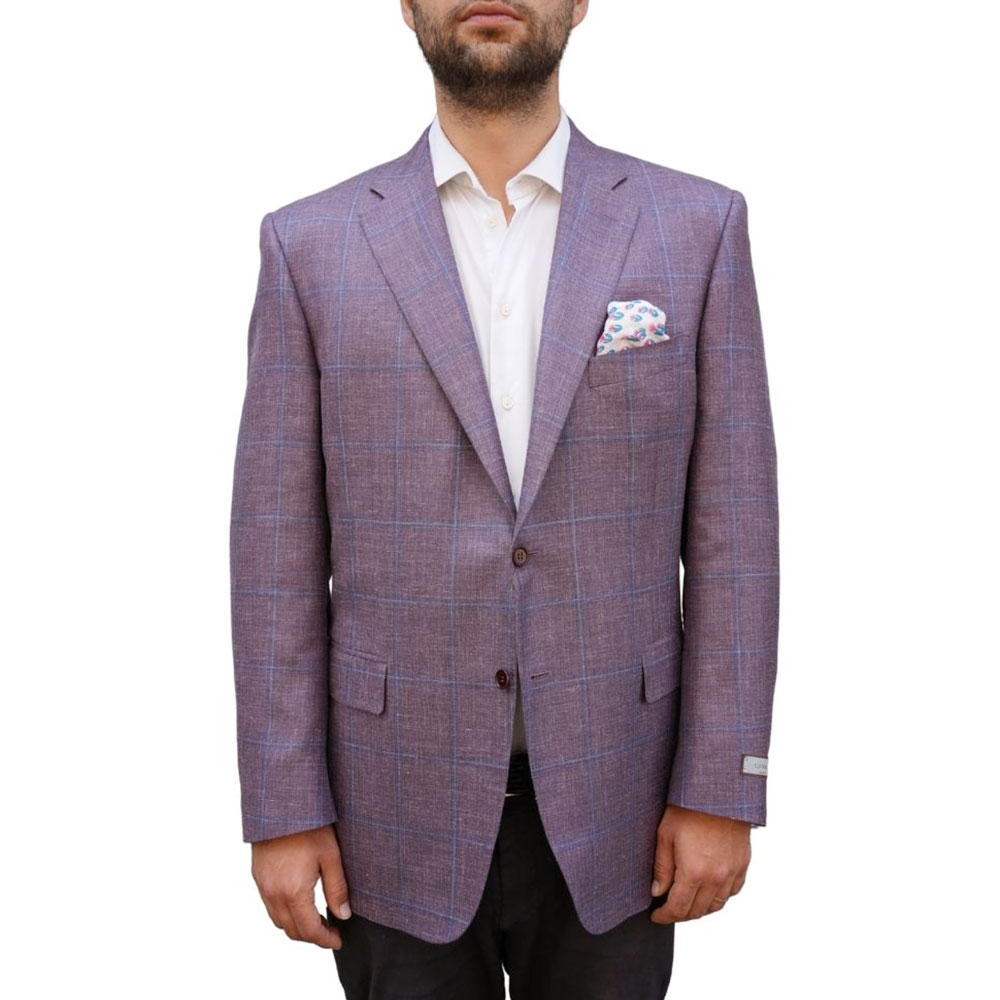
CANALI Silk, Wool and Linen Light Beige and Blue Check Jacket
2. Fit Guide by Body Type
If there is one principle in menswear that is more consistently true than any other, it is this: fit beats everything. A perfectly fitted jacket in a mediocre fabric from a mid-range brand will always look better – more polished, more intentional, more flattering – than an expensive jacket from a prestigious house in the wrong cut for your body. This is not a matter of opinion. It’s something you can verify simply by trying on the same jacket in two different sizes and standing in front of a mirror.
Why Most Men Buy the Wrong Size
The problem is that most men don’t have a clear picture of what fit is supposed to look like on their specific frame. They try a jacket, it feels roughly comfortable, it doesn’t look catastrophically wrong, and they buy it. But comfortable in the fitting room and genuinely flattering are different things – and the gap between them is almost always the cut. A jacket that is too boxy makes a slim man look swamped. A jacket that is too slim makes a broader man look constrained. A jacket that is too long shortens a compact man visually. A jacket that is too cropped makes a tall man look disproportionate. These are not subtle differences. They are immediately visible to anyone looking at the finished outfit.
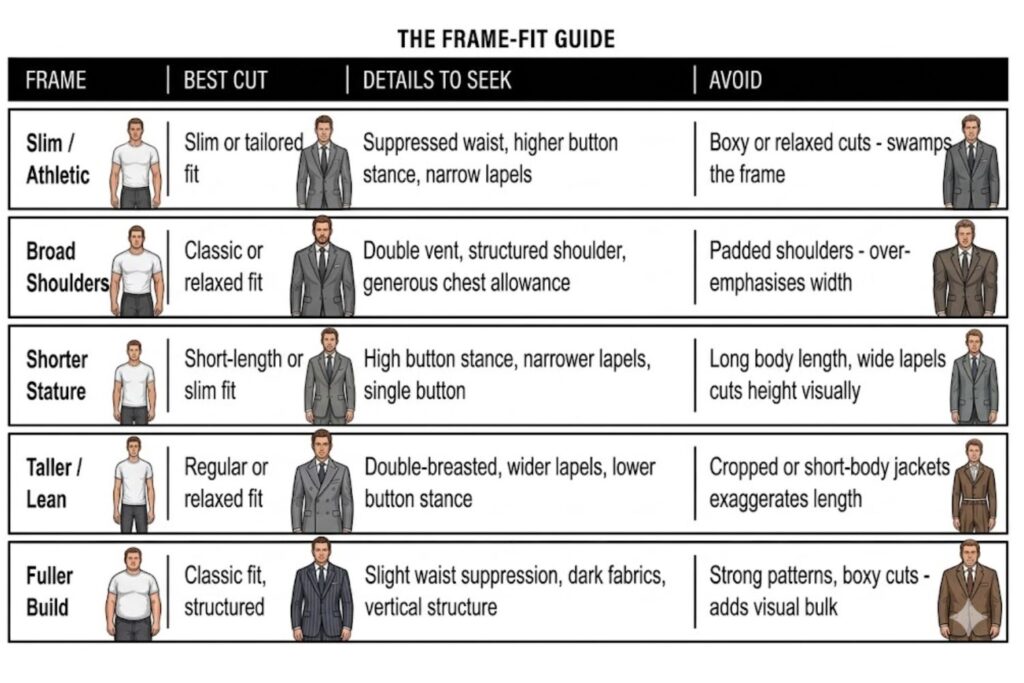
| Frame | Best Cut | Details to Seek | Avoid |
|---|---|---|---|
| Slim / Athletic | Slim or tailored fit | Suppressed waist, higher button stance, narrow lapels | Boxy or relaxed cuts - swamps the frame |
| Broad Shoulders | Classic or relaxed fit | Double vent, structured shoulder, generous chest allowance | Padded shoulders - over-emphasises width |
| Shorter Stature | Short-length or slim fit | High button stance, narrower lapels, single button | Long body length, wide lapels - cuts height visually |
| Taller / Lean | Regular or relaxed fit | Double-breasted, wider lapels, lower button stance | Cropped or short-body jackets - exaggerates length |
| Fuller Build | Classic fit, structured | Slight waist suppression, dark fabrics, vertical structure | Strong patterns, boxy cuts - adds visual bulk |
Finding Your Personal Blueprint
The good news is that once you know what to look for – and which cuts are designed to work with your proportions – buying well becomes much more straightforward. The table below is your starting framework. It tells you which cuts to seek out, which details reinforce a flattering silhouette for your frame, and which features to avoid. Use it as your filter when browsing the collection and you’ll save yourself the time and frustration of working through options that were never going to work for your build.
The Post-Purchase Secret
One further point worth making: a tailor is not just for bespoke suits. A single visit after buying an off-the-peg jacket – to take in the waist, shorten the sleeves, or adjust the length – typically costs a fraction of the jacket’s purchase price and can transform the result from good to exceptional. It’s one of the best-value investments in menswear, and one that most men never consider. If you find a jacket where the shoulder fits perfectly and the chest lies flat, don’t reject it because the body is slightly loose or the sleeves are a centimetre too long. Those things are fixable. Buy it, and take it to a tailor.
→ For a much deeper dive into proportions and specific jacket details for your frame, read our full guide: Smart Jackets for Men: How to Find the Right Fit for Your Frame
3. How to Style a Smart Jacket by Occasion
The defining quality of a great smart jacket – the thing that separates it from a suit jacket, a sports coat, or a casual overshirt – is its range. A well-chosen smart jacket can work across a spectrum of contexts that would require multiple separate garments to cover any other way. The same navy wool blazer that projects authority in a client meeting on Tuesday can, worn differently, be entirely appropriate for a restaurant dinner on Friday or a smart casual weekend occasion on Saturday. Understanding how to move between those contexts is what unlocks the real value of the piece.
The variables are what goes beneath the jacket and what goes below it. The jacket itself barely changes – perhaps you button it for a formal setting, leave it open for a casual one. But pair it with tailored trousers and an Oxford shirt and it reads one way; pair it with dark jeans and a plain white T-shirt and it reads entirely differently. This is why smart jackets are so worth investing in properly: you’re not buying one look, you’re buying a framework around which multiple very different outfits can be built.
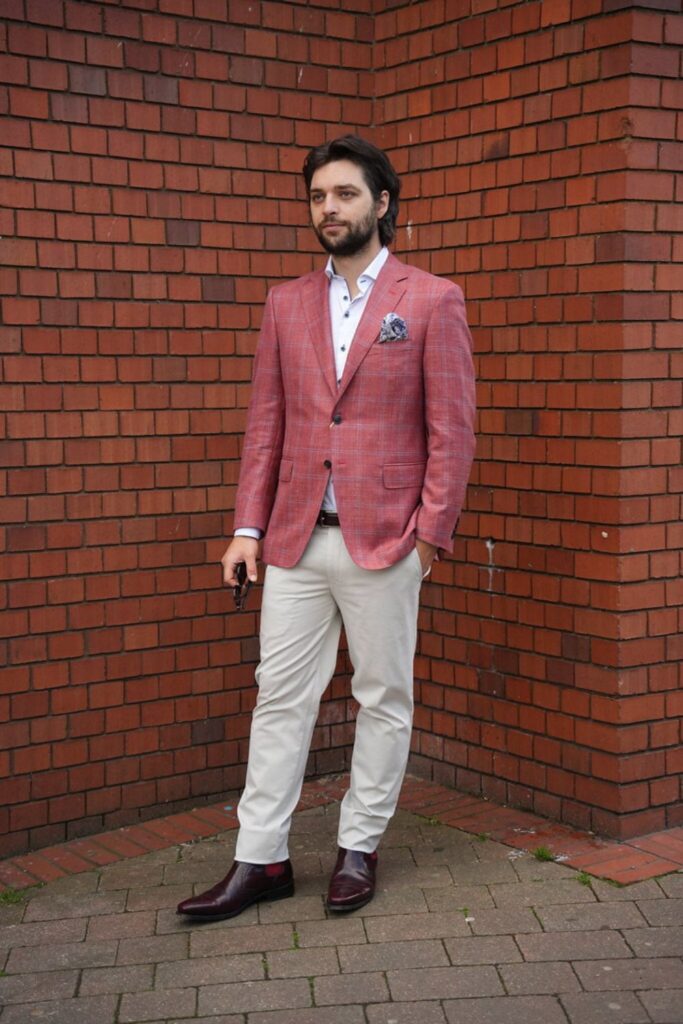
Below are four occasion types – business casual, weekend smart, spring transitional, and evening – with specific guidance on how to dress the jacket for each one. These aren’t rigid formulas. Think of them as starting points that you can adapt to your own wardrobe and personal style. Each card also links to a dedicated styling guide where the occasion is explored in much more depth.
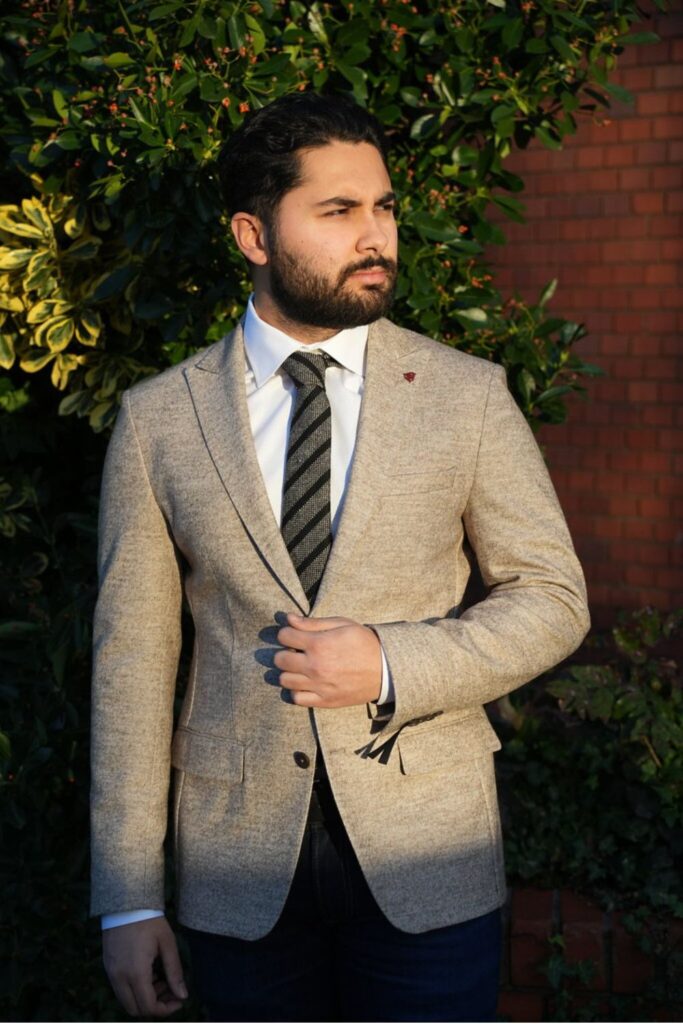
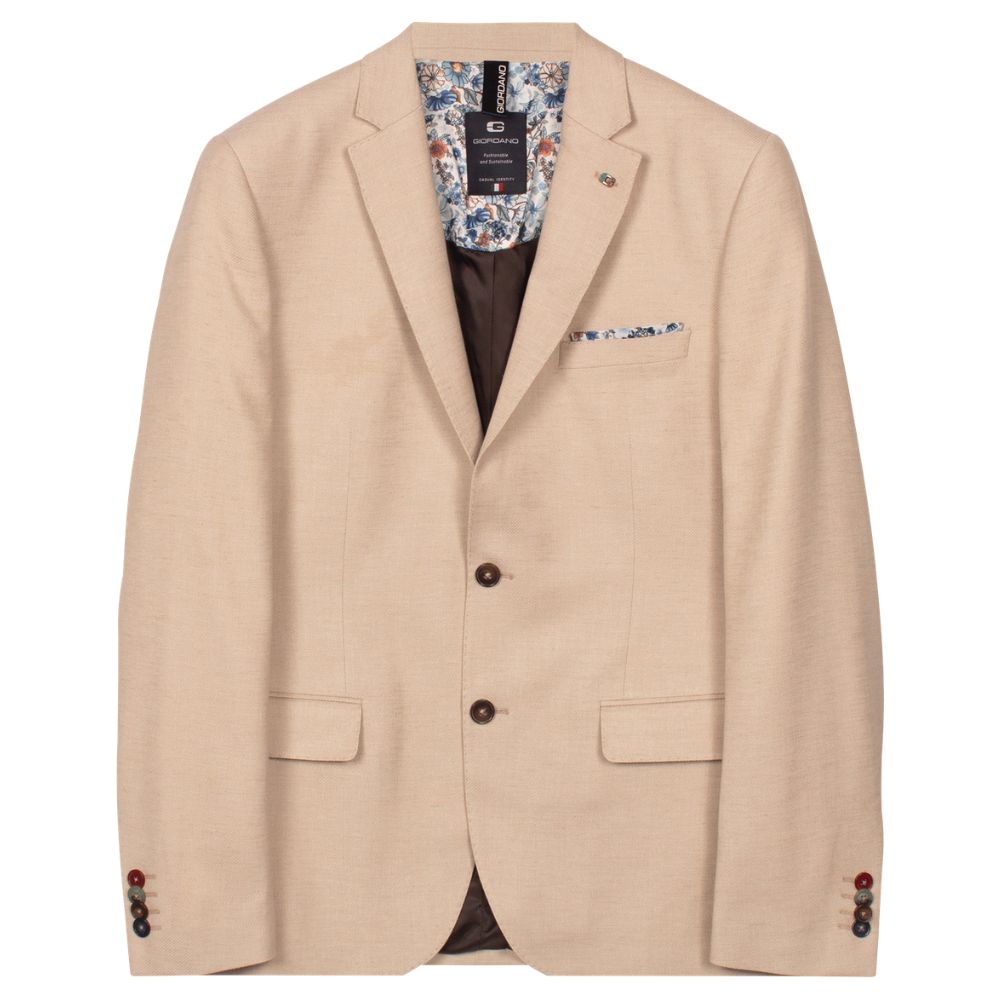
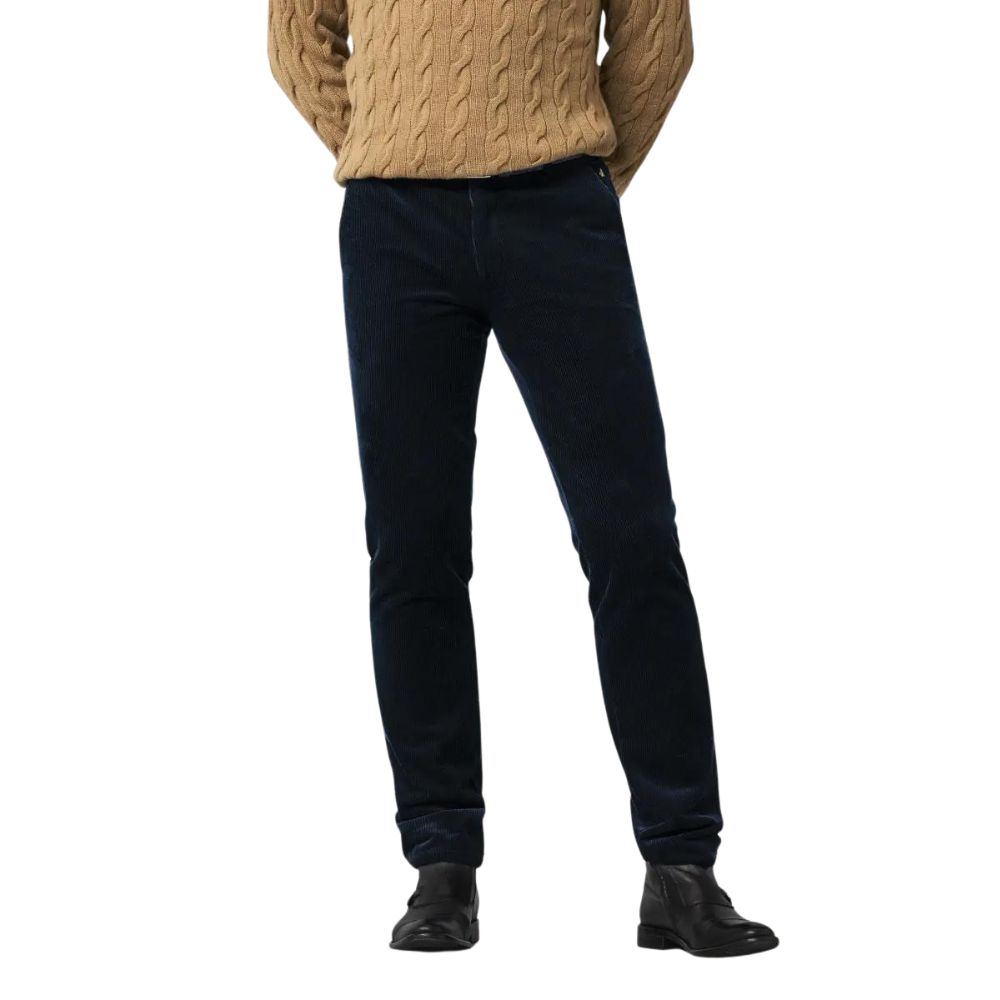
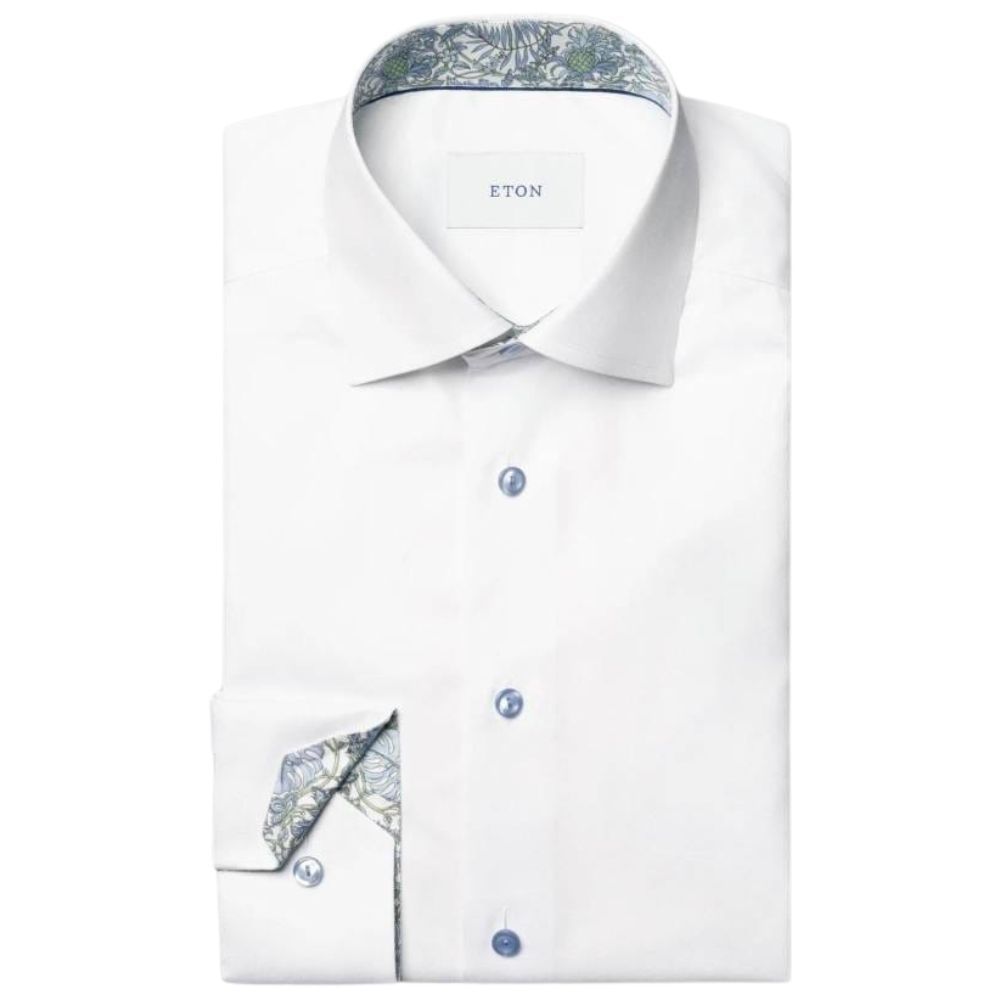
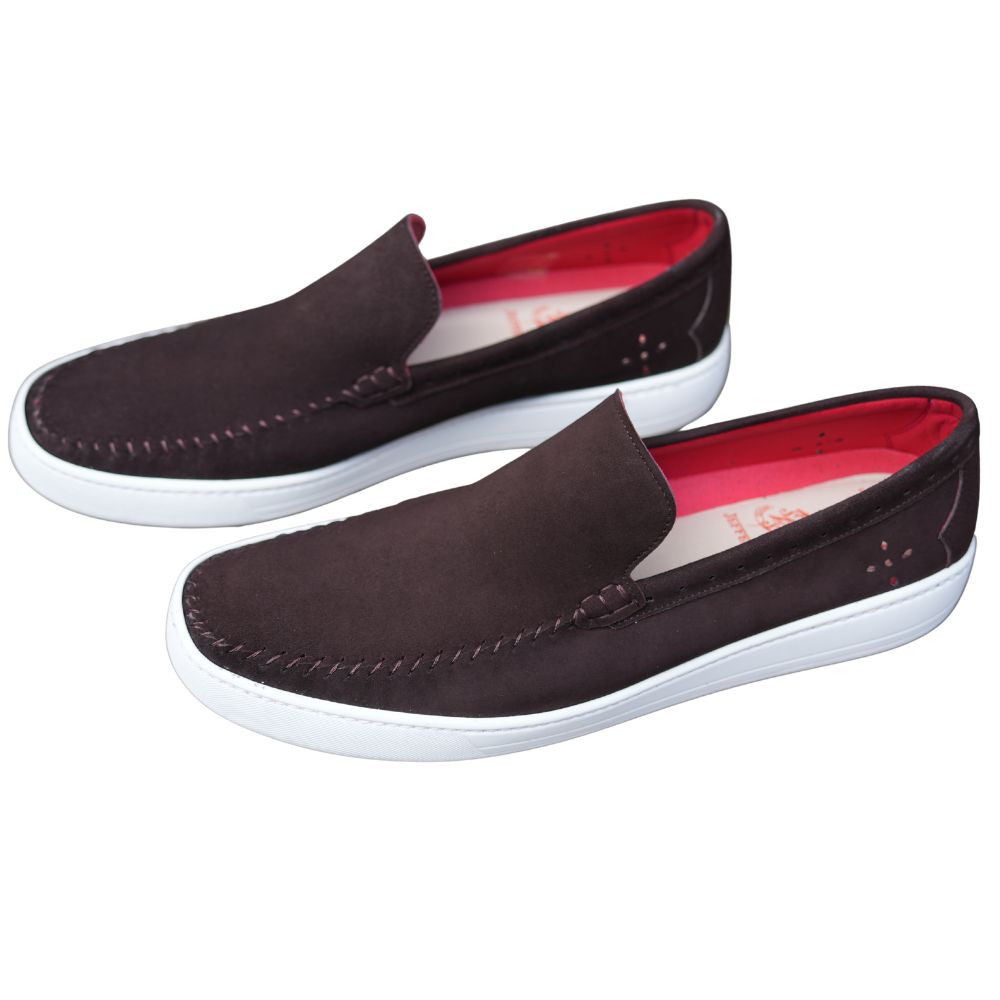
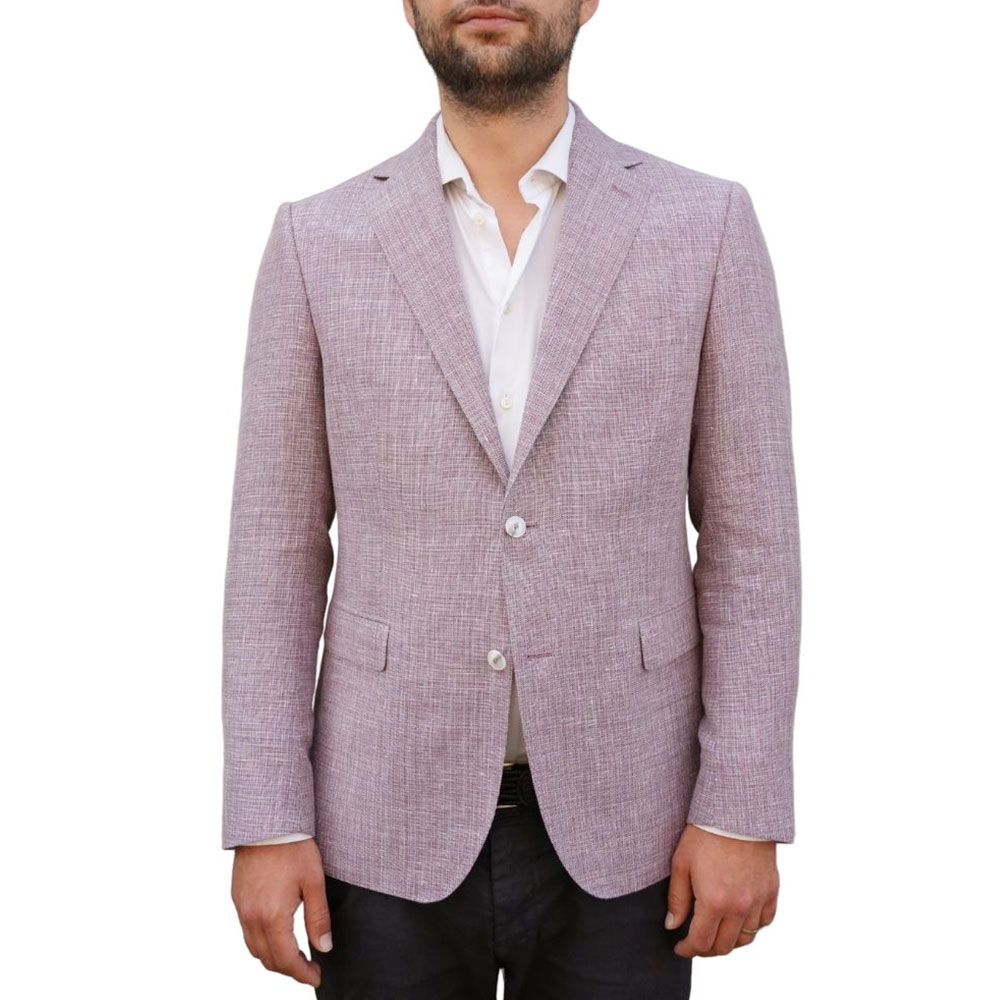
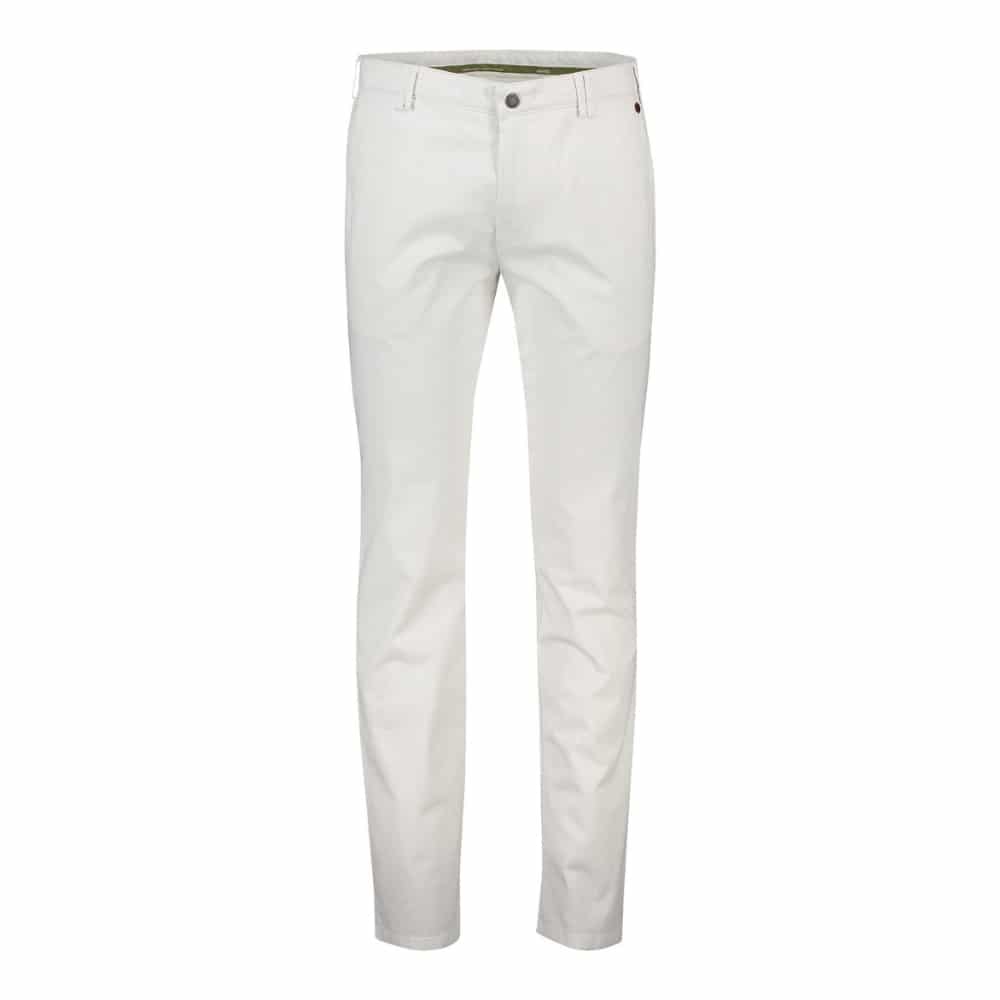
recreate the look
4. Fabric Guide
Fabric is the dimension of smart jacket buying that most men pay the least attention to – and it is also the one that most reliably explains why a jacket that appears to fit well still doesn’t feel quite right to wear. The wrong fabric for your climate makes you uncomfortable regardless of cut. The wrong fabric for the occasion makes the jacket look incongruous even when the styling is correct. And a jacket made in a fabric that doesn’t drape well will never achieve the polished result you’re looking for, no matter how carefully it has been tailored.
The fabric question is also inseparable from the seasons. Menswear has long had a clearer seasonal logic than most men apply to their buying – and while modern heating, climate-controlled offices, and hybrid working have blurred some of the old distinctions, they haven’t eliminated them. A heavy wool blazer will make you miserable in a warm July; a lightweight cotton jacket will offer little comfort on a wet November morning. Buying the right fabric for how and when you’ll actually wear the jacket is the difference between a piece you reach for constantly and one that waits on its hanger for exactly the right conditions that rarely arrive.
There are five fabric categories worth understanding for smart jackets. Each has a distinct character, a clear set of practical properties, and an ideal season and context. Here’s what you need to know about each one.
Smart Jacket Fabric Guide
Six fabrics worth understanding — each with a distinct character, seasonal logic, and ideal context.
| Fabric | Best season | Warmth | Formality | Notes |
|---|---|---|---|---|
Wool Super 100–150s · year-round |
All year | The versatile default. Finer weaves (120s+) drape beautifully for business; heavier weights add structure in cooler weather. |
||
Flannel Brushed wool · matte finish |
Autumn / Winter | Substantial and warm. Slightly casual in tone — ideal layered over a jumper, less suited for formal occasions. |
||
Linen Breathable · natural crisp |
Spring / Summer | Highly breathable. Wrinkles are part of the character — avoid where a pristine look is essential. |
||
Tweed Textured wool · heritage weave |
Autumn / Winter | The warmest option. Country and heritage in spirit — excellent outdoors, less so in corporate environments. |
||
Mohair Lustrous blend · light sheen |
Autumn / Spring | Sheen reads as evening-wear. Best reserved for occasions where a touch of glamour is welcome. |
||
Cotton Casual · breathable |
Spring / Summer | The most relaxed of the six. Comfortable in warm weather but struggles to hold a sharp drape. |
5. Lining Guide
The lining is the hidden half of every jacket – and most men never give it a second thought until they’re wearing the wrong one in the wrong conditions. But the lining has a meaningful impact on three things: how comfortable the jacket is to wear over long periods, how warm or cool it keeps you, and how smoothly the jacket moves over the shirts and knitwear beneath it.
There are three lining types to understand. Each has its place – the right choice depends on the fabric of the jacket, the formality of the occasion, and the season you’re buying for.
Smart Jacket Lining Guide
Three lining types worth understanding — comfort, warmth, and breathability depend on getting this right.
| Lining | Best season | Warmth | Breathability | Notes |
|---|---|---|---|---|
|
Full lining
Silk or viscose · full coverage |
Autumn / Winter |
|
|
The standard choice for formal jackets. Helps the jacket slip on and off easily over shirts and knitwear, and holds its structure well. Warmer — avoid in summer fabrics. |
|
Half lining
Lined at chest · open back |
All year |
|
|
The best of both worlds. The chest stays structured and easy to layer, while the open back allows far more airflow. A smart choice for transitional seasons and lighter fabrics. |
|
Unlined
No lining · raw or finished seams |
Spring / Summer |
|
|
Maximum breathability — ideal for linen and lightweight cotton in warm weather. The jacket sits closer to the body and feels lighter. Requires well-finished internal seams to look intentional, not unfinished. |
6. Brand Guide
Not all smart jacket brands are trying to do the same thing. Each label in our collection has a distinct point of view – a particular aesthetic, a specific customer in mind, and a set of occasions and body types for which it is especially well-suited. Understanding those differences means you buy with purpose rather than by brand recognition alone, and you end up with a jacket that genuinely works for your life rather than one that looked right on someone else.
Price alone is not a reliable guide to which brand to choose. An expensive jacket in the wrong style for your build and occasions will serve you worse than a more accessible one chosen with clear intent. The right question is not “what is the best brand?” but “which brand is right for what I need?” The answer is almost always specific to your body type, your professional context, and how you want to present yourself.
We stock four brands across our smart jacket range: Giordano, Roy Robson, BOSS, and Paul Smith. Here’s an honest account of what each one does, who it works best for, and when to reach for it.
recreate the look
7. Colour Guide: What to Buy First
Colour is the decision that most men either overcomplicate or get completely wrong in the opposite direction. The overcautious buyer defaults to black – which is actually one of the harder jacket colours to style well, far less versatile than navy or charcoal, and rarely as flattering as either. The impulse buyer sees a striking olive or burgundy jacket, buys it on the strength of how it looks on the hanger, and then discovers that it pairs with approximately three things in their wardrobe.
The right approach to smart jacket colour is sequential: buy in order of versatility, and only move on to more distinctive colours once the foundational ones are in place. This is not about being boring – it’s about making sure every jacket you own earns its place by working with everything else, rather than sitting in the wardrobe waiting for the narrow set of conditions in which it makes sense.
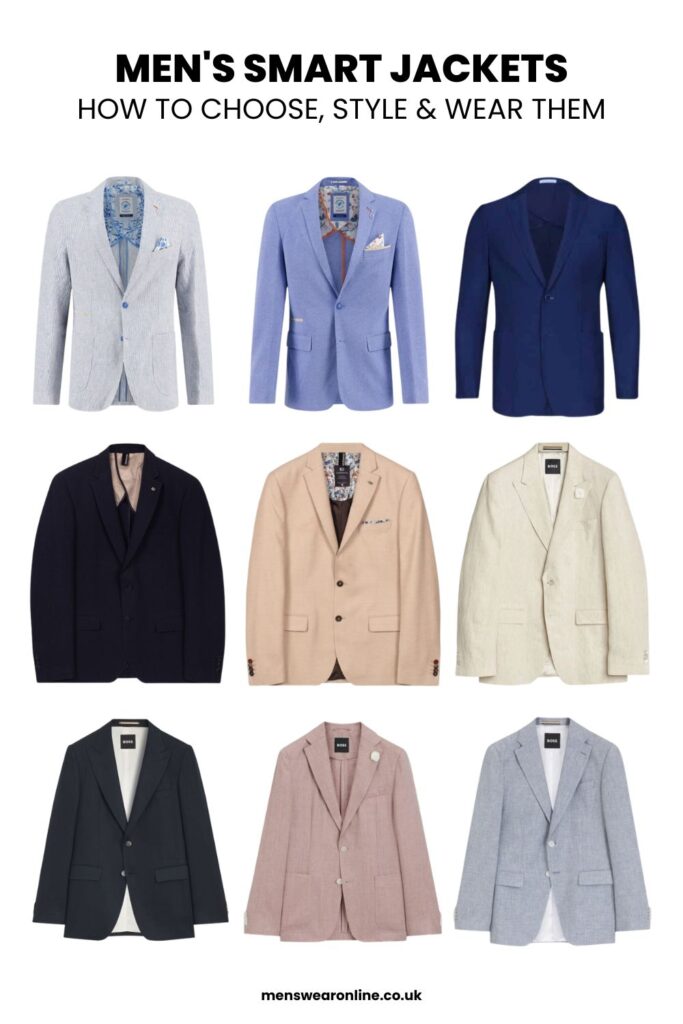
Navy goes first, always. It is the most universally flattering jacket colour – it pairs with grey trousers, beige chinos, dark denim, and almost any shirt colour without effort. Charcoal goes second: cooler, more formal, and excellent for business settings where navy feels slightly too casual. Camel or tan is your third jacket – warmer in tone, naturally suited to smart casual combinations, and exceptional with the jacket-jeans-tee formula. After those three, you have a genuinely functional smart jacket wardrobe that covers most situations.
The colours and their recommended buy order are laid out below. A note on patterns: once you have your solid colour essentials covered, a Prince of Wales check, a subtle herringbone, or a fine windowpane grid are all worth owning. They add variety without sacrificing versatility – but they are fourth or fifth purchases, not first ones.
| Colour | Buy Order | Pairs With | Best For |
|---|---|---|---|
| Navy | 1st | Grey, beige, white, most shirt colours | Office, smart casual, evening - the most versatile jacket you'll own |
| Charcoal | 2nd | White, light blue, pale pink shirts | Business meetings, formal settings, evening events |
| Camel / Tan | 3rd | Jeans, white tee, dark trousers | Weekend smart casual, jacket-jeans-tee formula |
| Mid Grey | 4th | Navy, white, burgundy, most neutrals | Versatile office and smart casual - often underrated |
| Olive / Khaki | 5th | Neutral chinos, cream shirts, dark denim | Relaxed smart casual, spring and autumn |
| Cream / Ivory | 6th | Navy trousers, tan chinos, dark denim | Summer only - linen cuts, smart casual outdoor settings |
A note on patterns: Prince of Wales check, subtle herringbone, and fine windowpane checks are all classics worth owning once you have solid colour essentials covered. Avoid bold patterns as your first or second jacket – they’re harder to pair and you’ll reach for them far less often than you think.
8. How to Care for a Smart Jacket
A well-made smart jacket, properly cared for, is not a short-term purchase. It is an investment that can serve you for a decade or more – and in that time it will become one of the most familiar and reliable pieces in your wardrobe. The construction quality, the fabric’s character, even the way the jacket drapes, all improve gradually with wear and correct maintenance. This is one of the things that makes a good jacket so different from cheaper fast-fashion garments: it gets better, not worse, with time.
The most important thing to understand about jacket care is that most damage is caused by over-maintenance rather than under-maintenance. Dry cleaning too frequently, pressing with too much heat, hanging on the wrong hanger, storing without proper ventilation – these are the things that degrade a jacket over time. The following five practices will extend the life of any smart jacket significantly, and all of them require nothing more than a small change in habit.
Dry Clean Sparingly
Dry cleaning is hard on fabric fibres and should be done no more than once or twice a season, even with heavy wear. The chemicals used in the process gradually degrade the structure of the cloth. Between cleans, spot-treat minor marks with a damp cloth and a small amount of gentle detergent.
Steam, Don't Iron
A garment steamer is the single most useful tool for jacket maintenance. Steam removes creases without the risk of flattening the lapels or leaving shiny iron marks on the fabric. Hold the steamer a few centimetres from the cloth - never press the head directly against the jacket. Allow the jacket to cool and dry fully before wearing or hanging.
Hang on a Proper Hanger
Never hang a jacket on a wire hanger. Use a wide, shaped wooden or padded hanger that matches the width of the jacket's shoulders. The hanger should hold the shoulder seams in their natural position without stretching or pulling the cloth. Allow the jacket to hang freely - don't crush it between other garments.
Air After Wearing
Before you return a jacket to the wardrobe, give it 20-30 minutes on a hanger in open air. This allows body moisture and any odours to dissipate naturally and the fabric to recover its shape. For wool jackets particularly, this simple step will dramatically extend the time between dry cleans.
Store Correctly Off-Season
For jackets you're putting away for the season, use a breathable garment bag - never plastic, which traps moisture and promotes mildew. Cedar blocks or balls deter moths naturally without the chemical smell of mothballs. Ensure the jacket is clean before long-term storage; moths are attracted to human skin oils and food residue, not the fabric itself.
FAQS: men’s smart jackets
A blazer is technically a specific type of smart jacket – traditionally more structured and often associated with navy tailoring and metal buttons. Today, the term “smart jacket” is broader and includes blazers, unstructured jackets, hybrid jackets, and smart casual tailored outerwear designed to bridge formal and casual dressing.
Navy is the best first purchase for most men. It pairs effortlessly with grey trousers, chinos, dark denim, white shirts, knitwear, and neutral T-shirts. It’s versatile enough for business casual settings while still working casually on weekends.
Neither. A smart jacket should follow the shape of the body without pulling or restricting movement. You should be able to button it comfortably while standing, move your arms naturally, and see clean lines through the chest and shoulders without excess fabric collapsing around the waist.
Absolutely – and it’s one of the best smart casual combinations in menswear. The key is choosing clean, dark denim without distressing and pairing it with a quality T-shirt, polo shirt, or knitwear. A structured jacket elevates the entire outfit immediately.
A well-made jacket that fits properly and is cared for correctly can last ten years or more. Higher-quality fabrics and construction tend to age better over time, particularly wool and wool-blend tailoring from reputable brands.
In many modern workplaces, yes. An unstructured jacket in navy, charcoal, or mid-grey paired with tailored trousers and smart shoes is entirely appropriate for business casual environments. More traditional corporate settings may still require a structured blazer.
The most versatile options are Oxford shirts, polos, fine-knit jumpers, roll necks, and plain premium T-shirts. What you choose underneath determines how formal or relaxed the jacket feels.
Yes – and they often should be. Sleeves can be shortened, waists can be taken in, and body shape can usually be refined by a tailor. The one thing that should fit correctly from the start is the shoulder width, as that is difficult and expensive to alter properly.
A medium-weight wool or wool-blend jacket is the most versatile option across seasons. It breathes naturally, resists creasing, holds its shape well, and works comfortably in both cooler and transitional weather.
Most men can build a highly functional wardrobe with three: a navy jacket, a charcoal or grey jacket, and a more casual option in camel, olive, or textured fabric. Those three cover the vast majority of smart casual, business casual, and evening situations.
a few final words
There are very few pieces in menswear that solve as many problems as a smart jacket. It closes the gap between casual and formal. It makes simple outfits look intentional. It allows you to walk into almost any situation – dinner, meeting, date, event, office, weekend plans – feeling appropriately dressed without looking overdone. And unlike trend-led clothing that disappears after a season, a genuinely good jacket becomes more valuable over time because you learn exactly how it works for your life.
The key is buying with clarity rather than impulse. Start with fit. Understand your frame. Choose fabrics that suit your climate and routine. Build your wardrobe in versatile colours first. And most importantly, buy for the occasions you actually dress for – not the imaginary version of your life that exists only in fitting-room mirrors and Instagram saves.
If you’re building your first smart wardrobe, begin with a navy jacket in a versatile wool or wool-blend fabric and wear it constantly. You’ll quickly discover why men return to the smart jacket decade after decade regardless of changing trends: nothing else delivers the same balance of versatility, polish, ease, and confidence.
And once you find the right one, you’ll wonder how you dressed without it.
explore more articles
Currently studying Marketing. I love spending time reading books, savouring coffee, and exploring new places.


No Comments