The Smart Casual Guide for Men

Smart casual is the dress code that sounds simple and consistently isn’t. It is vague by design – which is precisely where most men go wrong. They interpret the absence of a rule as the absence of any standard at all, and arrive underdressed. Or they overcorrect toward formality and arrive looking like they misread the invitation.

The truth is that smart casual has a logic. It is not a free-for-all, and it is not a concession – it is a distinct register of dressing with its own rules, its own hierarchy of pieces, and its own definition of what works. Master it, and you have a wardrobe that covers the majority of your social and professional life with ease.

This is the complete guide: what smart casual actually means, the pieces that form its foundation, how to build outfits for every context it covers, and the mistakes that undermine it most reliably.

The Smart Casual Guide for Men
What Smart Casual Actually Means

The working definition is this: dressed intentionally, without being formally dressed. Every piece is chosen with care. Nothing is there by accident or because it was nearest to hand. But nothing requires a tie, a suit, or a pocket square to make sense.


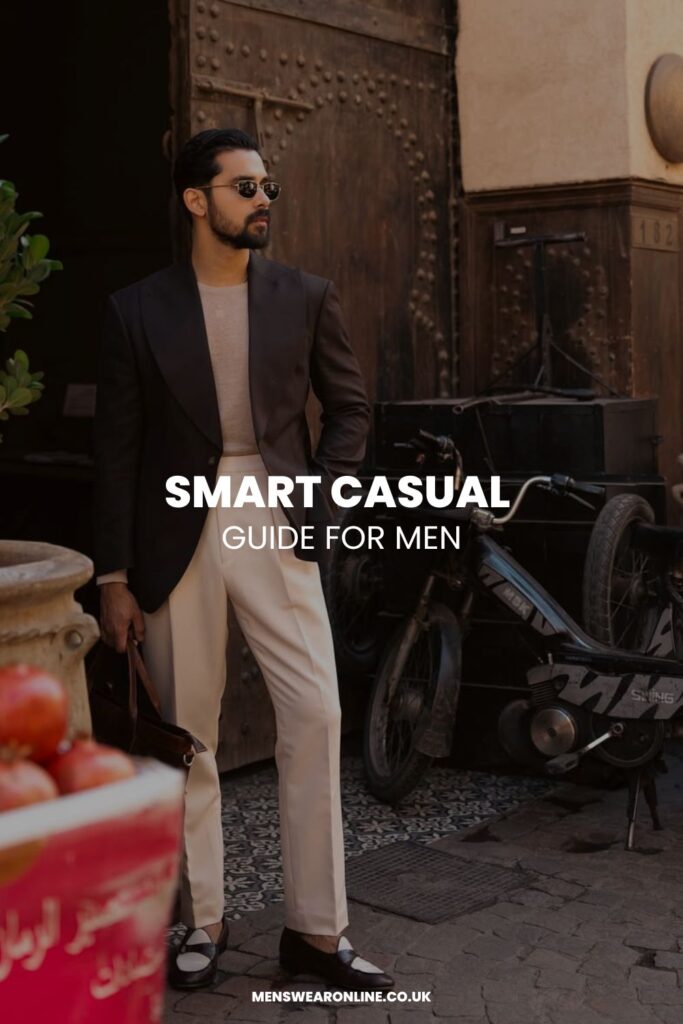
Smart casual occupies the considerable territory between business formal and genuinely casual. A well-cut blazer with chinos and a clean leather loafer is smart casual. A merino crew neck over an open-collar shirt with dark jeans and Chelsea boots is smart casual. A polo shirt in a quality pique with tailored chinos and suede Derby shoes is smart casual. The connecting thread is not the specific pieces – it is the level of intentionality behind them.


What smart casual is not: jeans and a T-shirt. Trainers and a hoodie. Anything that could be worn to the gym or the supermarket without drawing a second glance. The ‘smart’ in smart casual is doing real work. It means the pieces are considered, well-fitted, and appropriate to a social or professional context where effort is expected.


For answers to the most common questions about the dress code: Smart Casual Menswear FAQs.

The Core Pieces: What to Build From

Smart casual is built from a relatively small number of key pieces, combined with judgment rather than formula. Own these well and the outfits largely assemble themselves.

The Blazer or Smart Jacket

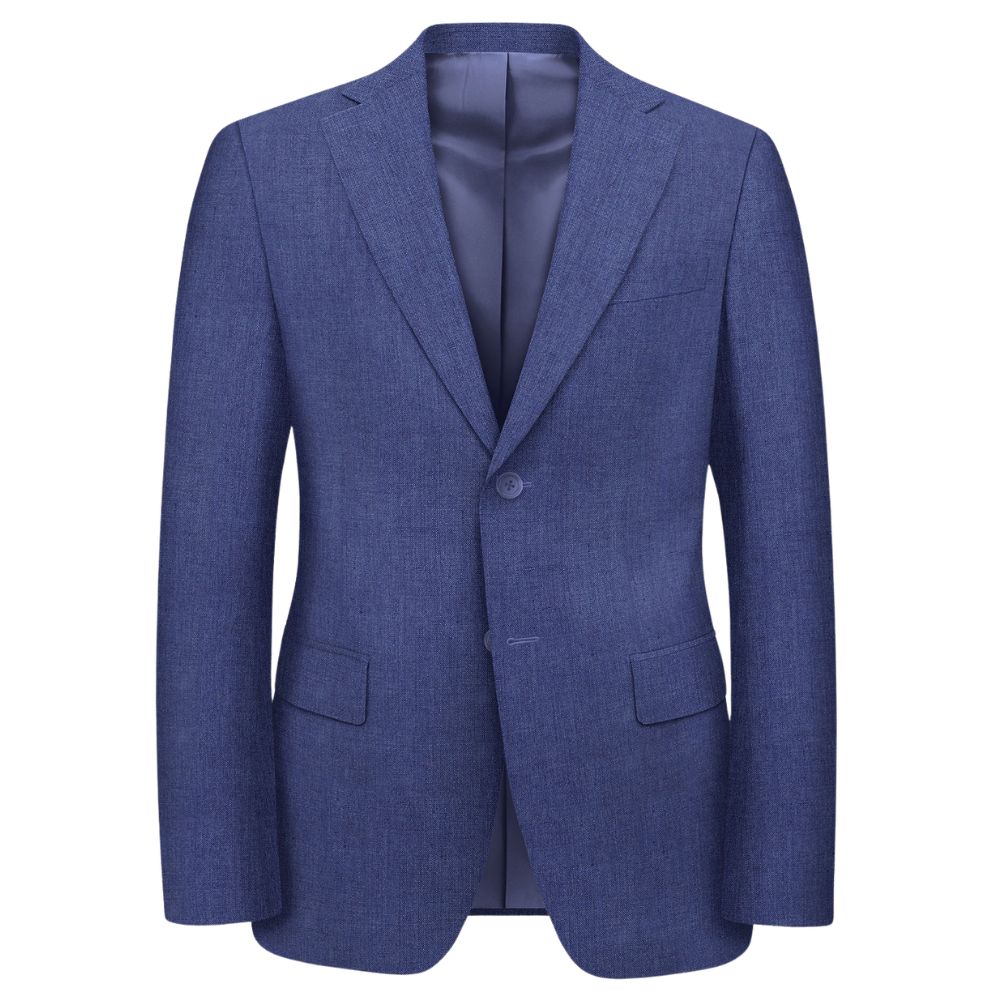
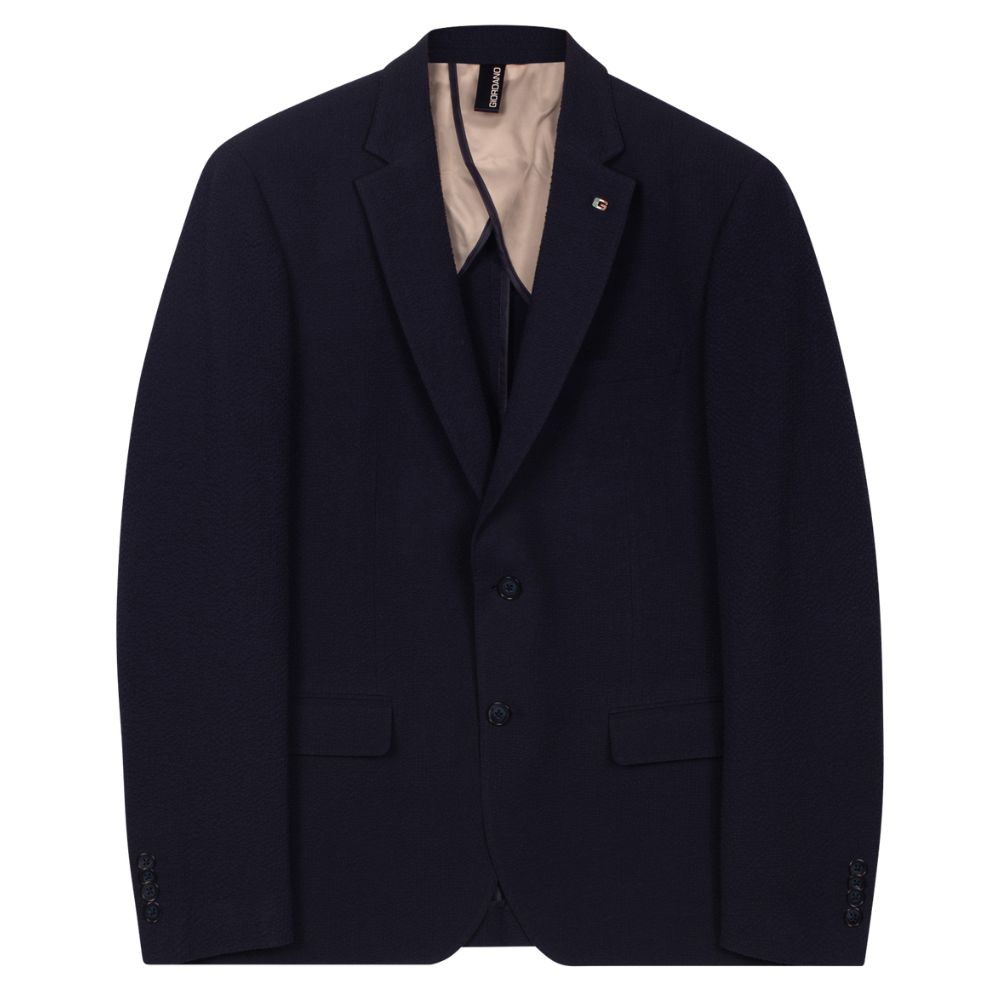
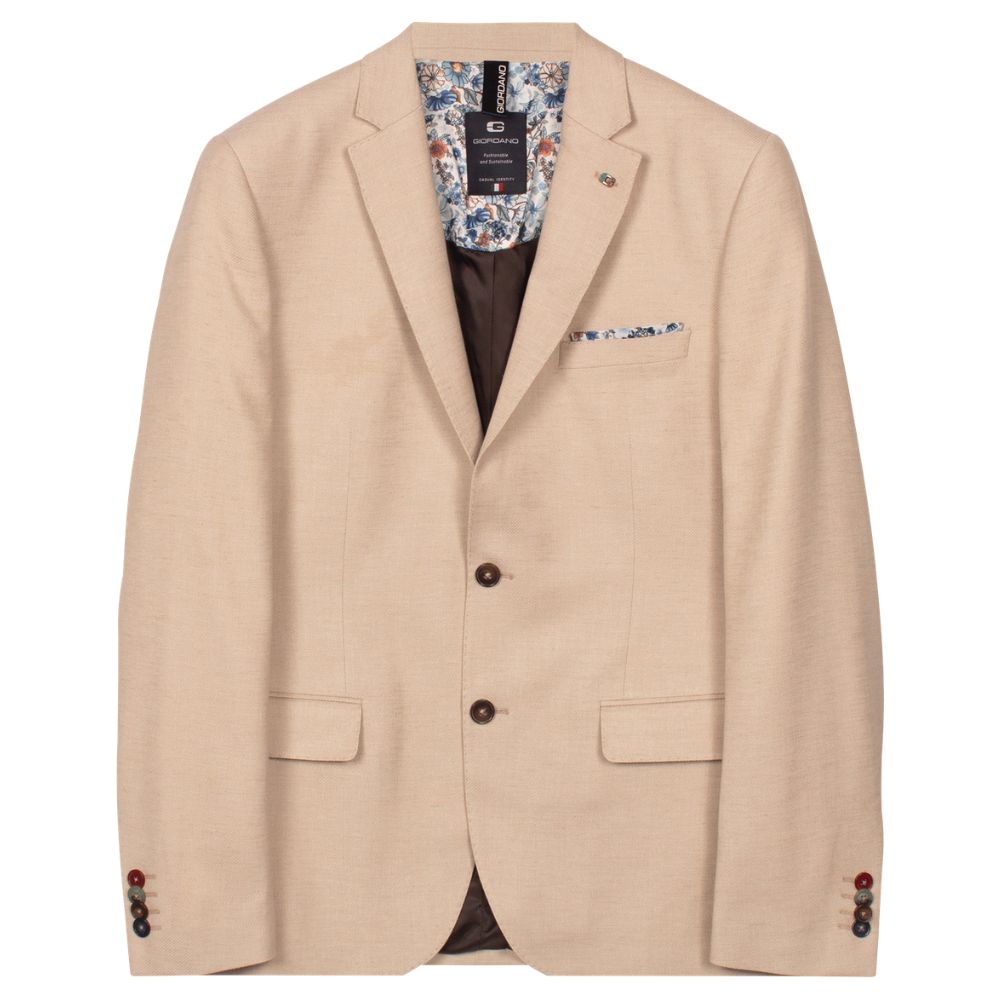
The single most effective piece in smart casual dressing. A well-cut blazer does more in a single garment than any other item: it adds structure, elevates whatever sits beneath it, and signals that an outfit has been considered. It is the piece that turns chinos and a shirt into something genuinely smart.

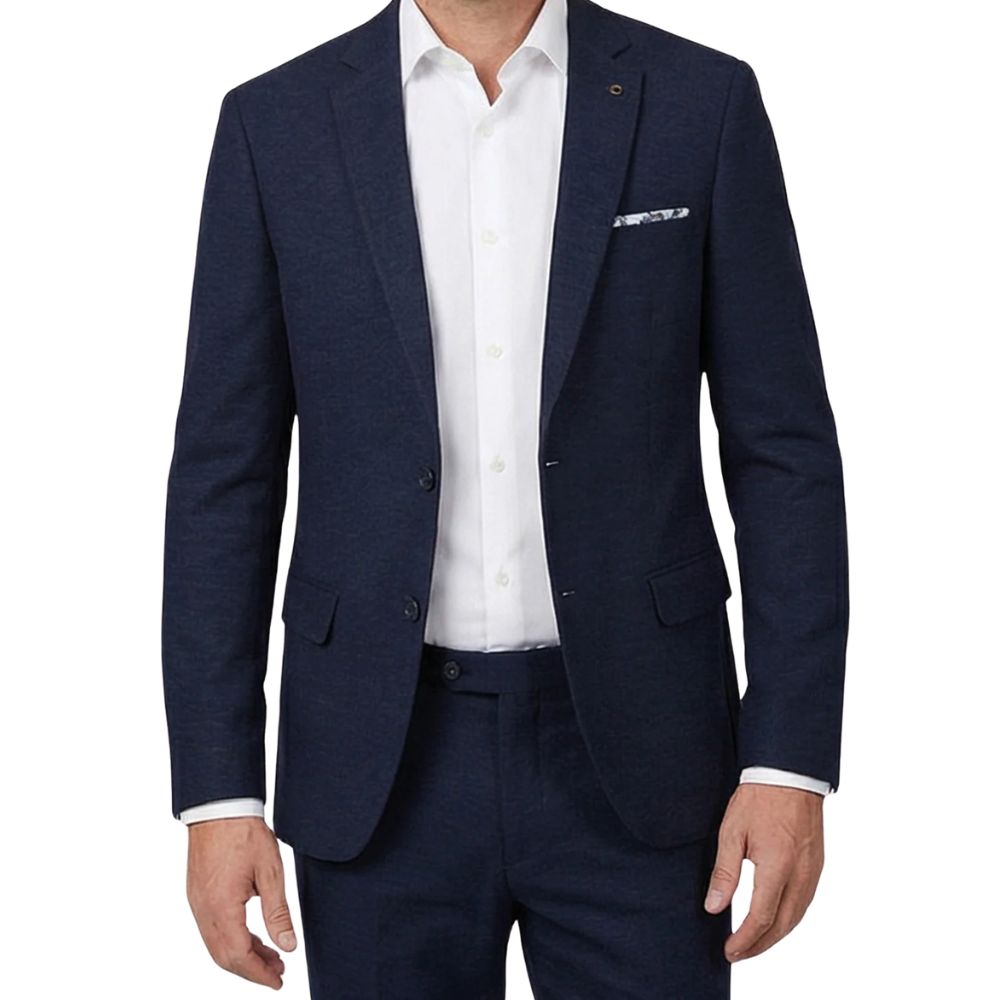
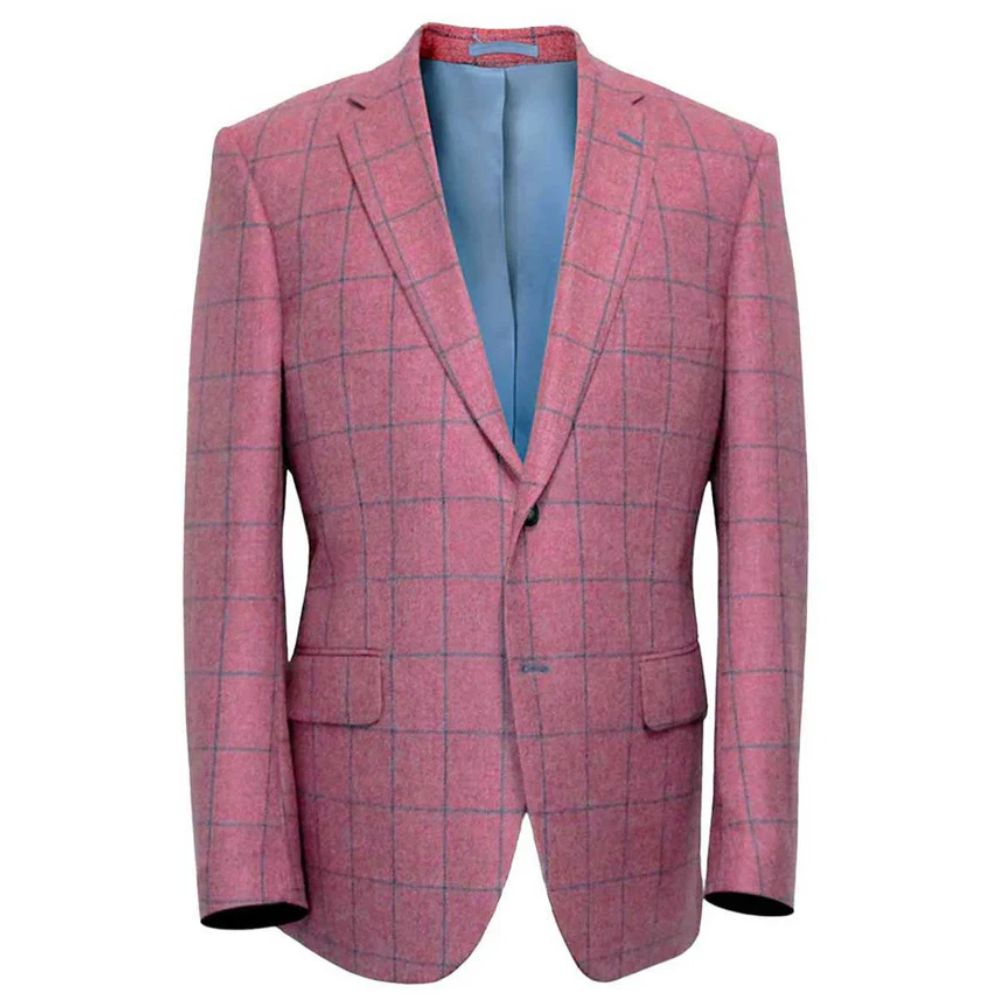
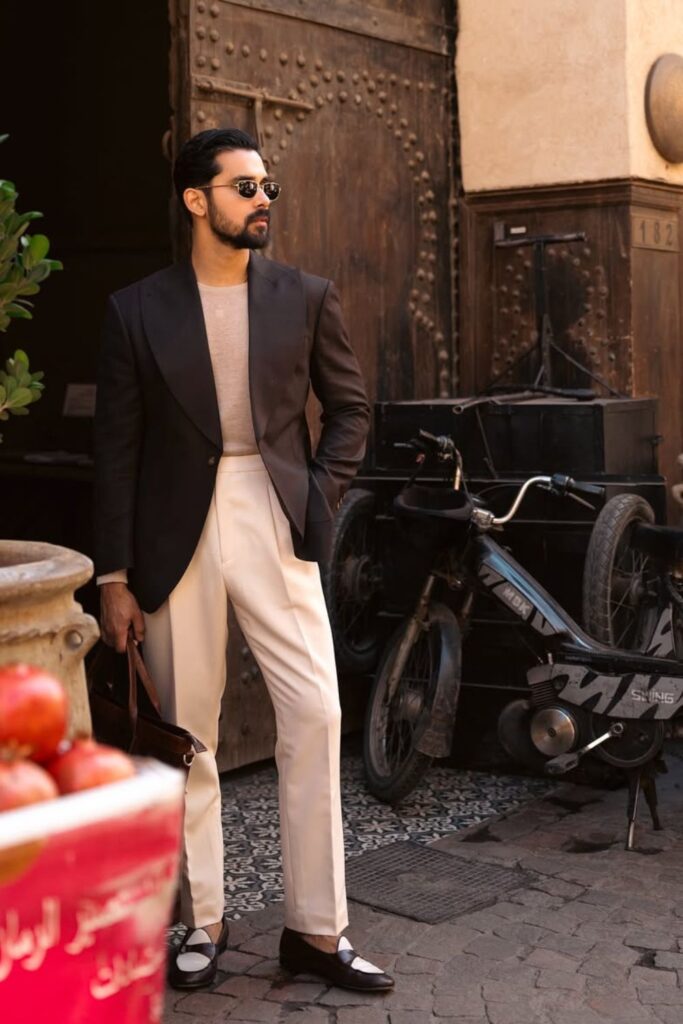
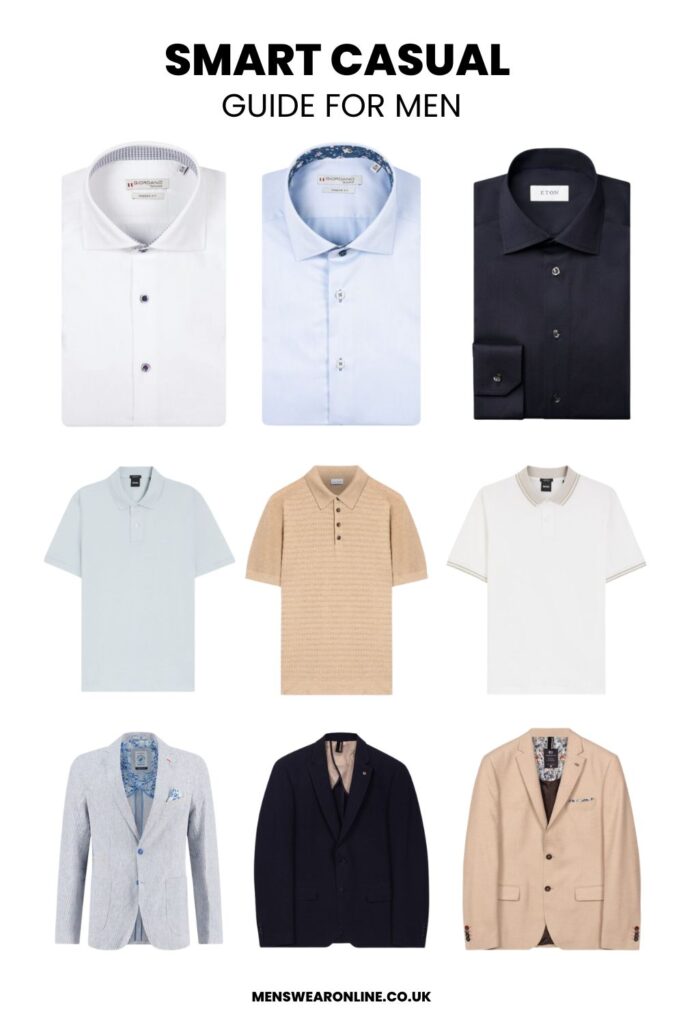
The most versatile option is an unstructured blazer in navy or mid-grey – it sits comfortably between the relaxed and the formal, and it pairs with almost everything in a smart casual wardrobe. A checked or textured jacket in a neutral – tweed, herringbone, a subtle windowpane – introduces character without effort.

A blazer should fit at the shoulder above everything else. Everything else can be altered; the shoulder cannot.

For guidance on pairing with polo shirts specifically: What Jacket Goes Best with a Polo Shirt.

Chinos

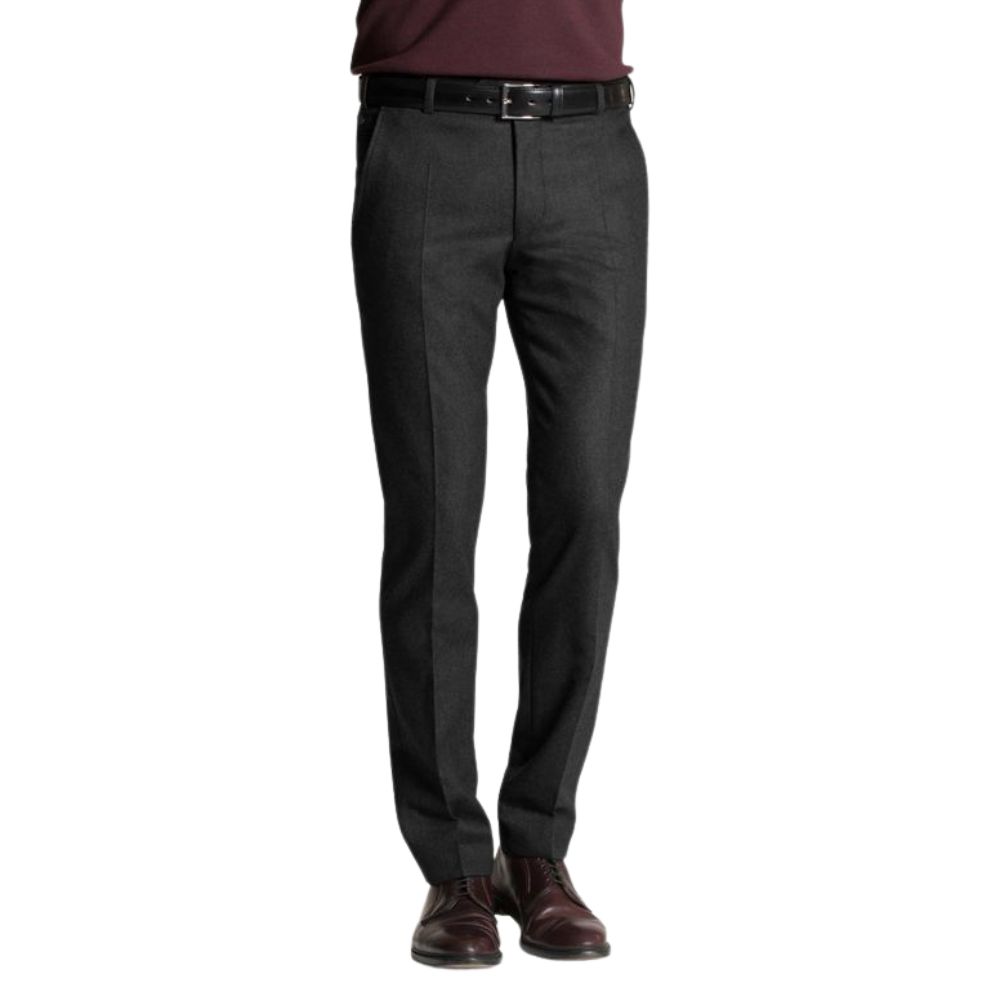
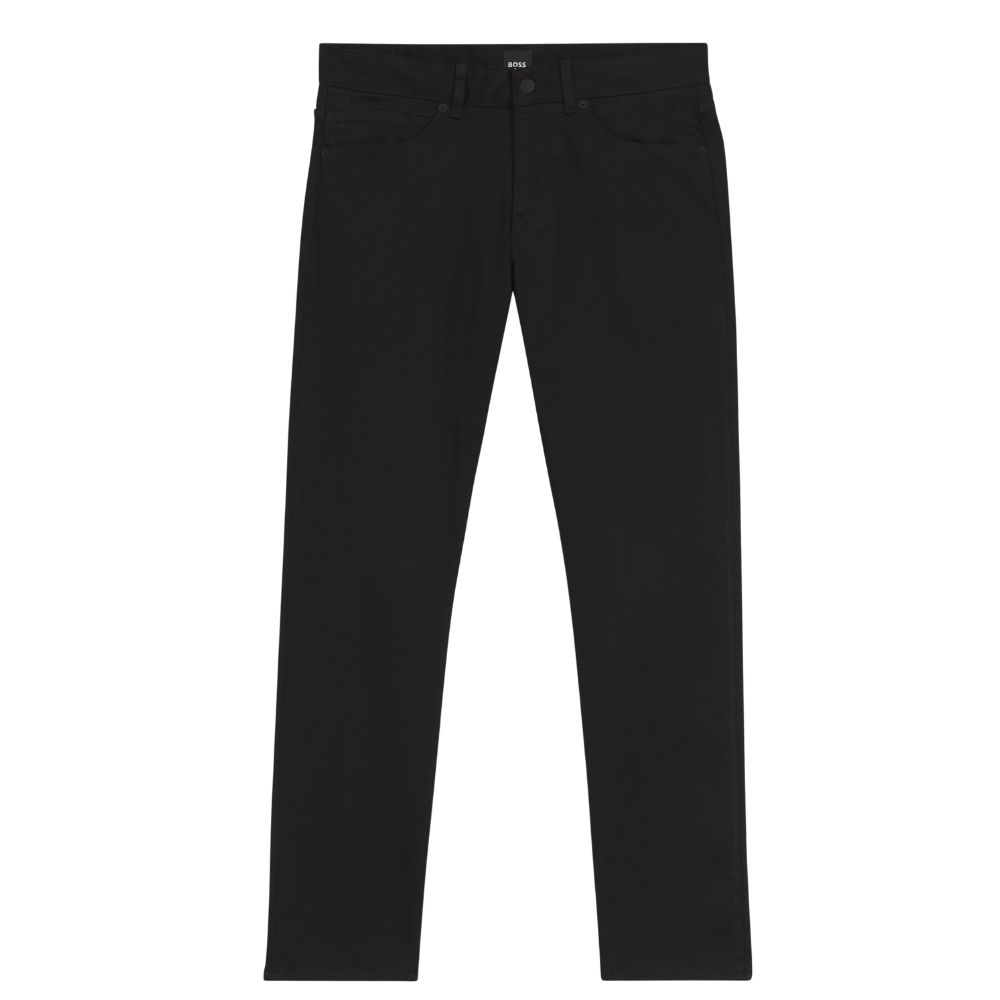
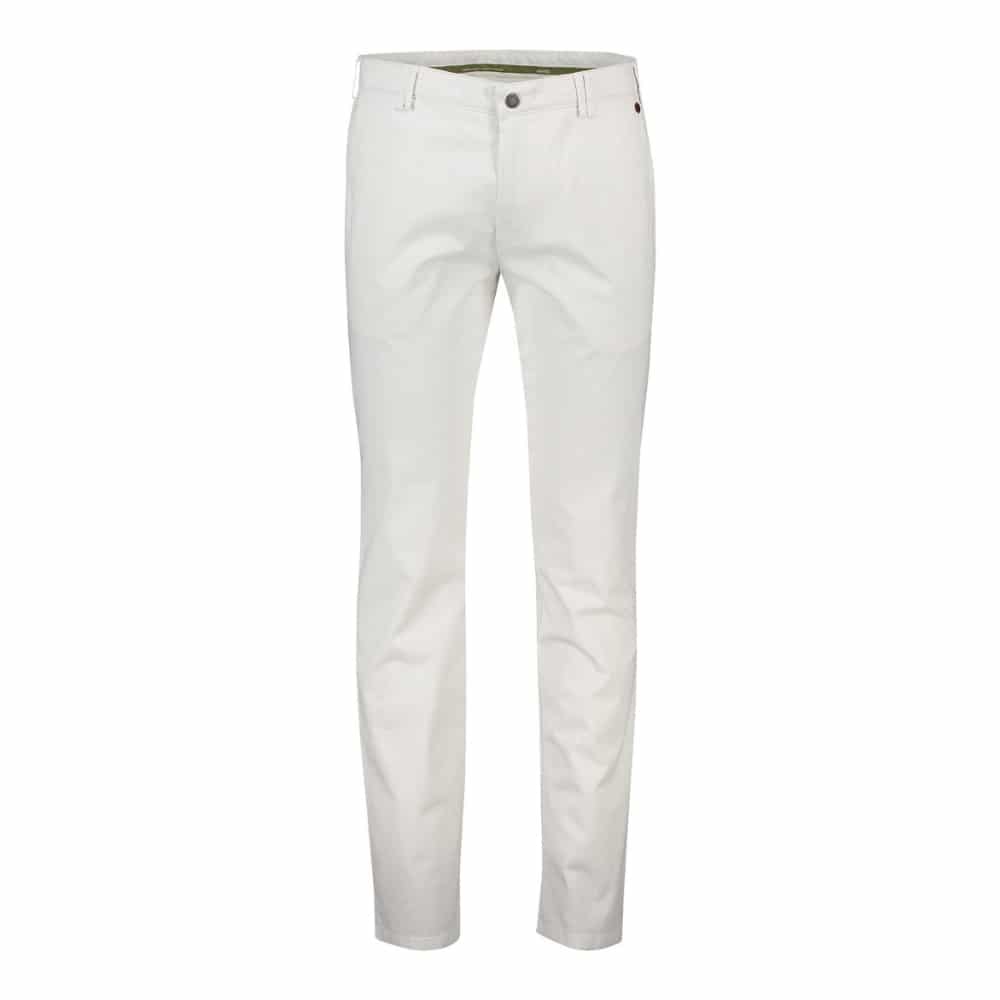
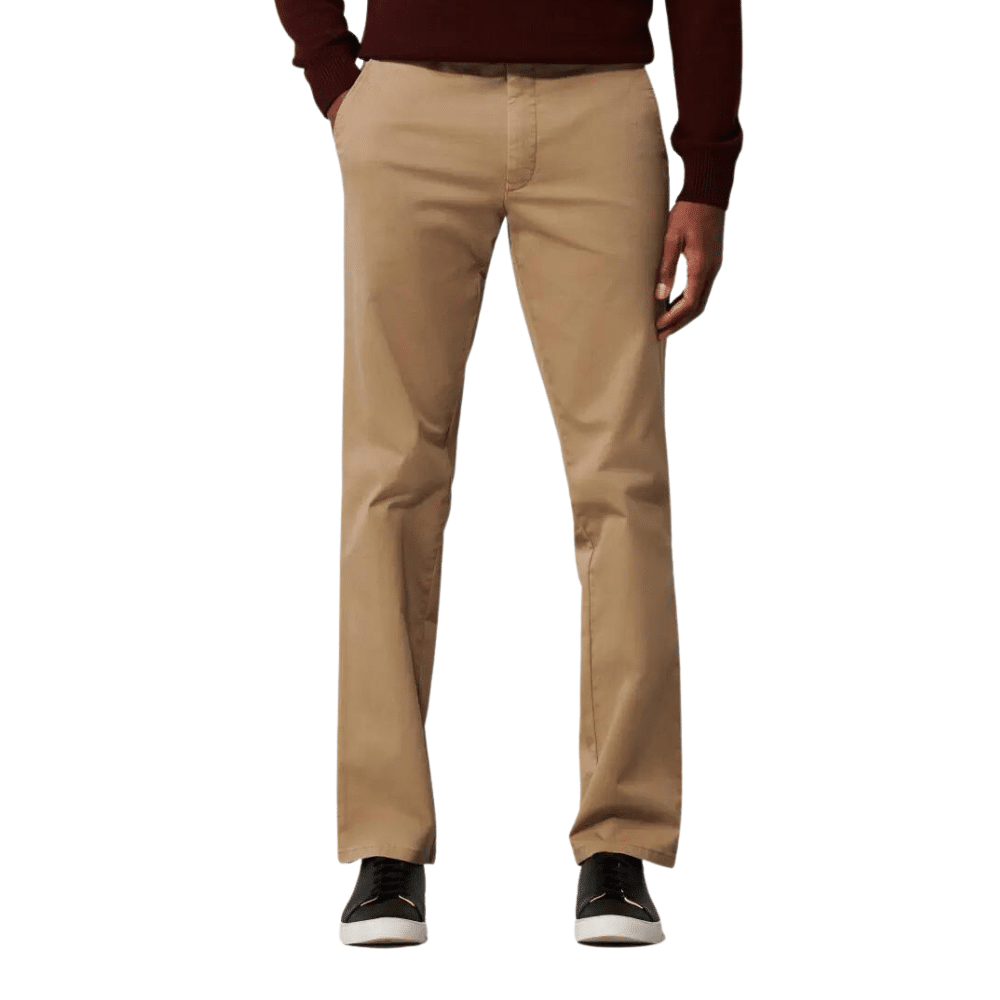
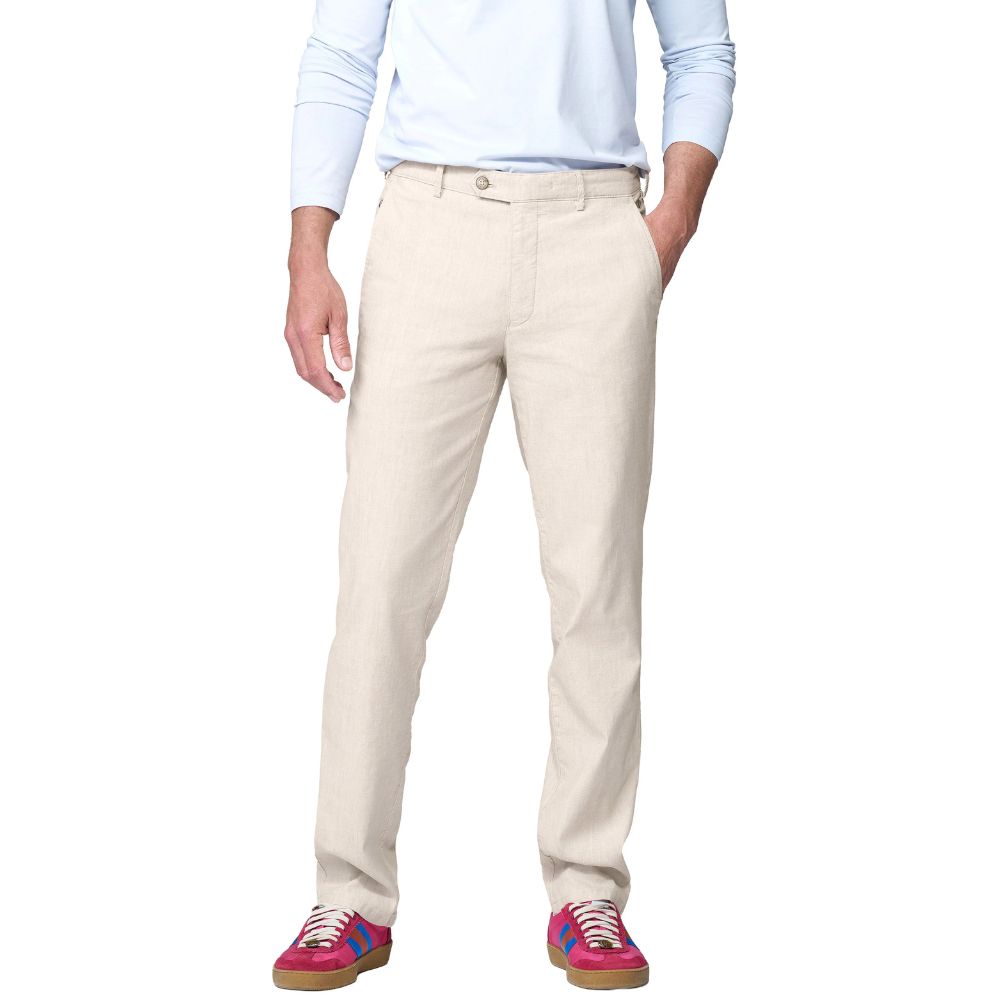
The trouser of smart casual. Chinos in navy, stone, mid-grey, or khaki are the neutral base around which the rest of the outfit builds. They are formal enough to sit under a blazer, relaxed enough to pair with a knitted polo or a merino crew neck.

Fit is everything with chinos. They should be slim through the thigh without being tight, tapering to a clean ankle. A chino that is too wide reads as casual; one that is too tight reads as trying too hard. The hem should hit just above the shoe – enough of a break to be clean, not enough to pool.

SHIRTS

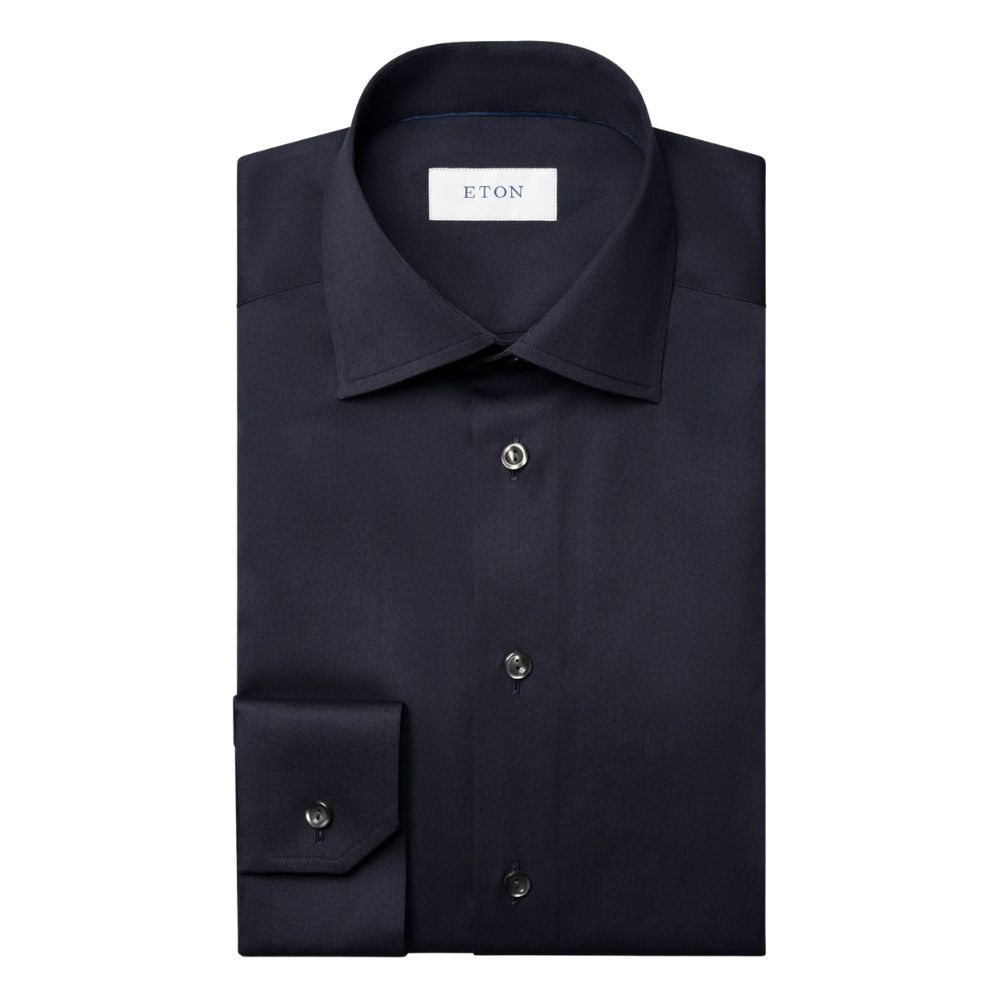
A well-chosen shirt is the foundation of the smart casual outfit in the same way a good suit lining is the foundation of a suit: invisible when right, immediately apparent when wrong.

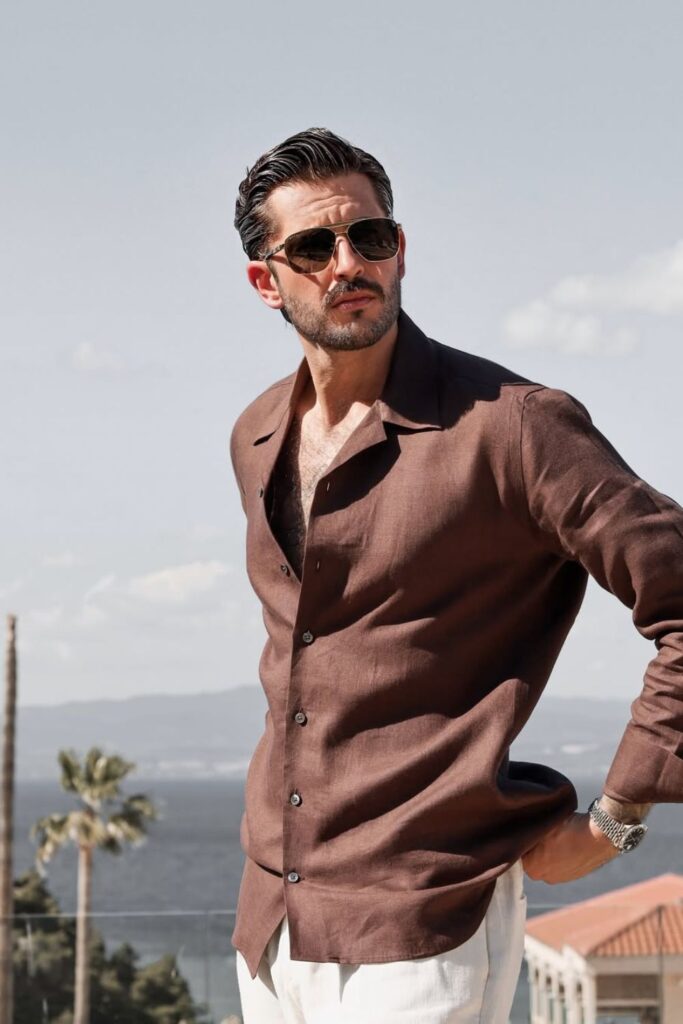
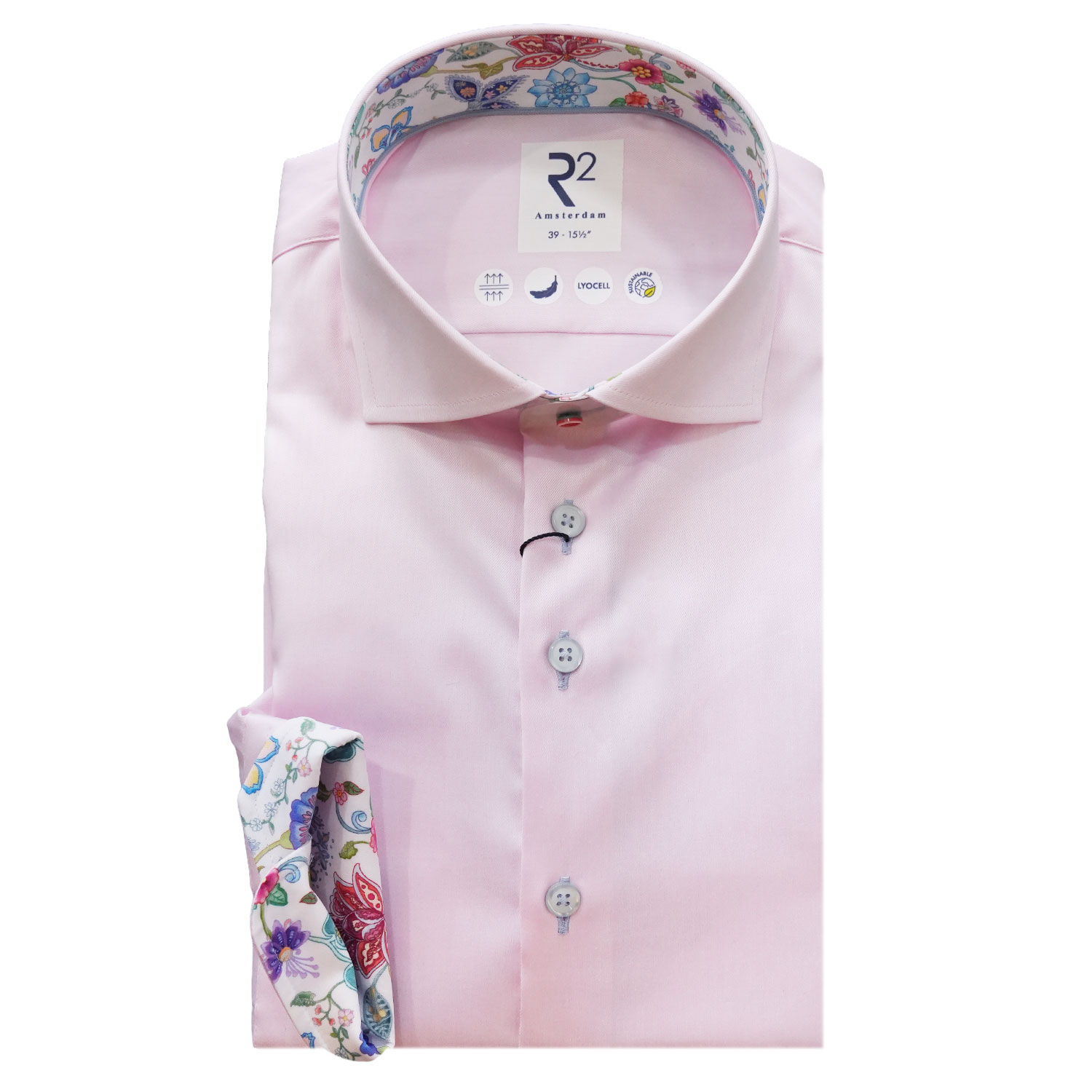
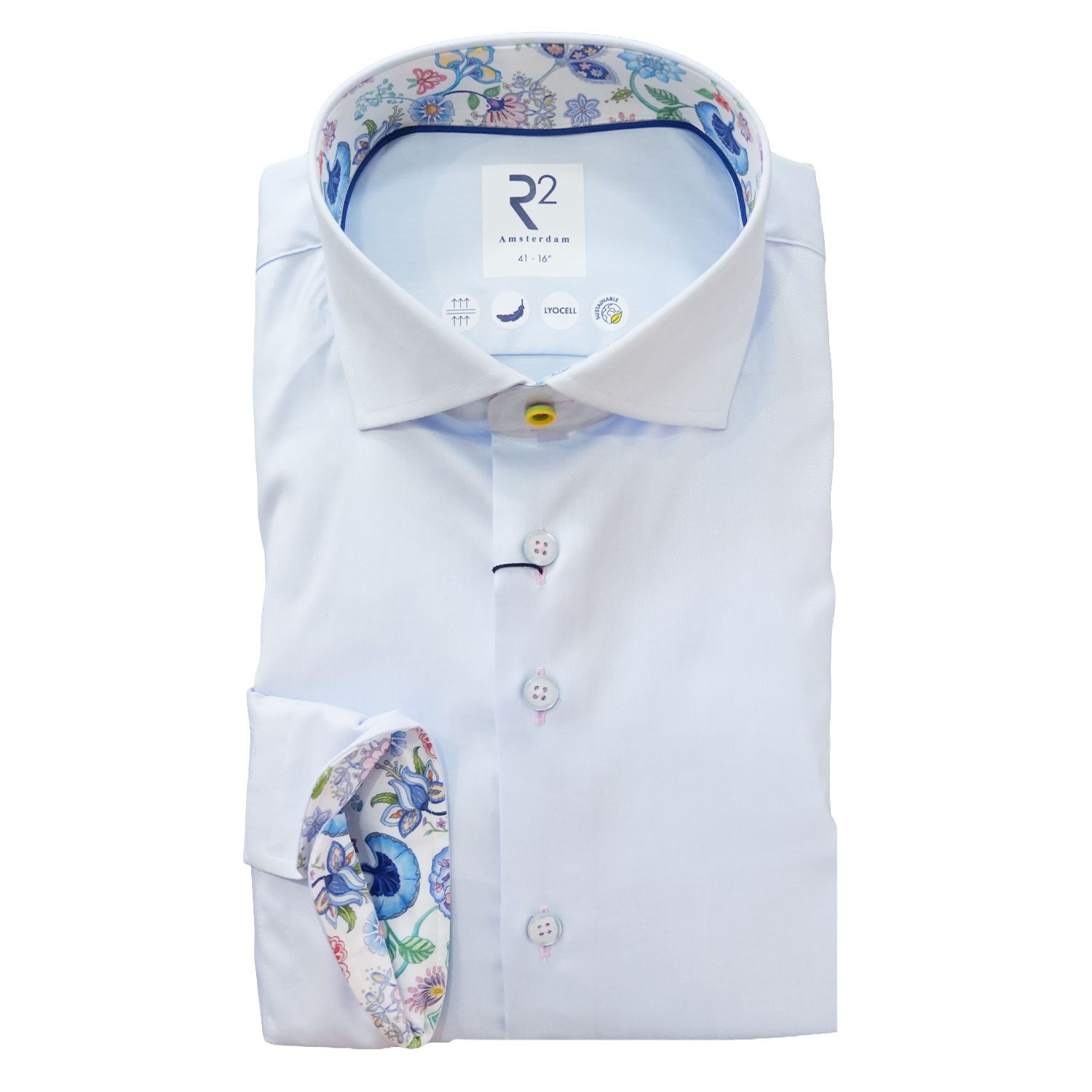
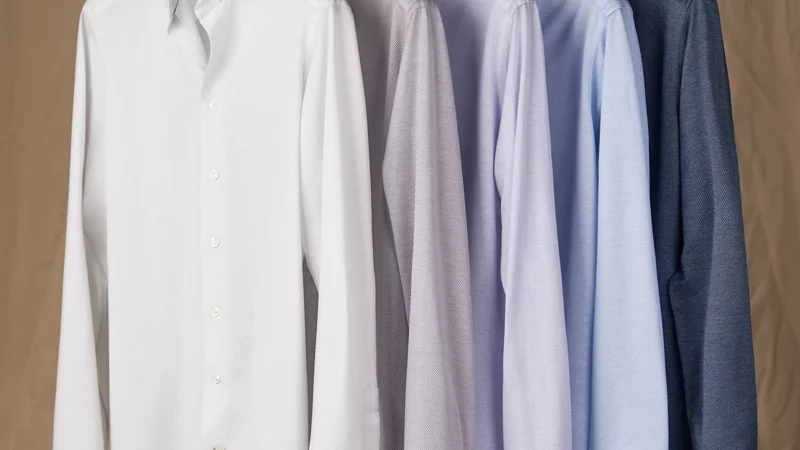
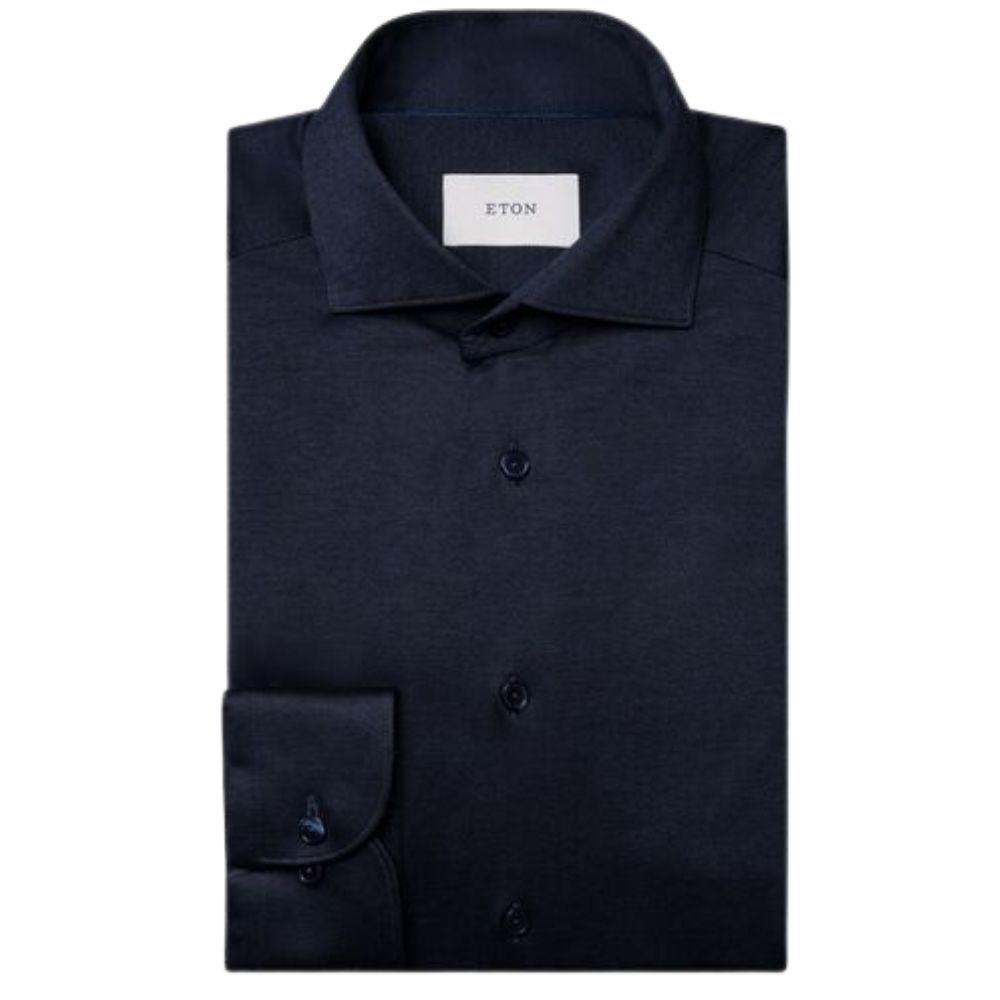
For smart casual, the shirt collar should be able to stand on its own – a button-down Oxford cloth shirt or a quality poplin in white, pale blue, or a subtle stripe. Worn open-collared, untucked or tucked depending on the trouser and occasion. The fabric should have enough weight to drape properly; lightweight fast-fashion shirts look limp under a blazer and do not improve with washing.

The Polo Shirt

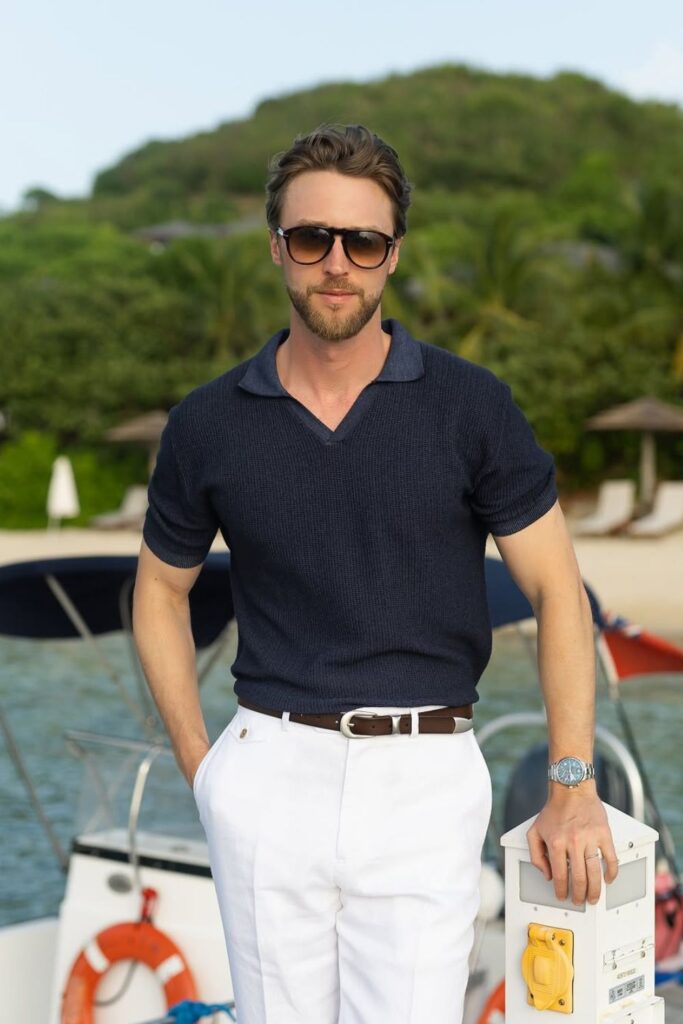
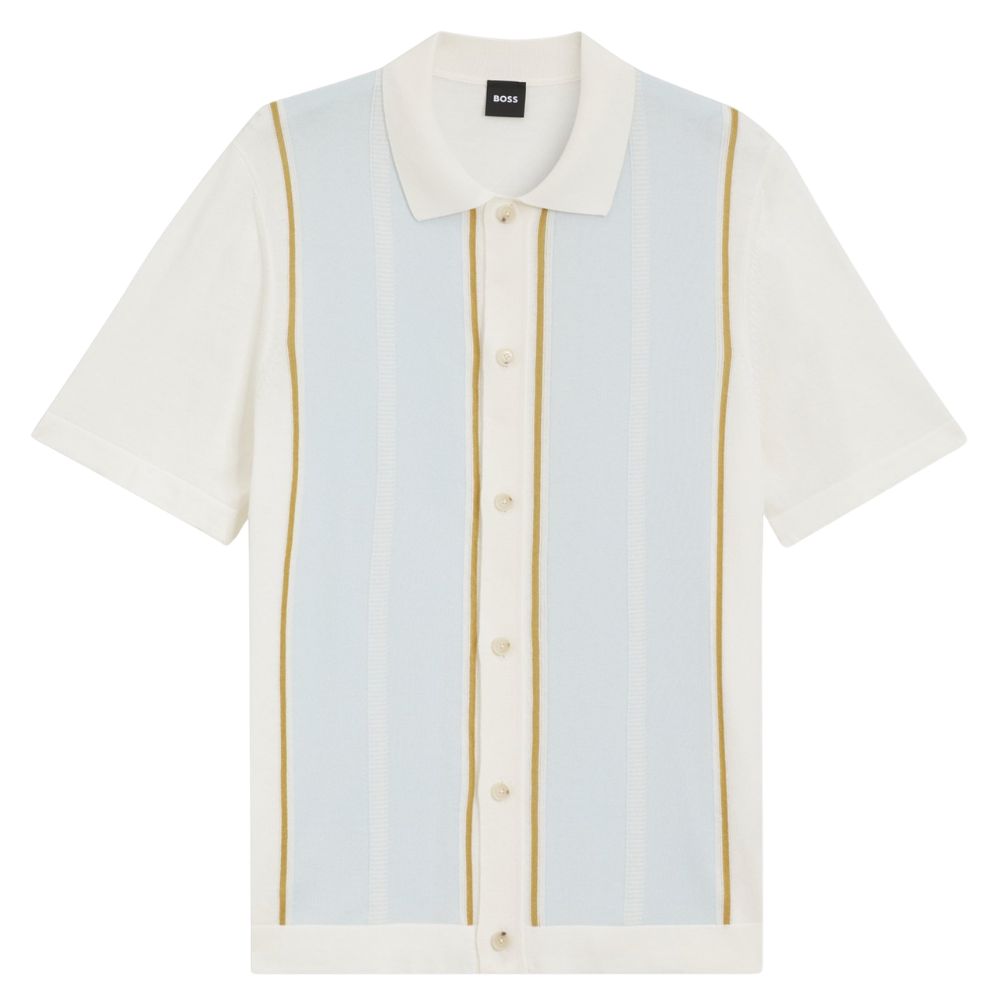
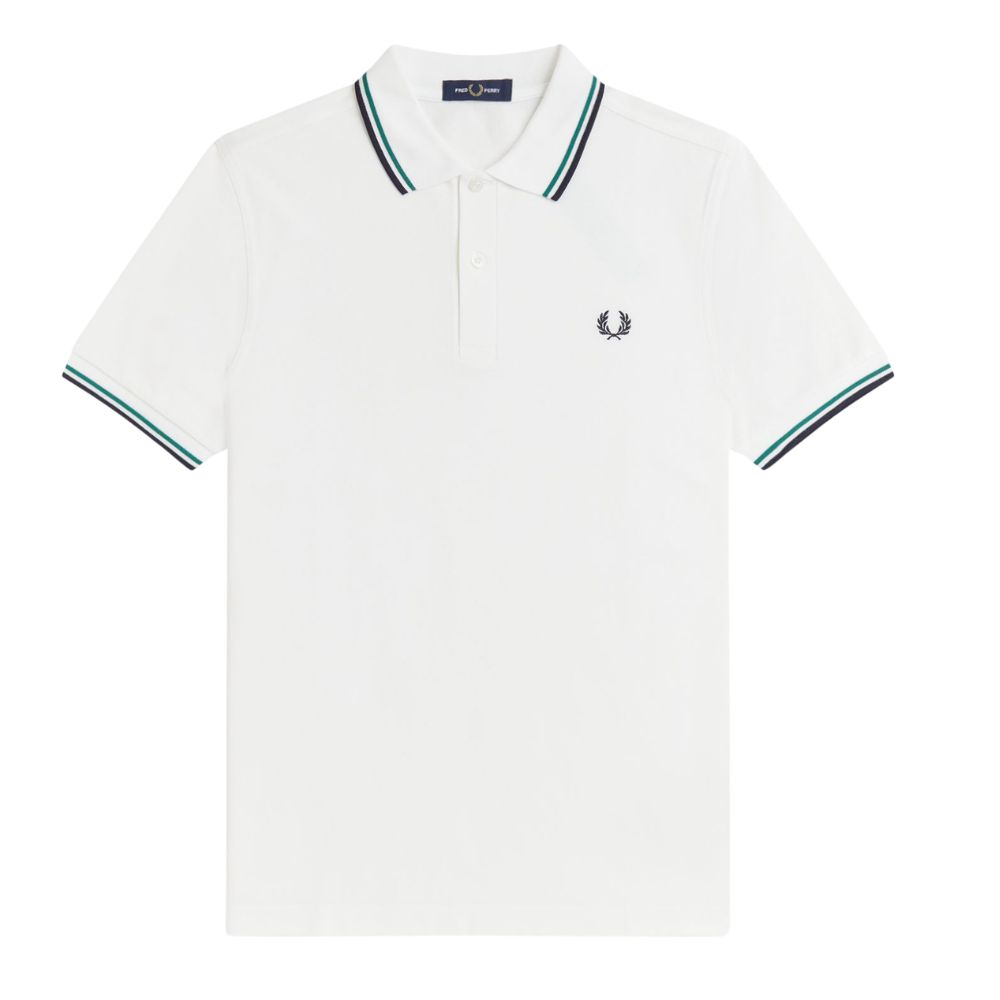
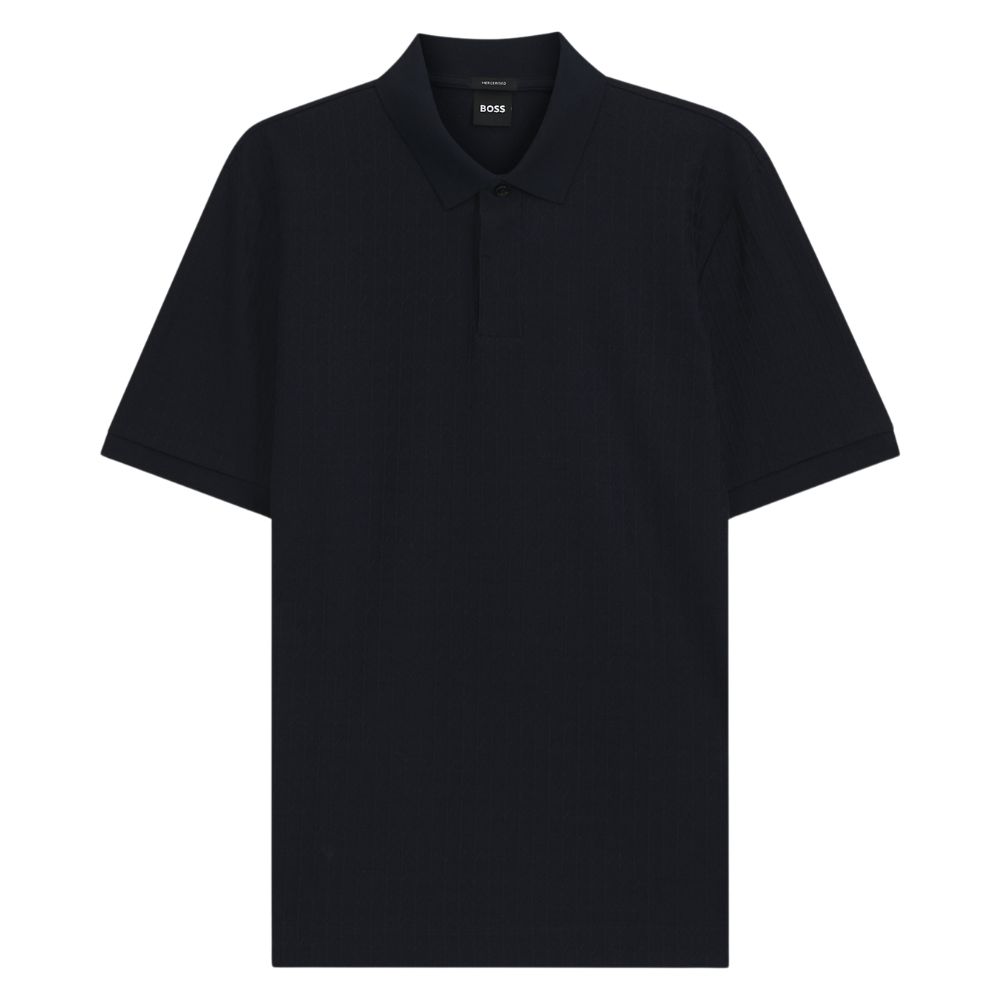
The polo is one of the most versatile pieces in smart casual dressing, and one of the most frequently worn badly. A quality pique cotton polo — or a fine-knit merino polo — in a solid colour sits comfortably across a wide range of smart casual occasions. It replaces the shirt when the context is relaxed enough, and it works under a blazer when a shirt would feel too formal.

The rules: a well-fitted polo, never oversized or boxy. Collar lying flat, not popped. In a quality fabric – pique, merino, or fine cotton – not in a synthetic blend that loses its shape after a season.

For nine principles that elevate polo shirt dressing: 9 Polo Shirt Style Tips.

JEANS

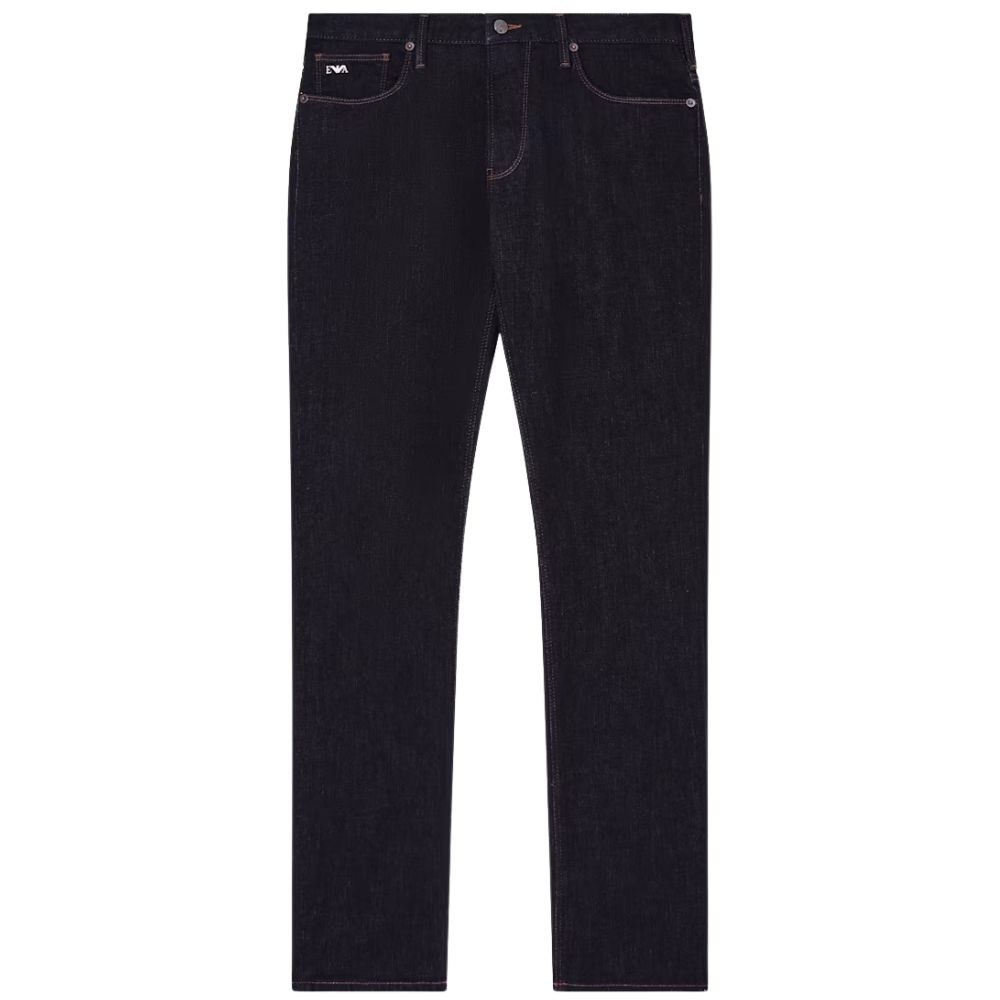
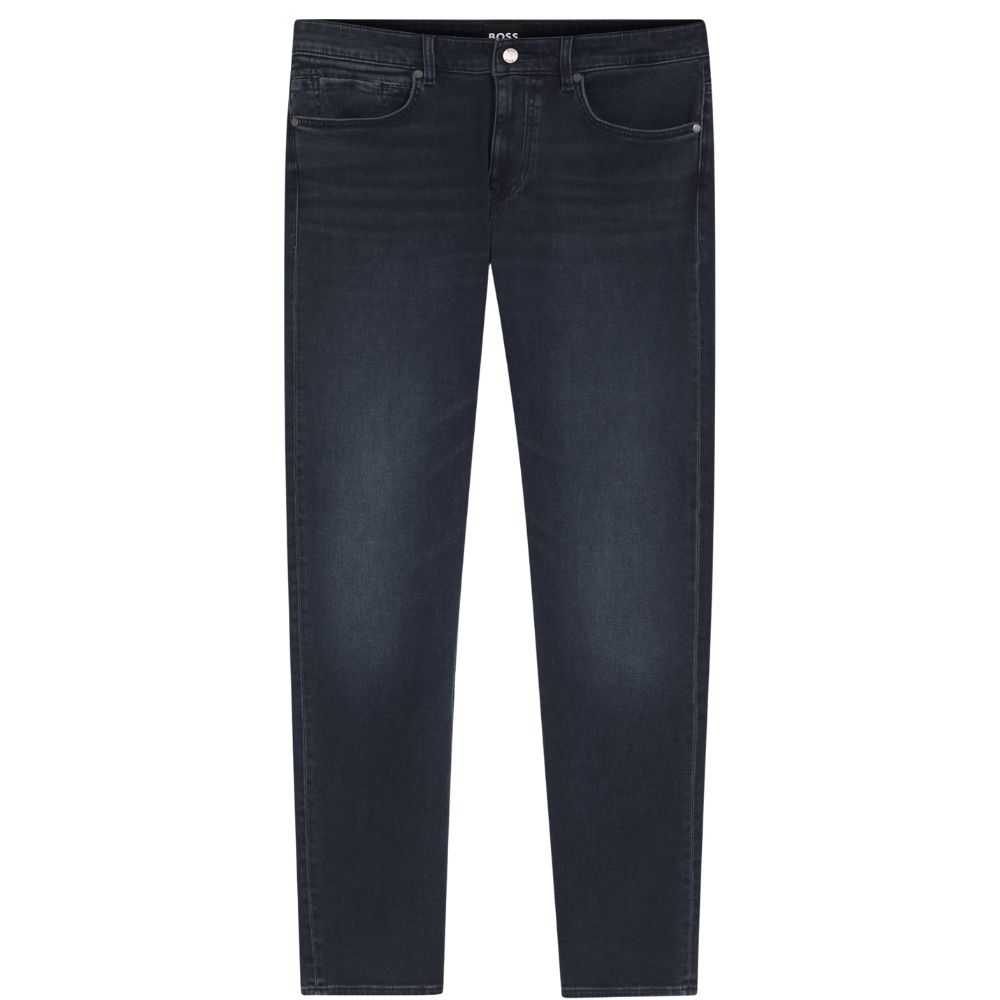
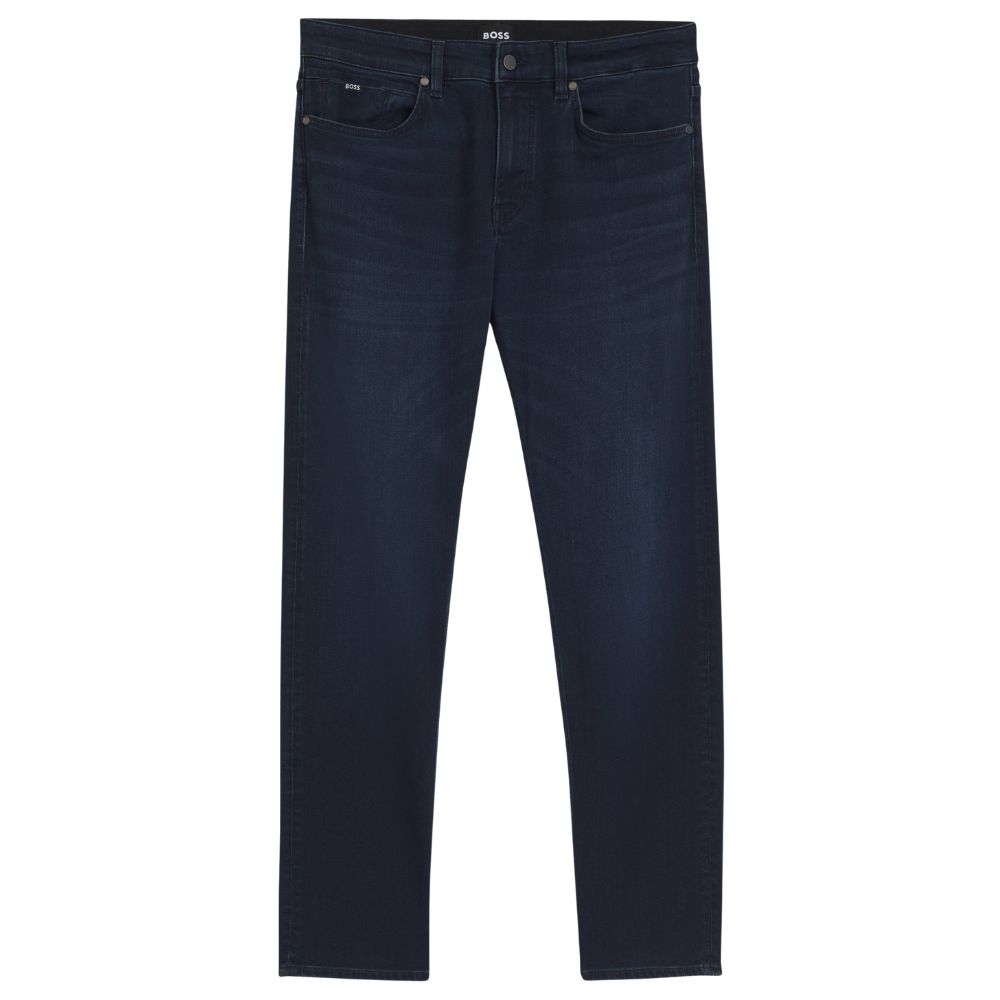
The smart casual wardrobe has room for dark jeans – specifically, dark-wash denim in a slim or straight cut, worn with intention. Dark jeans sit at the more relaxed end of smart casual territory, and they work when the rest of the outfit compensates with structure: a blazer, a quality shirt, clean leather shoes or Chelsea boots.


Light-wash or distressed denim belongs elsewhere. The distinction in smart casual is the depth of the wash and the cleanliness of the silhouette.

KNITWEAR

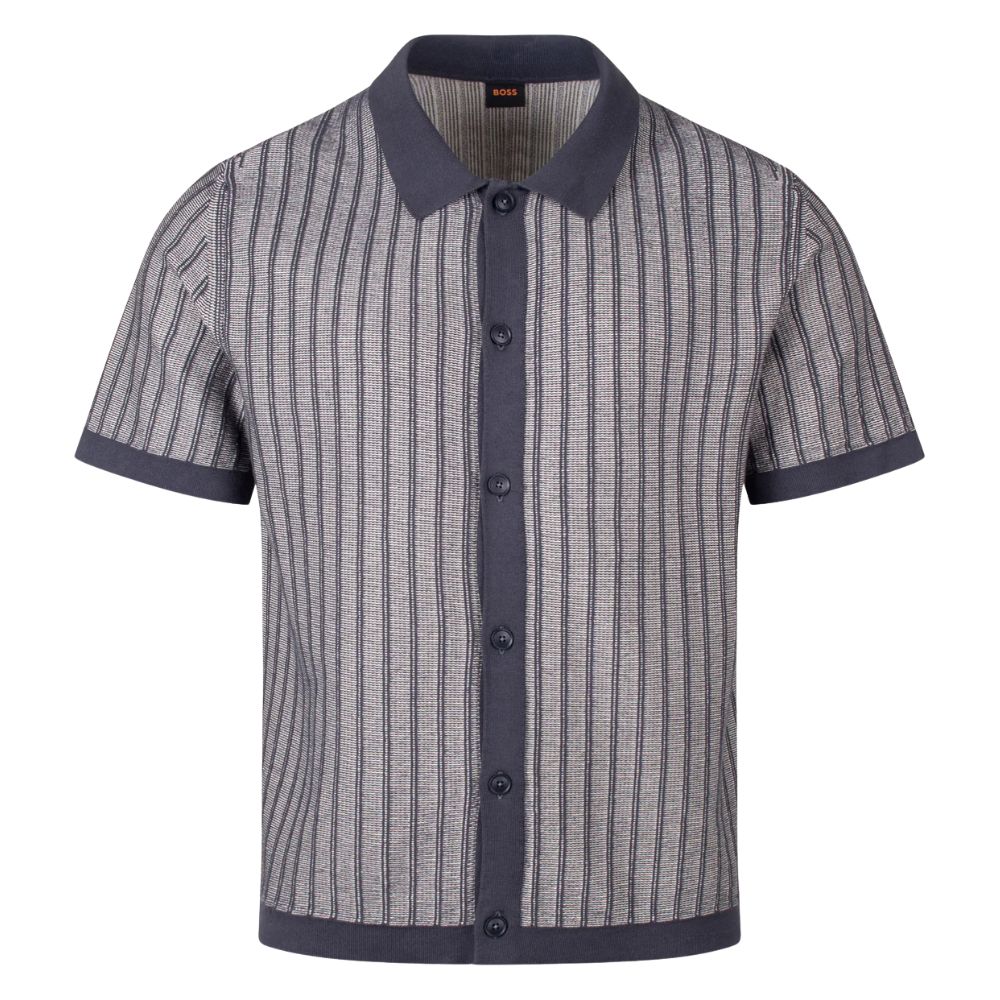
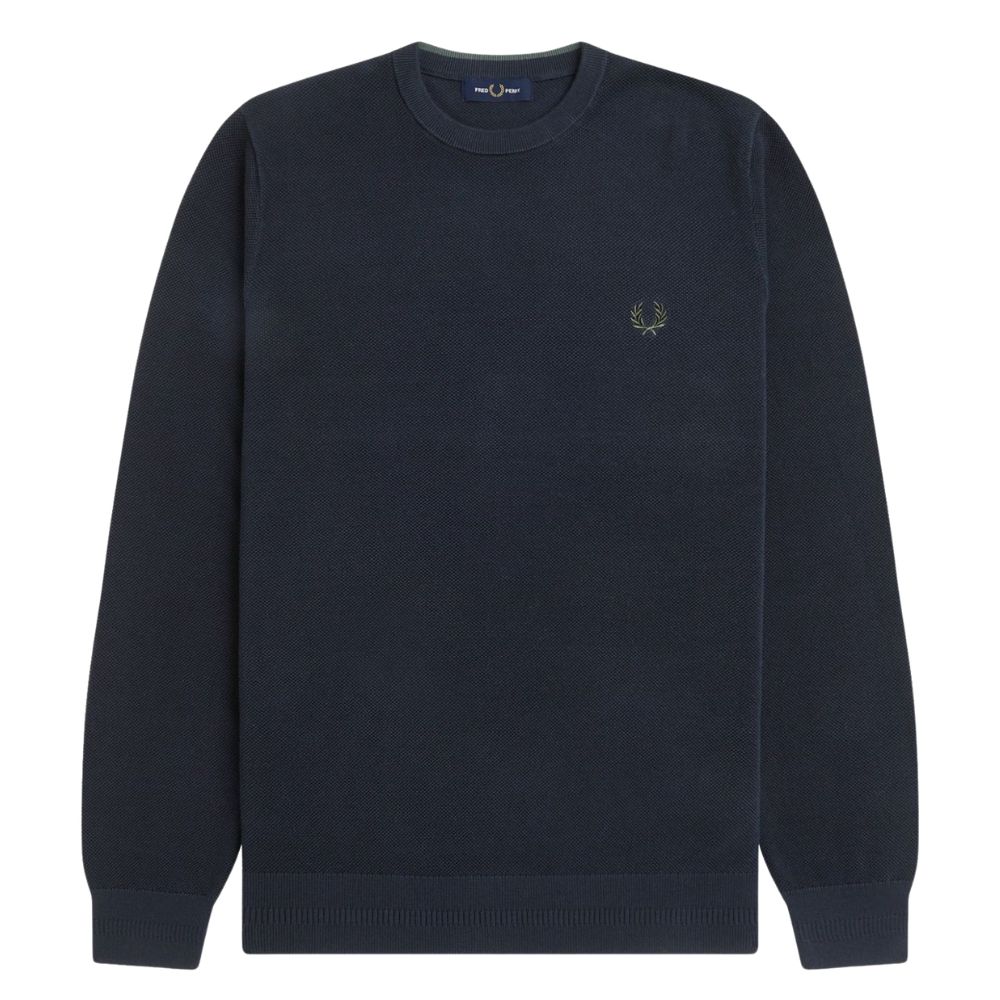
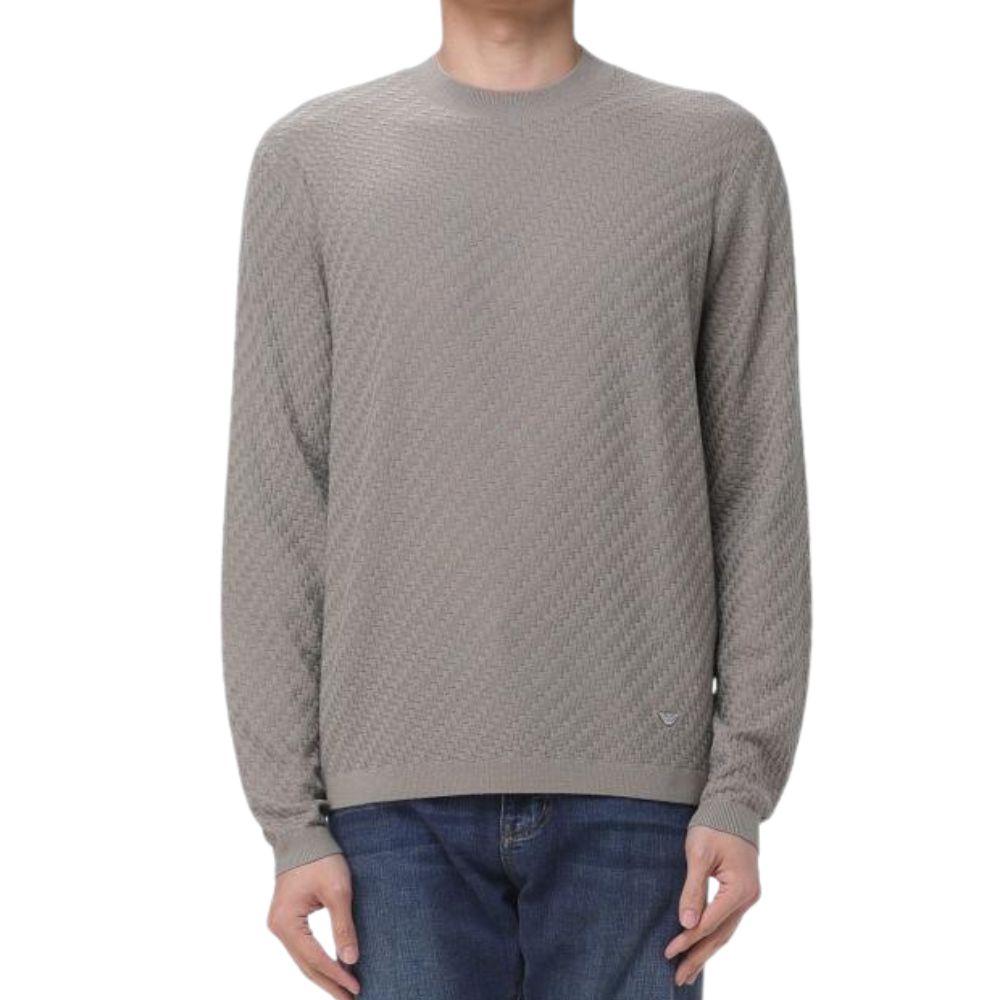
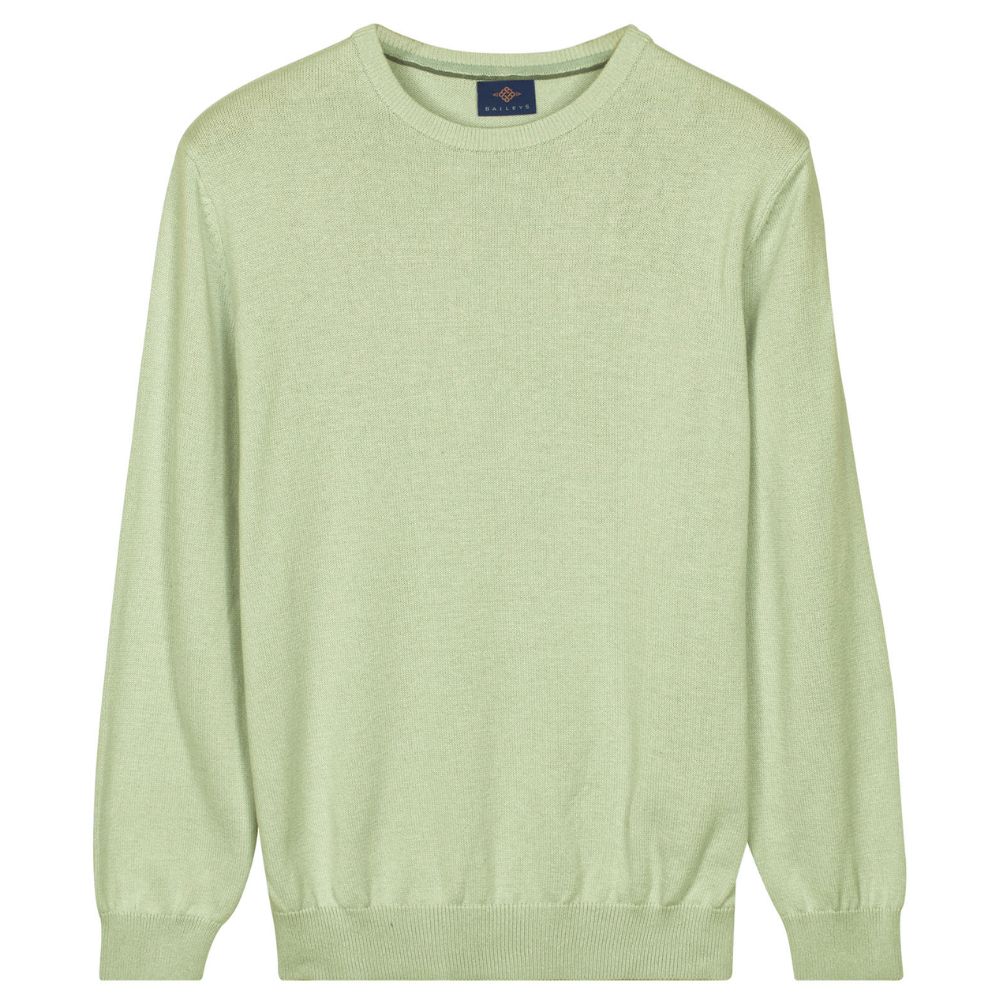
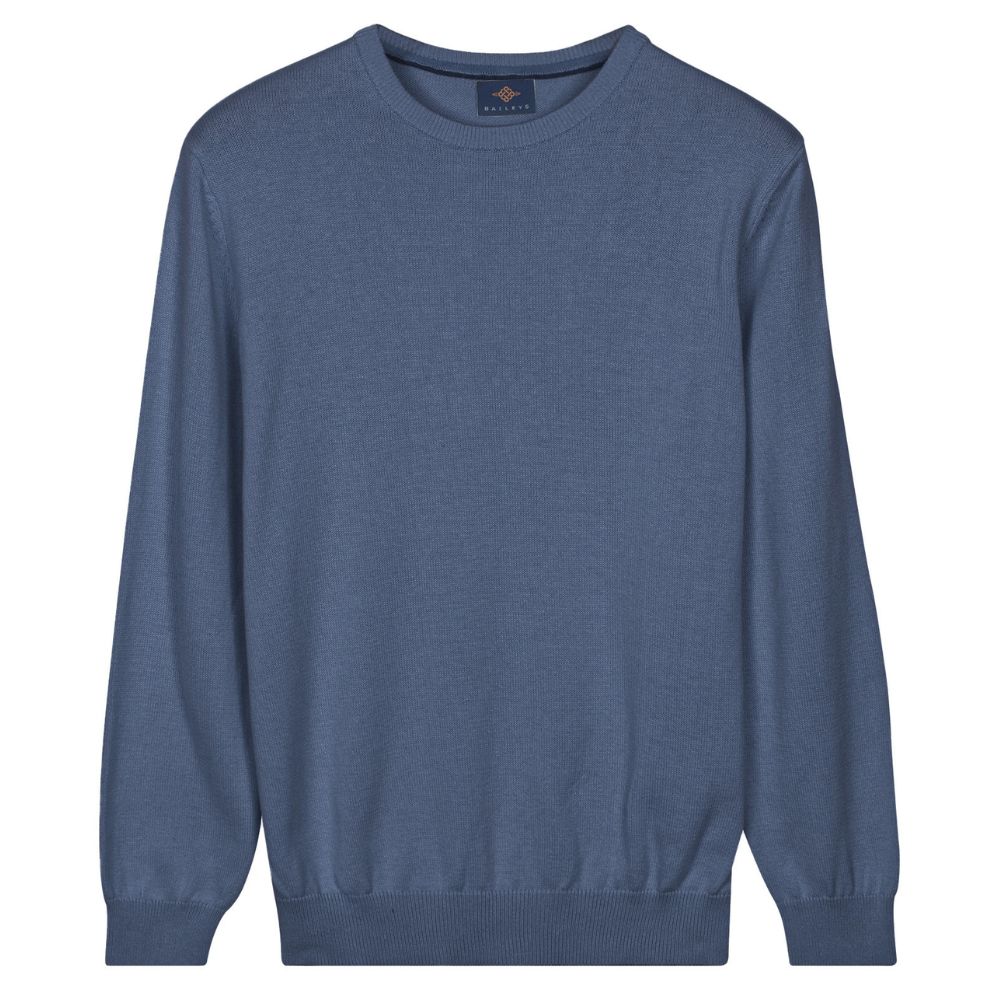
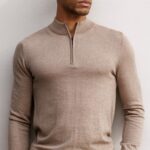
A merino crew neck, a fine-gauge V-neck, or a quality cardigan in place of a jacket – this is the piece that makes smart casual work in autumn and winter. It adds warmth and texture without formality, and it layers naturally under a coat or over a shirt.


The fabric determines whether it reads as smart or merely warm. Merino and cashmere read as considered. Acrylic reads as not.

Shoes: The Detail That Settles Everything

The shoe is the most reliable indicator of where an outfit sits on the smart-casual spectrum. It also has the power to lift or undermine every piece above it.

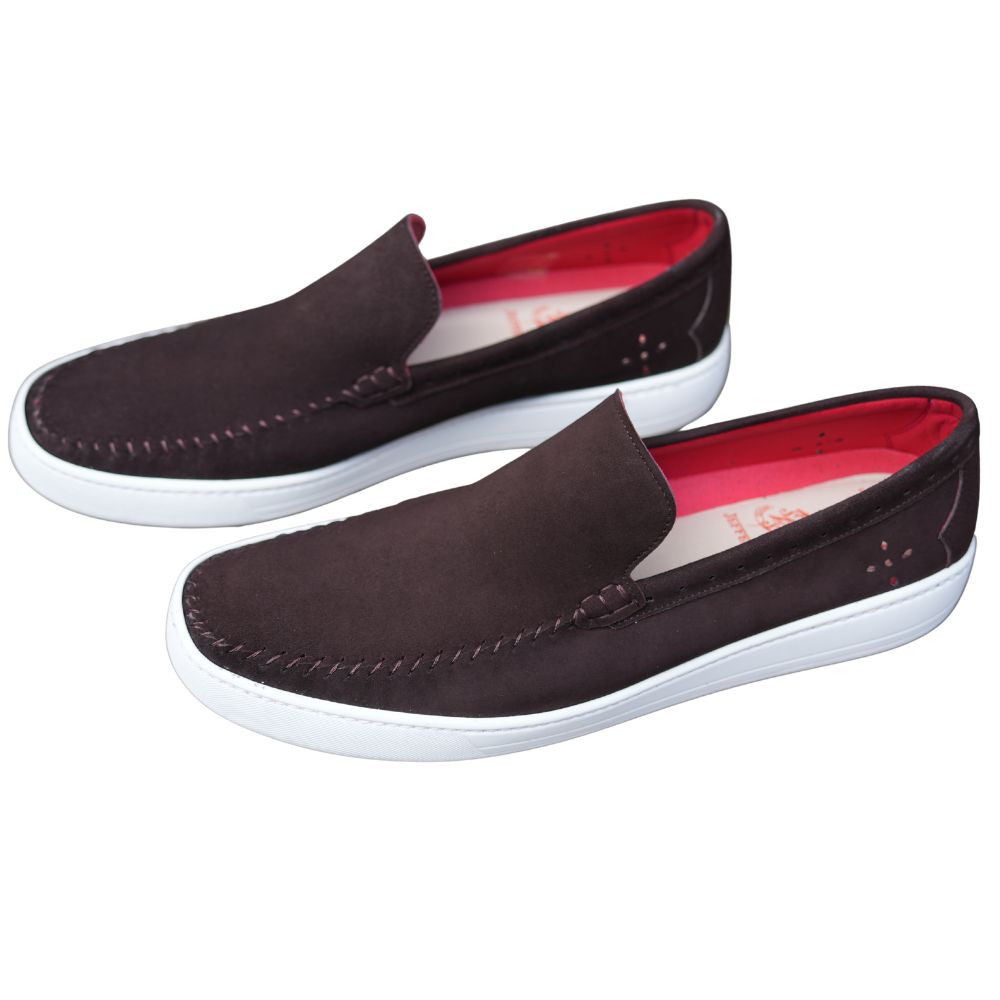
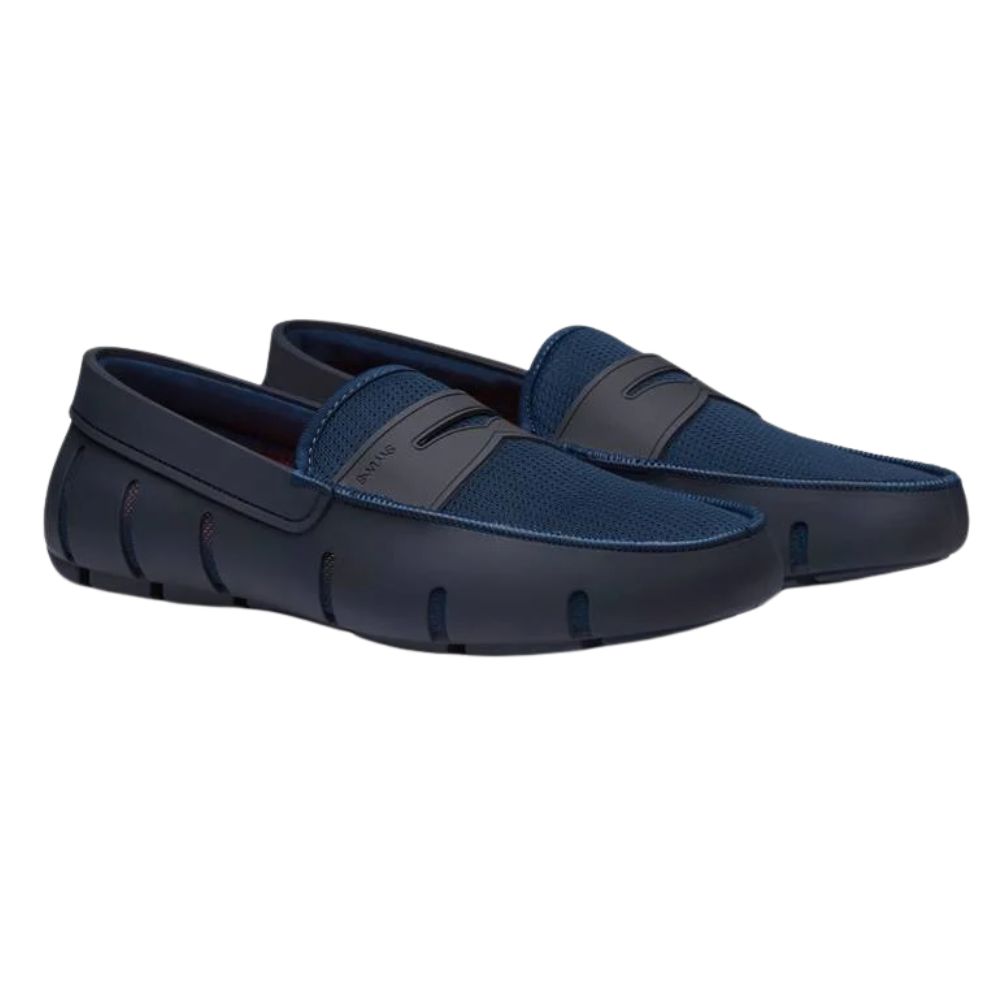
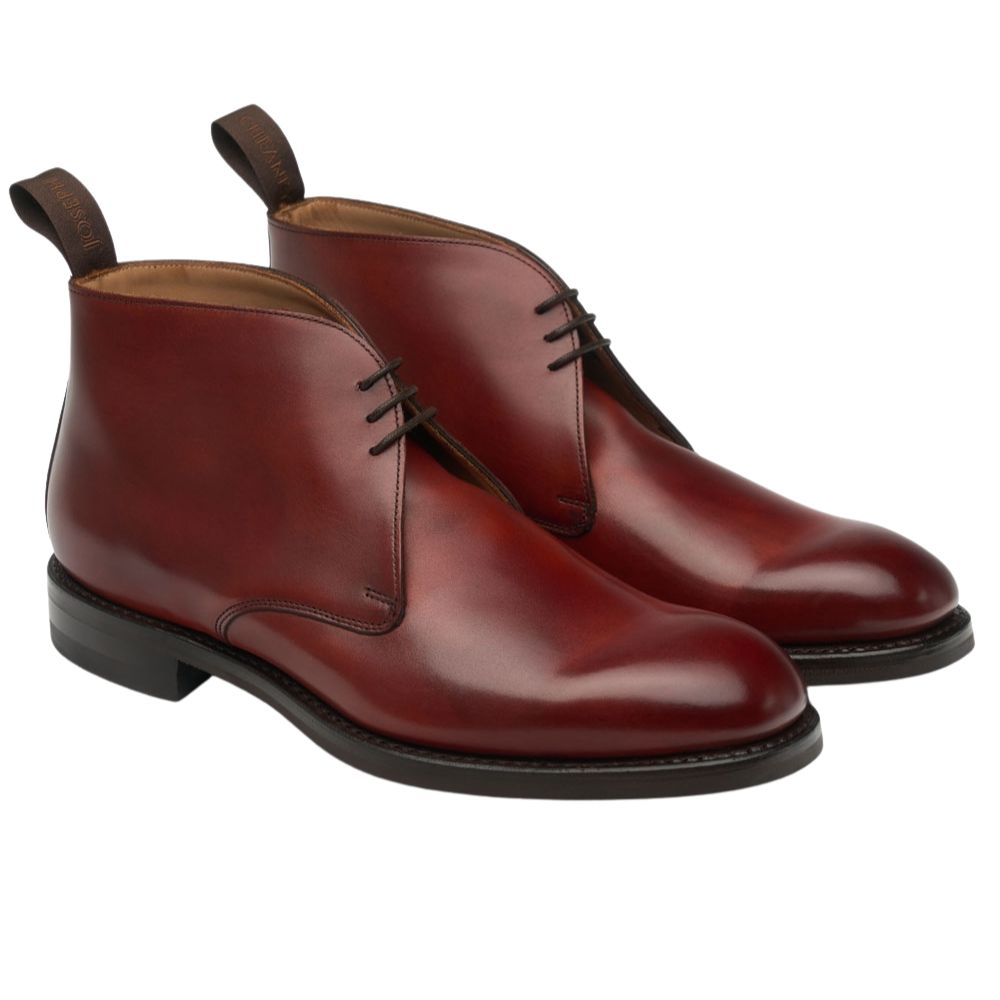
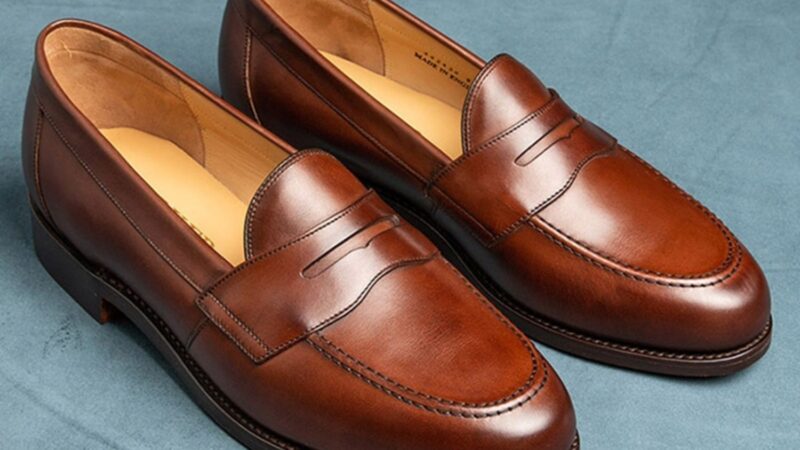
Loafers, Derby shoes, and Chelsea boots are the three workhorses of smart casual footwear. A suede loafer in tan or mid-brown is one of the most elegant smart casual choices available. A dark leather Chelsea boot works from chinos to dark jeans. A Derby shoe in brown or burgundy completes a blazer-and-chino combination with quiet authority.

Trainers can work at the more relaxed end, but only in a clean, minimal silhouette. Heavily branded athletic trainers do not belong in smart casual territory regardless of how expensive they are.

For the full guide to wearing loafers: How to Style Loafers for Men.

How to Build Outfits by Occasion

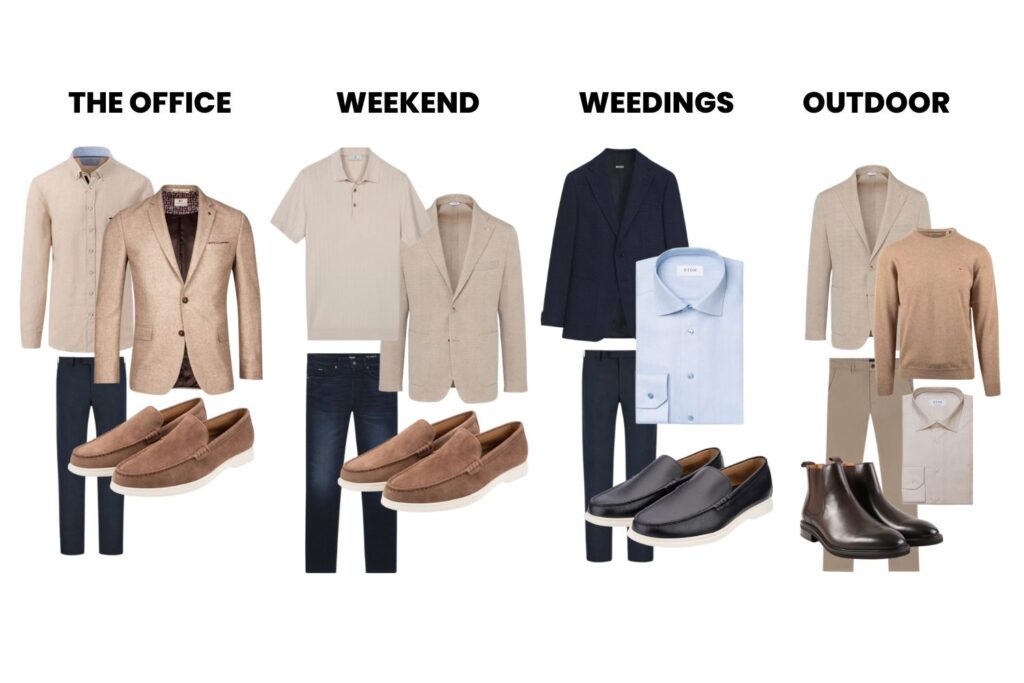
The Office (Business Casual)

The smart casual ask in most modern offices sits at the smarter end of the range. A blazer is not required, but its absence should be compensated for by everything else being well-chosen.

The reliable combination: Slim chinos in navy or grey + a quality Oxford cloth shirt, open collar + a leather Derby or loafer in dark brown. Add a blazer if the day requires it; remove it for a more relaxed register.

The knit option: Fine-gauge merino V-neck over a formal shirt and tie with tailored chinos. This reads as polished and considered – a strong choice for client-facing days when a full suit feels excessive.

Avoid: Jeans of any wash in a conservative professional environment. Trainers unless the office culture clearly supports them. T-shirts under blazers – the collar line matters.

Weekend Lunches and Social Occasions

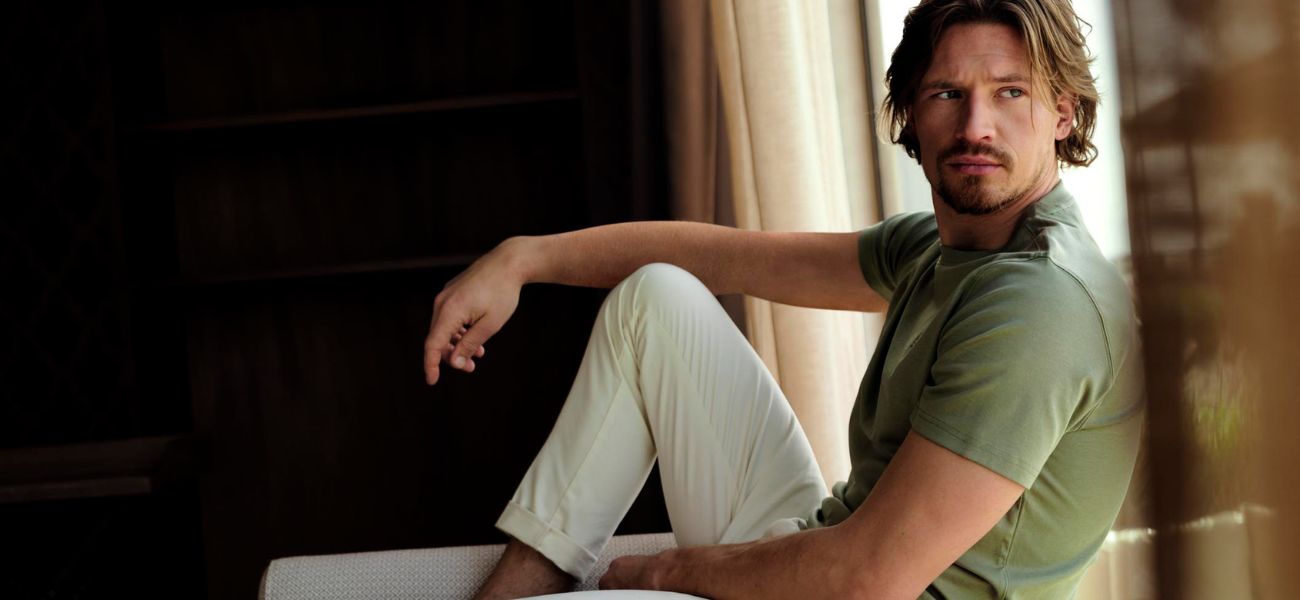
The most enjoyable smart casual context, and the one with the most room for personal expression. The standard is elevated, not formal: someone who opens the door and immediately thinks ‘he’s made an effort’ rather than ‘he’s overdressed.’

The reliable combination: Dark jeans + a quality shirt or polo shirt + a textured jacket or blazer + Chelsea boots or loafers. This combination works across restaurants, gallery openings, informal dinners, and everything in between.

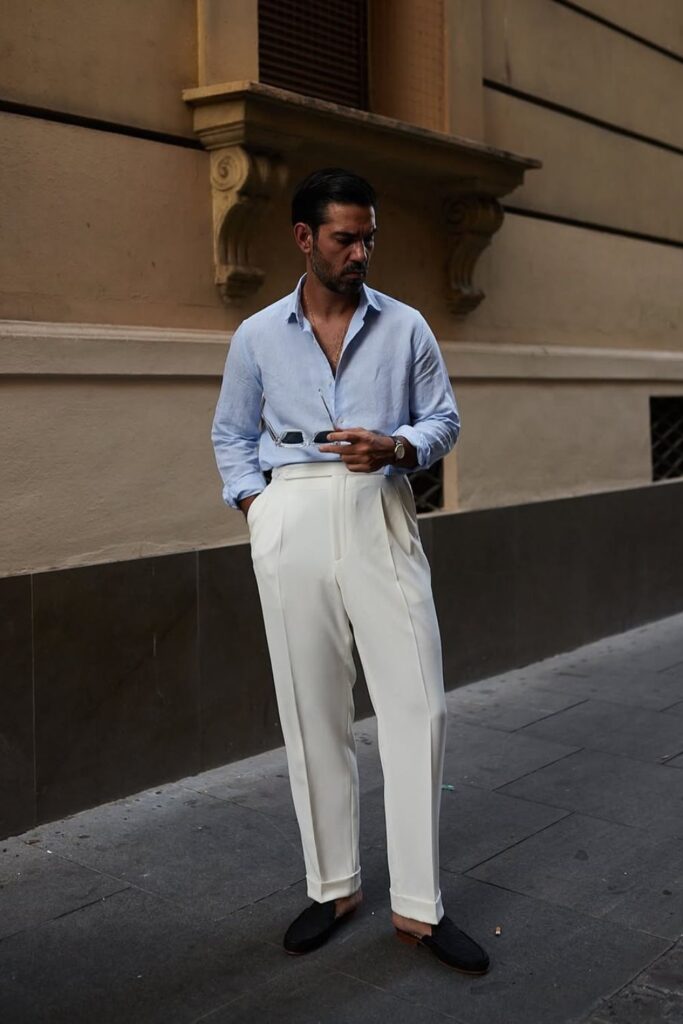
The elevated weekend option: Tailored chinos + an open-collar shirt + a merino crew neck + suede loafers. Relaxed enough for a weekend, considered enough for anywhere you might be seen.

Avoid: Polo shirts with shorts in any context that involves a table and an indoor setting. Trainers unless they are genuinely clean, minimal, and the rest of the outfit is doing the lifting.

recreate the look

Weddings (Smart Casual Dress Code)

When a wedding invitation says smart casual, it means the smarter end. The hosts have chosen not to ask for lounge suits, but they still expect an effort. This is not the occasion to interpret the dress code loosely.

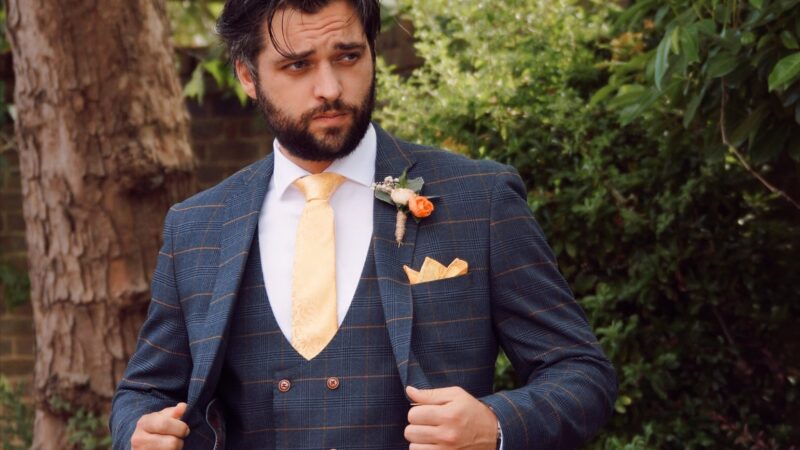
The reliable combination: A well-cut blazer in navy or a subtle check + tailored chinos or smart trousers + a quality shirt + leather loafers or Derby shoes. Pocket square optional but welcome.

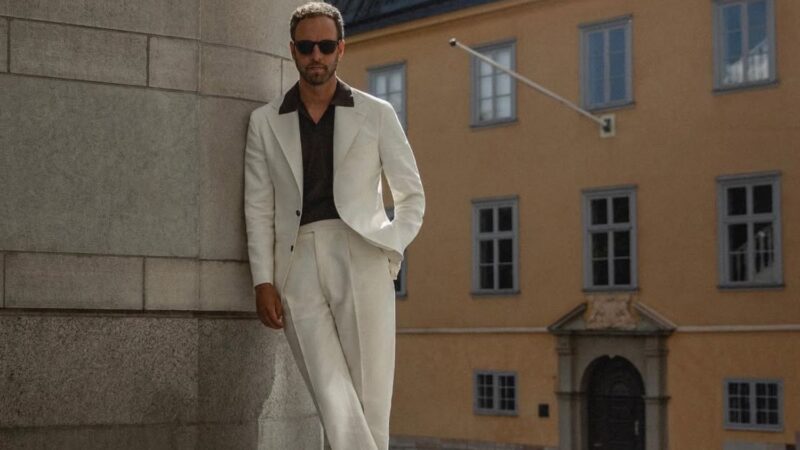
The suit alternative: A suit worn without a tie reads as smart casual done properly at a wedding – it is very rarely too dressed, and it is always appreciated.

Avoid: Jeans, however dark. Trainers. Open-collar shirts with no jacket. If you are unsure, go one level smarter than your instinct suggests – no one has ever left a wedding thinking they were overdressed.

Country and Outdoor Settings

Smart casual in the country has its own vocabulary: tweed, moleskin, suede, layers. The context allows for more texture and more pattern than the city, and the footwear naturally adapts toward heavier leather and rubber-soled options.

The reliable combination: A tweed or herringbone blazer or sports coat + moleskin or cord trousers + a quality shirt + a merino crew neck or lambswool jumper + suede brogues or leather boots.

The knitwear-forward option: A heavyweight lambswool or Shetland crew neck over a button-down shirt + cord or moleskin trousers + suede Derby or brogue. No jacket required when the knit is doing sufficient work.

Occasion The Reliable Combination The Alternative What to Avoid
The Office (Business Casual) Slim chinos in navy or grey, a quality Oxford cloth shirt worn open collar, and a leather Derby or loafer in dark brown. Add a blazer if the day requires it. Fine-gauge merino V-neck over a formal shirt and tie with tailored chinos. A strong choice for client-facing days when a full suit feels excessive. Jeans of any wash in a conservative environment. Trainers unless the office culture supports them. T-shirts under blazers.
Weekend Lunches & Social Occasions Dark jeans, a quality shirt or polo shirt, a textured jacket or blazer, and Chelsea boots or loafers. Works across restaurants, openings, and informal dinners. Tailored chinos, an open-collar shirt, a merino crew neck, and suede loafers. Relaxed enough for a weekend, considered enough for anywhere. Polo shirts with shorts in any indoor setting with a table. Trainers unless genuinely clean and minimal.
Weddings (Smart Casual Dress Code) A well-cut blazer in navy or a subtle check, tailored chinos or smart trousers, a quality shirt, and leather loafers or Derby shoes. Pocket square optional but welcome. A suit worn without a tie. It reads as smart casual done properly, is very rarely too dressed, and is always appreciated. Jeans, however dark. Trainers. Open-collar shirts with no jacket. When unsure, go one level smarter.
Country & Outdoor Settings A tweed or herringbone blazer or sports coat, moleskin or cord trousers, a quality shirt, a merino crew neck or lambswool jumper, and suede brogues or leather boots. A heavyweight lambswool or Shetland crew neck over a button-down shirt, cord or moleskin trousers, and a suede Derby or brogue. No jacket required when the knit is doing the work. -
The Smart Casual Guide for Men

Brand Recommendations

The brands worth knowing for smart casual dressing are those that understand fit, fabric, and the difference between relaxed and lazy. In the Menswear Online range, these deliver consistently across smart casual categories:

BOSS – Precise, continental, consistently well-cut. Particularly strong on chinos, smart casual shirts, and blazers that sit at the more tailored end of the smart casual range.

Ralph Lauren – The defining brand of American smart casual translated impeccably for the British wardrobe. The polo shirts and Oxford cloth shirts are benchmarks; the blazers and chinos carry the same authority.

Paul Smith – British smart casual with a personality. Paul Smith introduces colour, print, and a slightly more individual sensibility into pieces that remain entirely wearable. Strong across shirts, knitwear, and tailored separates.

Lacoste – The polo shirt authority. In quality pique and fine-knit constructions, Lacoste’s polo shirts represent exceptional value at the premium end of the market and anchor the smart casual wardrobe with an ease no other brand quite replicates.

Canali – For the occasions when smart casual verges on smart. Canali’s unstructured blazers and tailored separates in quality Italian fabrics represent the upper end of the smart casual range.

Brand Why It Earns a Place in Smart Casual
BOSS Precise, continental, consistently well-cut. Particularly strong on chinos, smart casual shirts, and blazers that sit at the more tailored end of the smart casual range.
Ralph Lauren The defining brand of American smart casual, translated impeccably for the British wardrobe. The polo shirts and Oxford cloth shirts are benchmarks; the blazers and chinos carry the same authority.
Paul Smith British smart casual with a personality. Paul Smith introduces colour, print, and a slightly more individual sensibility into pieces that remain entirely wearable. Strong across shirts, knitwear, and tailored separates.
Lacoste The polo shirt authority. In quality pique and fine-knit constructions, Lacoste's polo shirts represent exceptional value at the premium end of the market and anchor the smart casual wardrobe with an ease no other brand quite replicates.
Canali For the occasions when smart casual verges on smart. Canali's unstructured blazers and tailored separates in quality Italian fabrics represent the upper end of the smart casual range.

What to Avoid

The smart casual mistakes that recur most reliably are not about specific pieces – they are about register. Dressing within the right range requires knowing what sits outside it.

Trainers that belong in sport, not style. Running trainers, chunky athletic footwear, and heavily branded sports shoes are not smart casual regardless of their price point. The shoe anchors the outfit’s register; a sports shoe drags everything above it toward casual.

Ill-fitting trousers. Wide-leg chinos, baggy jeans, or any trouser with excess fabric pooling over the shoe are the fastest route to looking underdressed. Fit is not negotiable in smart casual – it is what makes the difference between dressed and merely clothed.

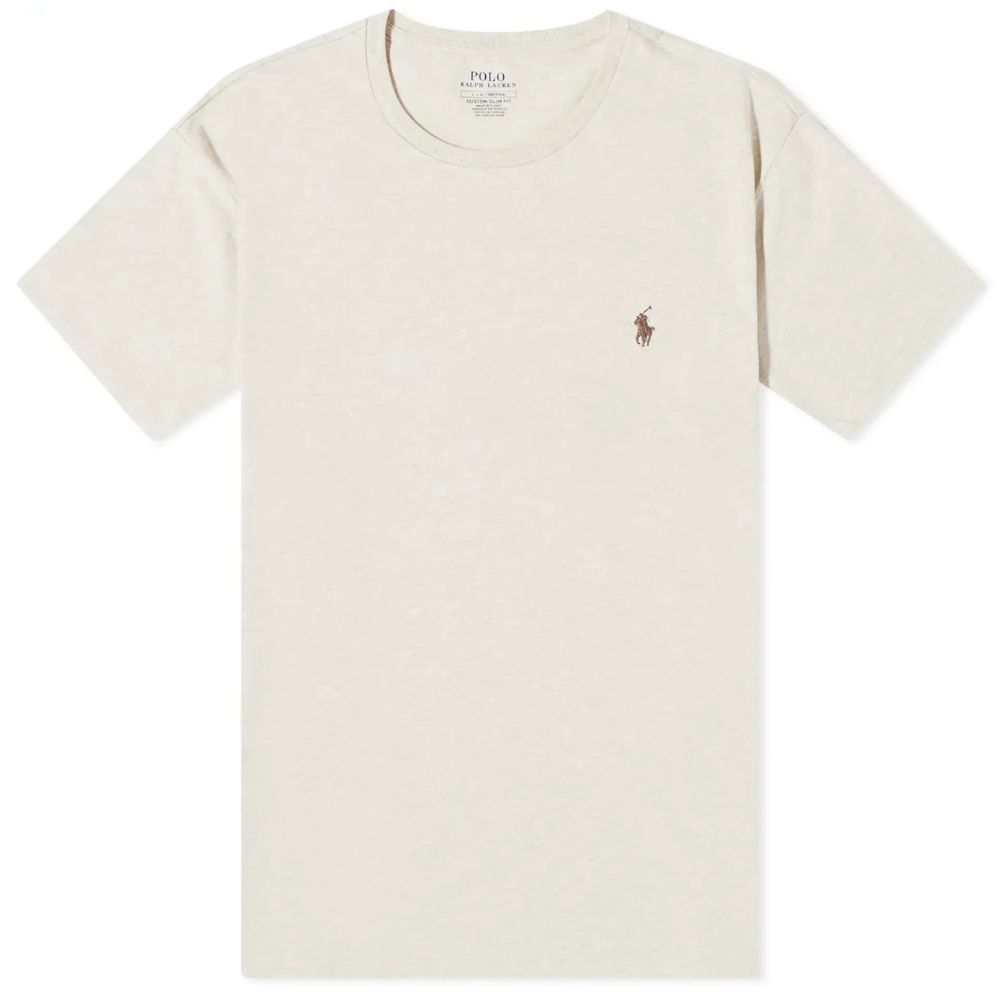
T-shirts as a foundation in smart contexts. A T-shirt under a blazer is a style that requires very specific conditions to work – the right T-shirt, the right blazer, the right occasion. In most smart casual contexts, a collar makes the crucial difference.

Matching too deliberately. A belt that matches the shoes that match the blazer buttons that match the watch strap reads as effort, not ease. Smart casual should look uncontrived. Cohesion comes from colour and tone, not from perfect co-ordination.

Ignoring the shoes. The most common mistake in smart casual dressing is putting thought into everything above the ankle and none into what sits below it. The shoe finishes the outfit. It also reveals whether the outfit was thought about at all.

For five practical ways to lift the overall effect: 5 Easy Ways to Elevate Your Style.

The Mistake Why It Undermines the Look
Trainers that belong in sport, not style Running trainers, chunky athletic footwear, and heavily branded sports shoes are not smart casual regardless of their price point. The shoe anchors the outfit's register; a sports shoe drags everything above it toward casual.
Ill-fitting trousers Wide-leg chinos, baggy jeans, or any trouser with excess fabric pooling over the shoe are the fastest route to looking underdressed. Fit is not negotiable in smart casual; it is what makes the difference between dressed and merely clothed.
T-shirts as a foundation in smart contexts A T-shirt under a blazer is a style that requires very specific conditions to work: the right T-shirt, the right blazer, the right occasion. In most smart casual contexts, a collar makes the crucial difference.
Matching too deliberately A belt that matches the shoes that match the blazer buttons that match the watch strap reads as effort, not ease. Smart casual should look uncontrived. Cohesion comes from colour and tone, not from perfect co-ordination.
Ignoring the shoes The most common mistake in smart casual dressing is putting thought into everything above the ankle and none into what sits below it. The shoe finishes the outfit. It also reveals whether the outfit was thought about at all.

Colour and the Smart Casual Wardrobe

Smart casual dressing is not the place for a maximalist approach to colour. The palette that works best is built on a core of versatile neutrals – navy, grey, white, stone, camel – with selective additions of colour where they earn their place.

The navy blazer is the anchor of the smart casual wardrobe precisely because it sits alongside almost every other colour without conflict. Navy chinos, a white or pale blue shirt, tan loafers – this is the combination that essentially never fails.

For T-shirts, colour matters more than most men appreciate. The right tone against the right skin tone and alongside the right trouser makes an outfit; the wrong one makes everything look slightly off. Our Best T-Shirt Colours for Smart Casual Dressing guide covers the logic in detail.

Introduce pattern through texture rather than print where possible – a subtle herringbone blazer, a micro-check shirt, a cable-knit jumper. These add interest without requiring any of the surrounding pieces to accommodate them.

recreate the look

The Smart Casual Wardrobe: A Starting Point

If you are building from scratch, or reassessing what you have, these are the pieces to prioritise. Own one excellent version of each before you buy a second of anything.

  • A navy blazer or unstructured jacket in a quality cloth
  • Two pairs of chinos – one in navy, one in stone or khaki
  • A white Oxford cloth shirt and a pale blue poplin shirt
  • Two quality polo shirts in solid colours
  • Dark-wash slim jeans
  • A merino crew neck in navy or charcoal
  • Tan suede loafers or dark leather Chelsea boots
  • A brown leather Derby shoe for the smarter end of the range


These pieces combine into a substantial number of outfits. The returns from adding a ninth or tenth piece of equal quality are greater than the returns from buying twice as many pieces of lesser quality.

For a deeper look at what’s influencing smart casual dressing at the moment: 25 Best Smart Casual Men’s Style Influencers.

FAQS: SMART CASUAL

Smart casual is a dress code that sits between business formal and genuinely casual. It requires intentional, well-fitted clothing – typically a combination of a blazer or quality knit, tailored chinos or smart trousers, a shirt or polo shirt, and leather shoes or clean boots. It does not require a tie or a suit, but it does require that every piece has been chosen with care. Both are natural fibres that improve with careful use. Avoid acrylic as the primary fibre.

Dark-wash jeans in a slim or straight cut can work in smart casual dressing, at the more relaxed end of the range. The rest of the outfit needs to compensate with structure: a blazer, a quality shirt, and leather shoes or Chelsea boots. Light-wash, distressed, or wide-leg jeans do not sit within the smart casual register.

Leather loafers, Derby shoes, and Chelsea boots are the strongest smart casual choices. A suede loafer in tan or mid-brown is particularly versatile. Trainers can work at the relaxed end if they are clean and minimal in design. Athletic or heavily branded trainers are not appropriate for smart casual regardless of price.

Yes – a quality polo shirt in pique cotton or fine merino is an excellent smart casual choice. It works under a blazer, with chinos, or as the centrepiece of a more relaxed outfit. Fit matters: the polo should be well-fitted, never baggy or boxy, and the collar should sit flat. See our full guide: 9 Polo Shirt Style Tips.

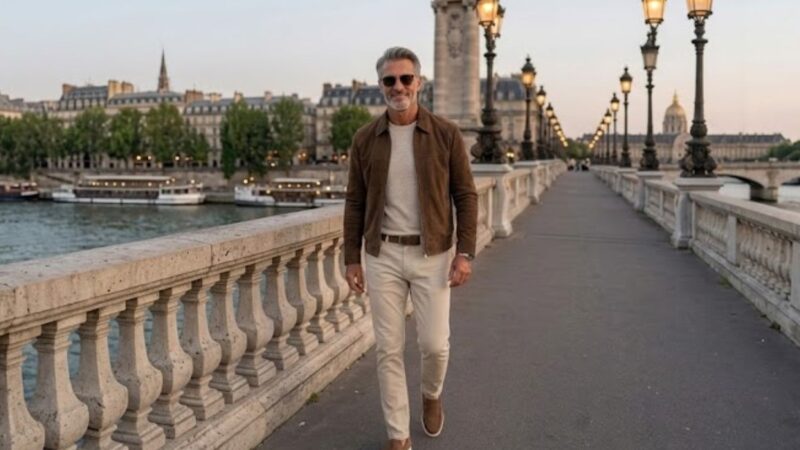
The same principles apply, with greater emphasis on fit, fabric, and restraint over trend. Well-cut chinos, quality knitwear, a navy blazer, and leather loafers or Derby shoes represent smart casual dressing at its most assured for men over 40. The goal is to look elevated and at ease – not fashion-forward, not underdressed.

A suit worn without a tie and with a casual shirt sits comfortably within smart casual territory, particularly at the smarter end – a wedding, an occasion event, or a business meeting in a creative environment. The suit itself is not too formal; it is how it is worn that determines the register.

a few final words

Smart casual is the dress code you will encounter most often in the second half of your professional and social life, and the one most worth understanding properly. It is not a compromise between formal and casual – it is a distinct, considered way of dressing that rewards intentionality and punishes indifference.

The pieces are relatively simple: a well-cut blazer, tailored chinos, a quality shirt or polo, and the right shoe. The judgment is in how they are assembled – and in knowing which occasion calls for which combination.

Get that right and smart casual becomes the easiest part of the wardrobe to manage. Everything fits together. Everything earns its place. And the question of what to wear stops being a problem and starts being a pleasurable decision.

The Smart Casual Guide for Men 2
The Smart Casual Guide for Men 3
Yelyzaveta

Currently studying Marketing. I love spending time reading books, savouring coffee, and exploring new places.

No Comments

Post A Comment