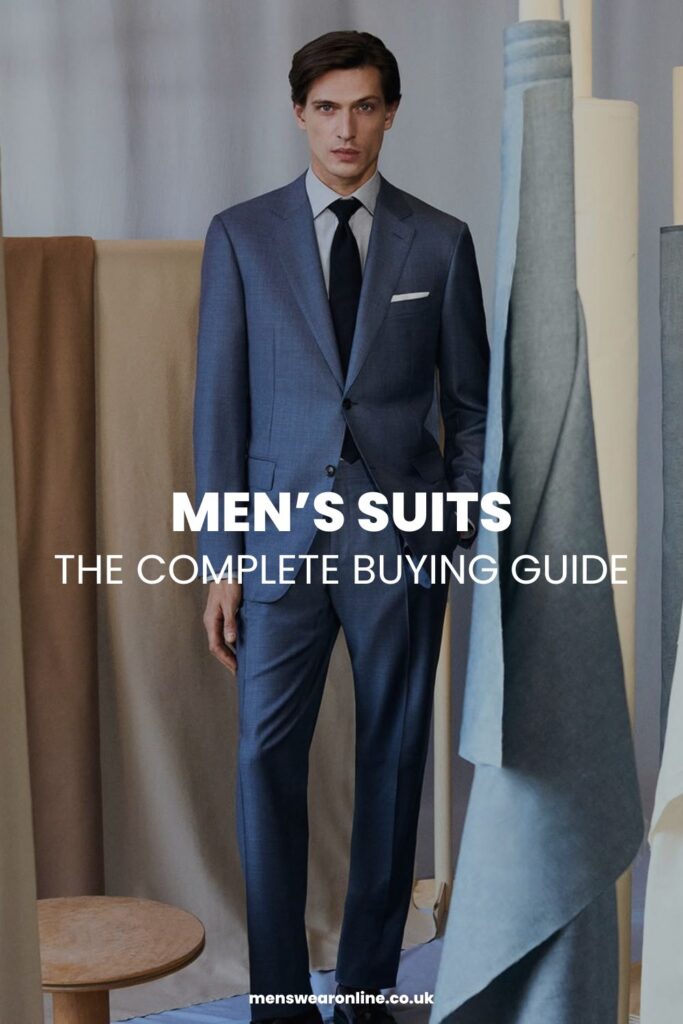
20 May Men’s Suits: The Complete Buying Guide
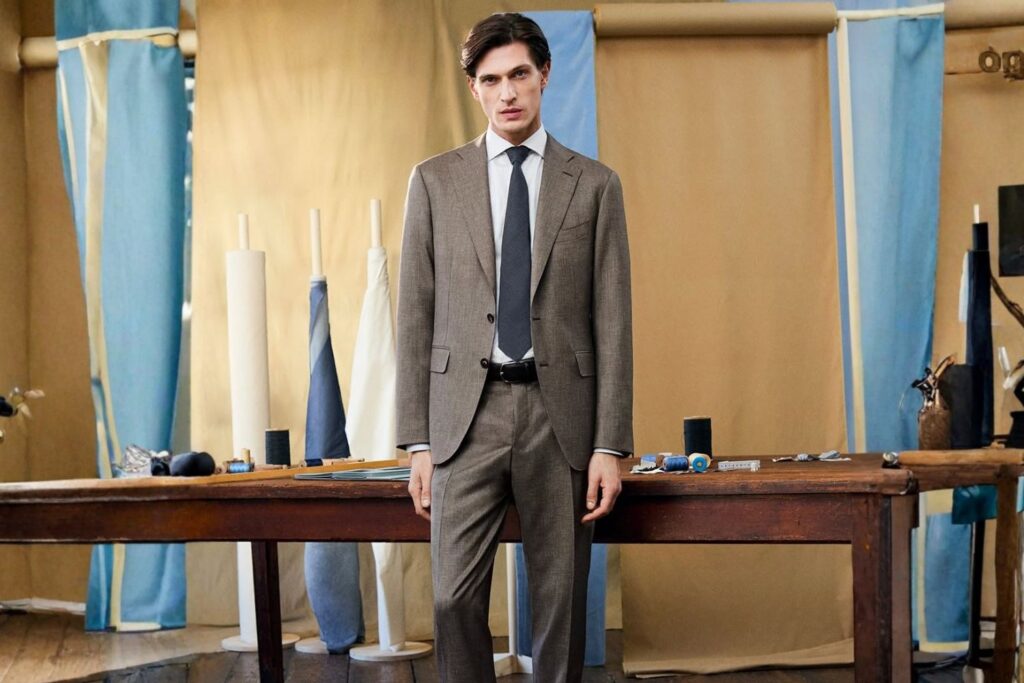
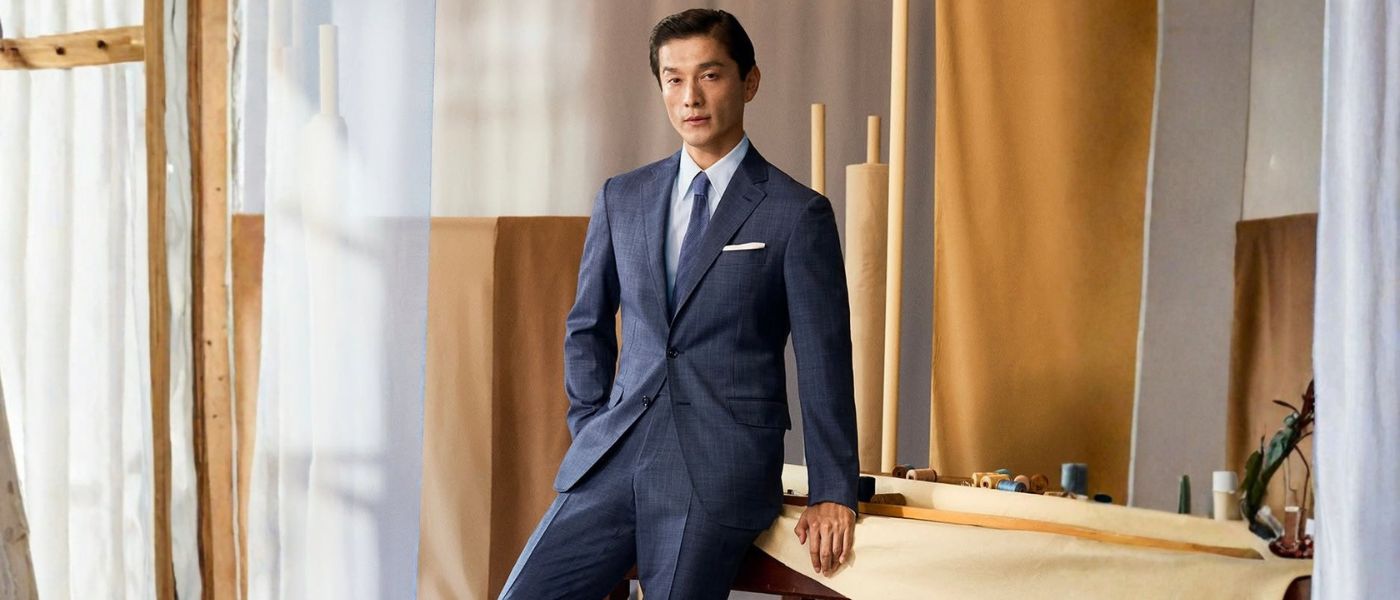
A well-fitted suit is one of the most powerful things a man can wear. Whether you’re dressing for the boardroom, walking down the aisle, or attending a formal occasion, the right suit signals confidence, taste, and attention to detail. But with so much choice – fabric, fit, cut, brand, price point – knowing where to start can feel overwhelming.
This guide covers everything: suit anatomy, how fabric affects performance, the philosophy of fit, when bespoke makes sense, and how to look after the suit you invest in. We’ve written it to help you walk into one of our stores – in Windsor, Guildford, or Horsham – already informed, so our fitting specialists can focus on making it perfect for you.
1. Suit Anatomy: Understanding What You’re Buying
Before you shop, it helps to know what you’re looking at. A suit has dozens of components, each of which affects how it looks and fits.
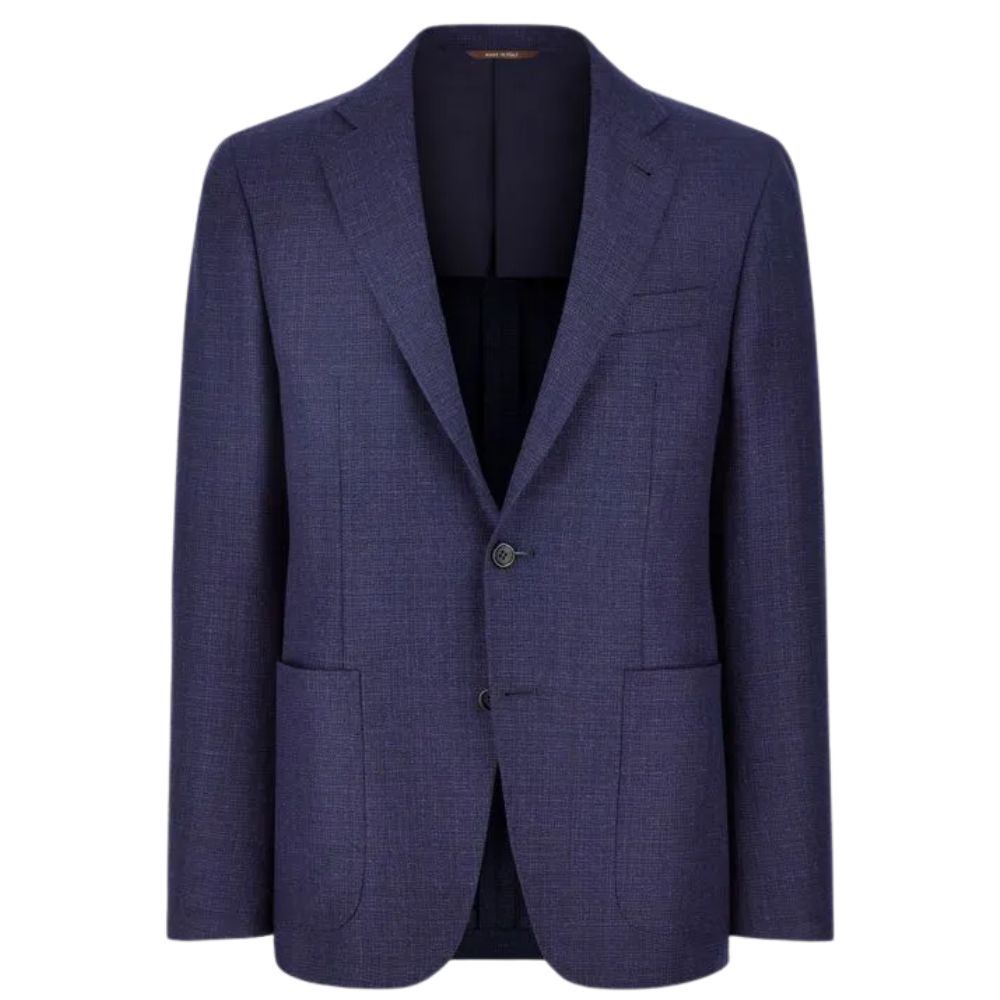
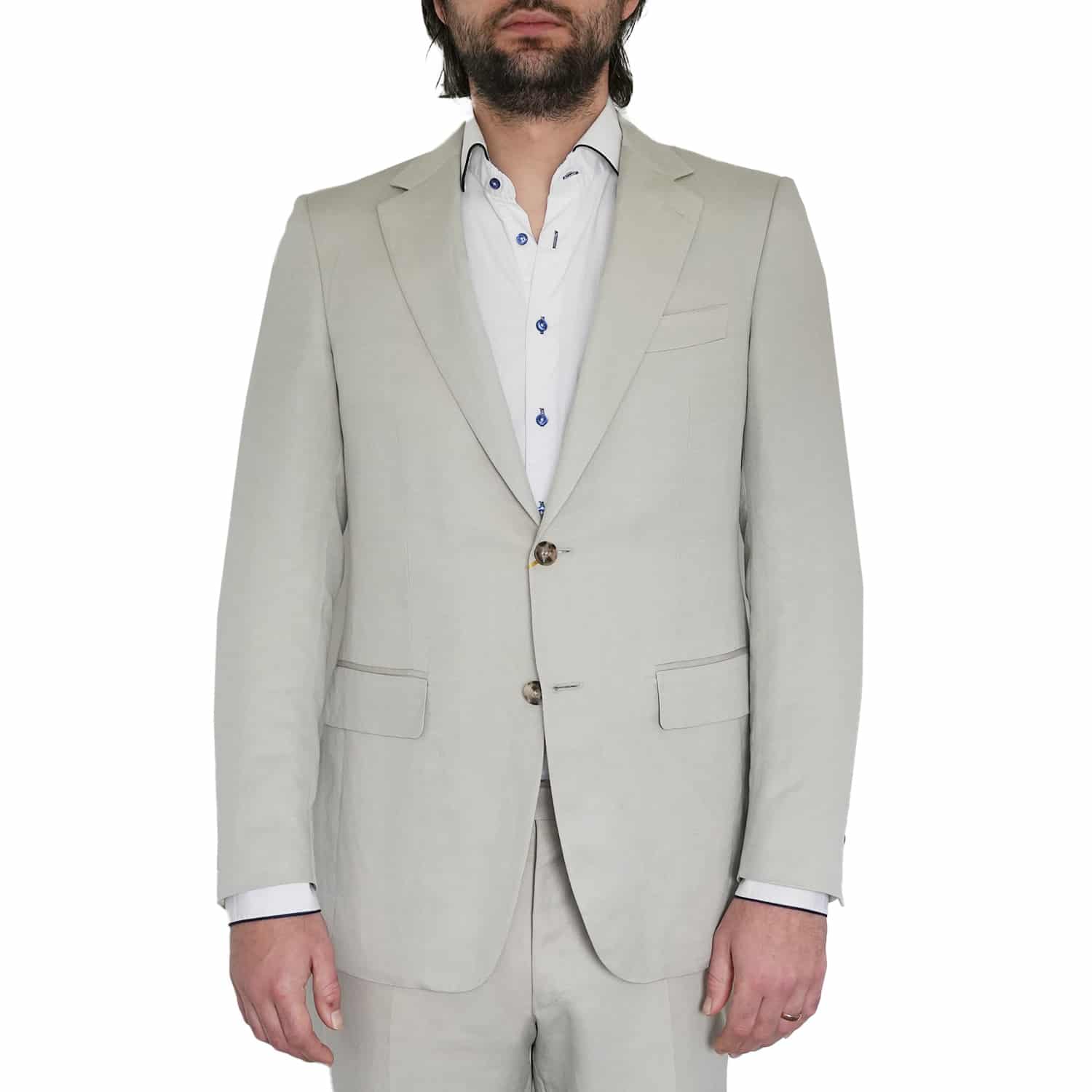
The Jacket
Lapels are the folded flaps below the collar. There are three types:
- Notch lapel – the most common, works for business and smart casual
- Peak lapel – wider, more dramatic, ideal for weddings and black tie
- Shawl lapel – rounded, typically reserved for dinner suits
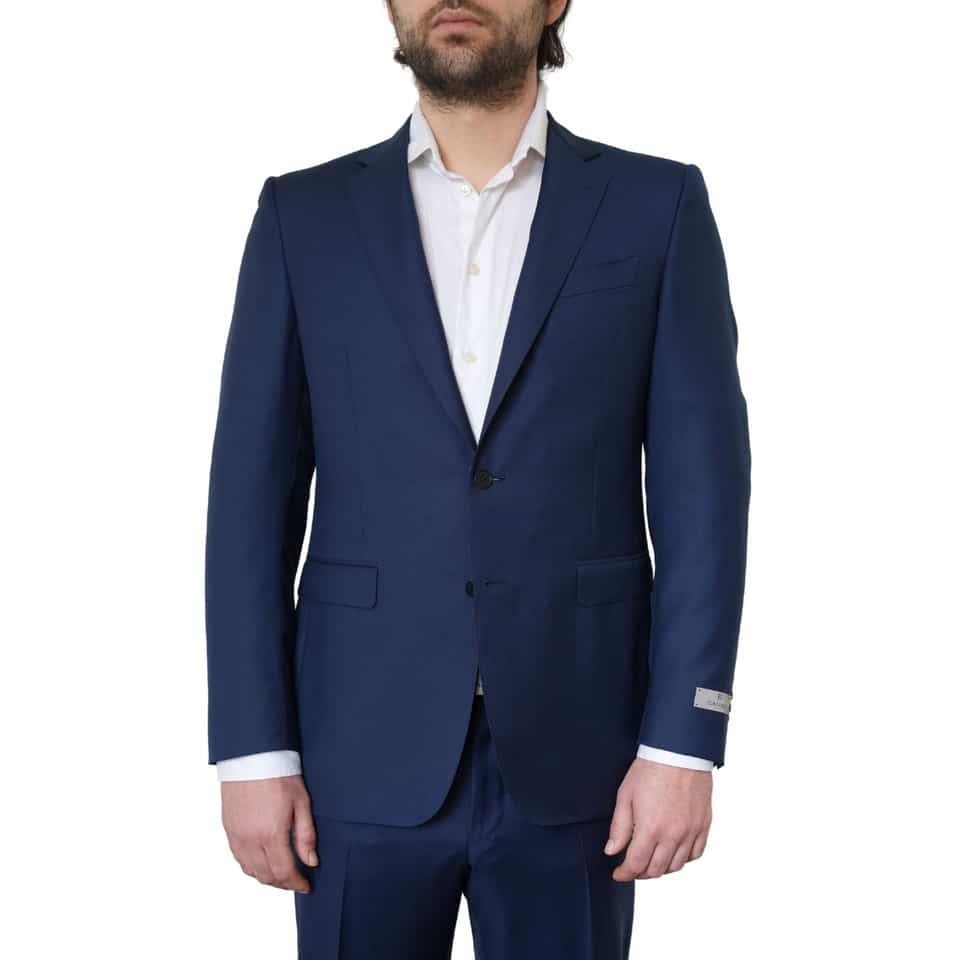
Buttons: Single-breasted suits typically have one, two, or three buttons. Two-button is the most versatile. Three-button is more traditional. Single-button is sleek and formal. Double-breasted suits have four or six buttons and make a bold statement.
Vents are the slits at the back hem. A single vent is common in American and entry-level suits. Double vents (two side vents) offer better drape and movement – the mark of a well-constructed jacket.
Pockets: Flap pockets are standard. Jetted (besom) pockets – flush with no flap – are more formal. Ticket pockets are a small additional pocket above the right hip, a classic English tailoring detail.
Lining: A fully lined jacket insulates and helps the suit glide on and off. Half-lined jackets are better for warmer climates. Unlined jackets (often called ‘deconstructed’) are the lightest option but less structured.
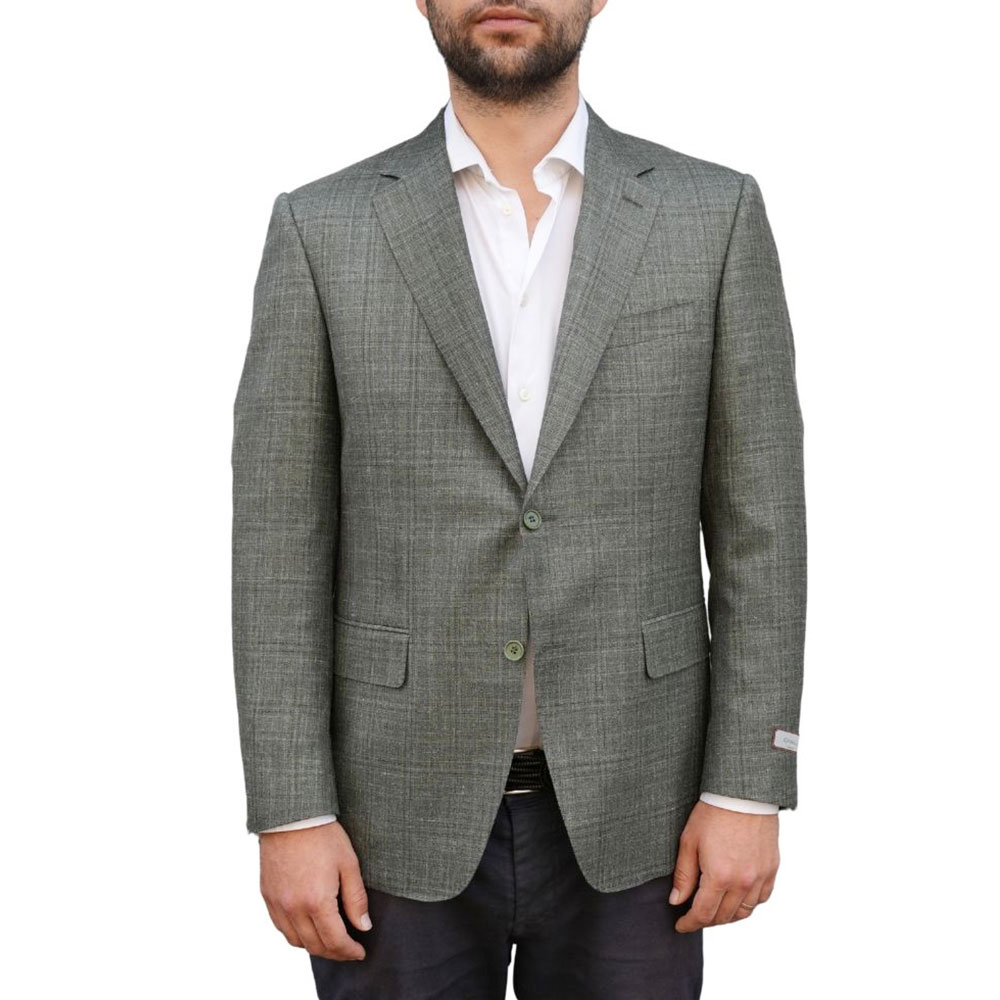
CANALI Silk, Wool and Linen Green Check Jacket
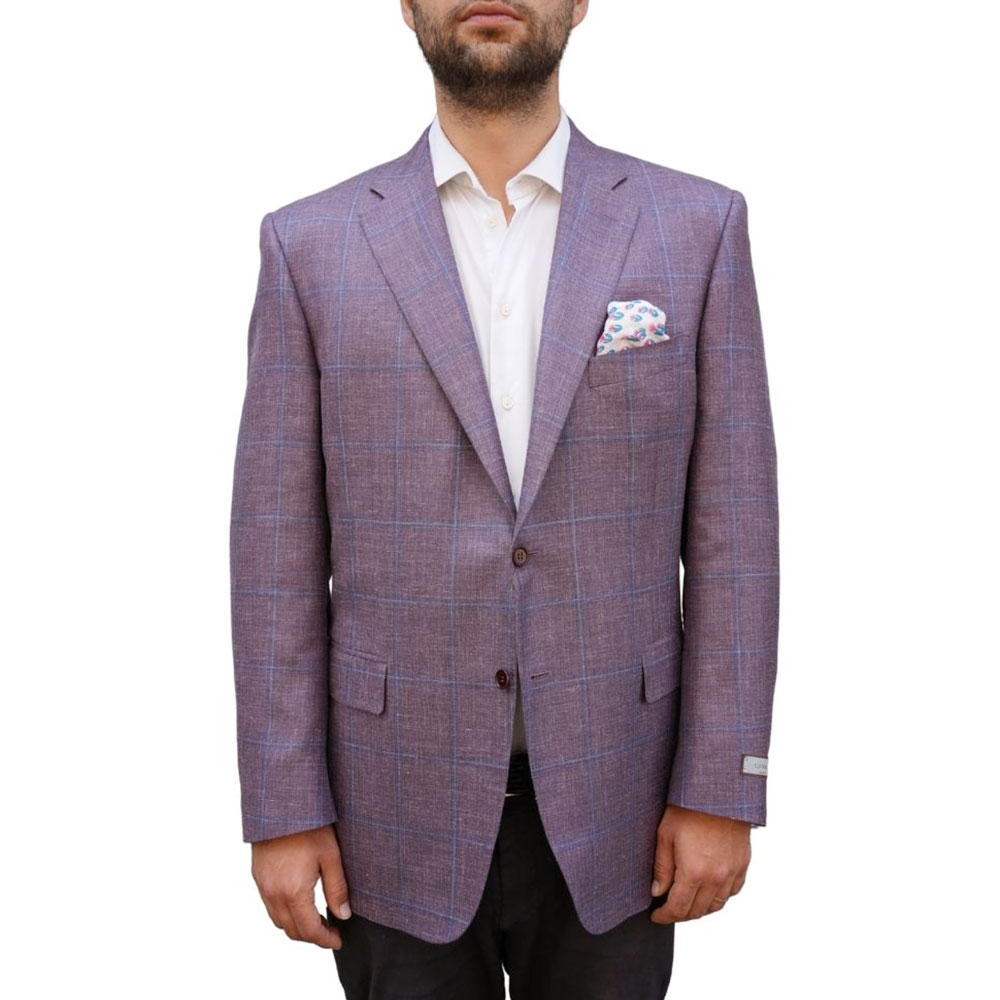
CANALI Silk, Wool and Linen Light Beige and Blue Check Jacket
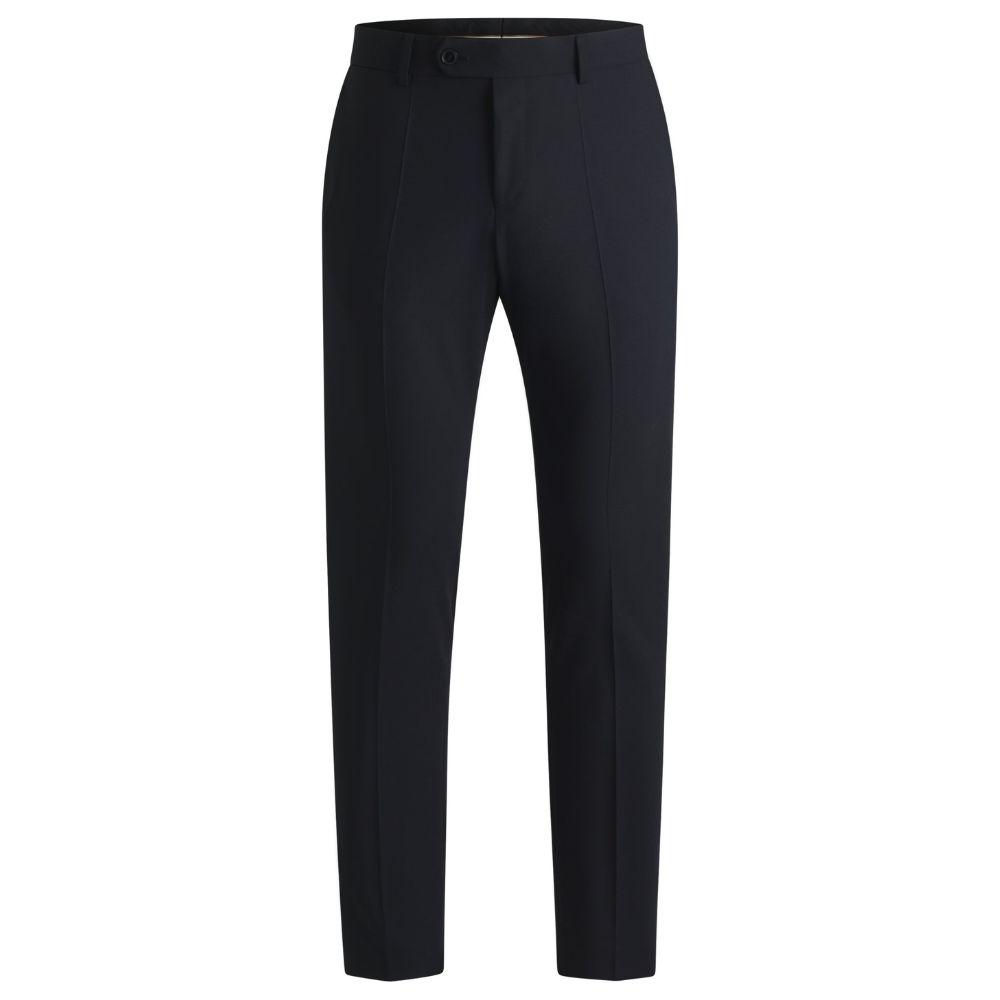
The Trousers
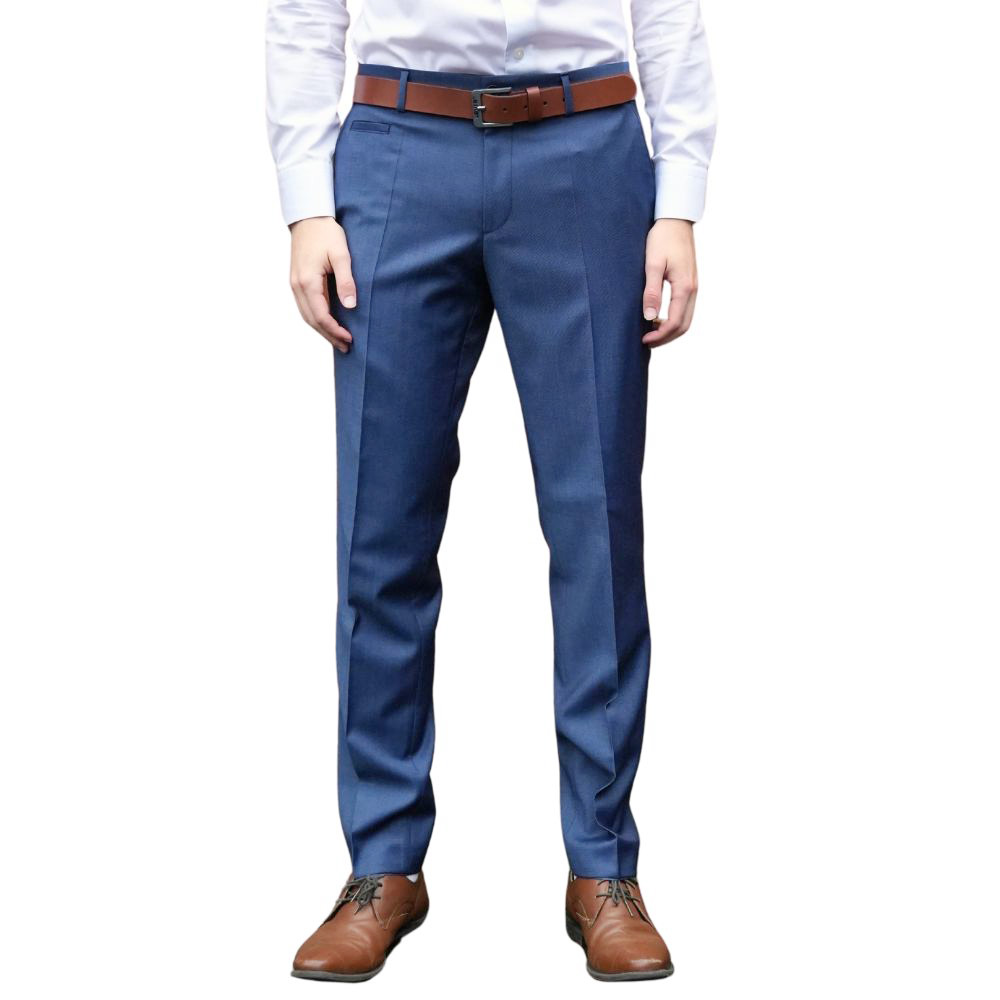
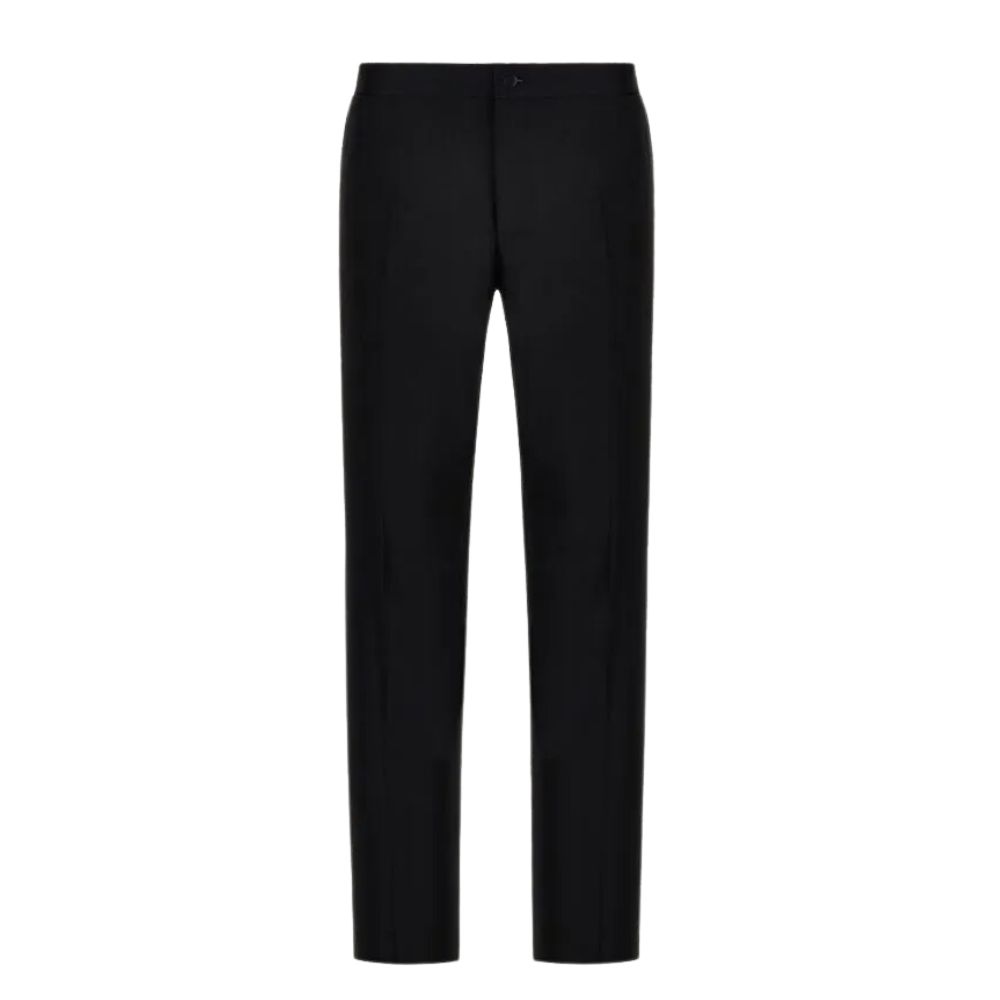
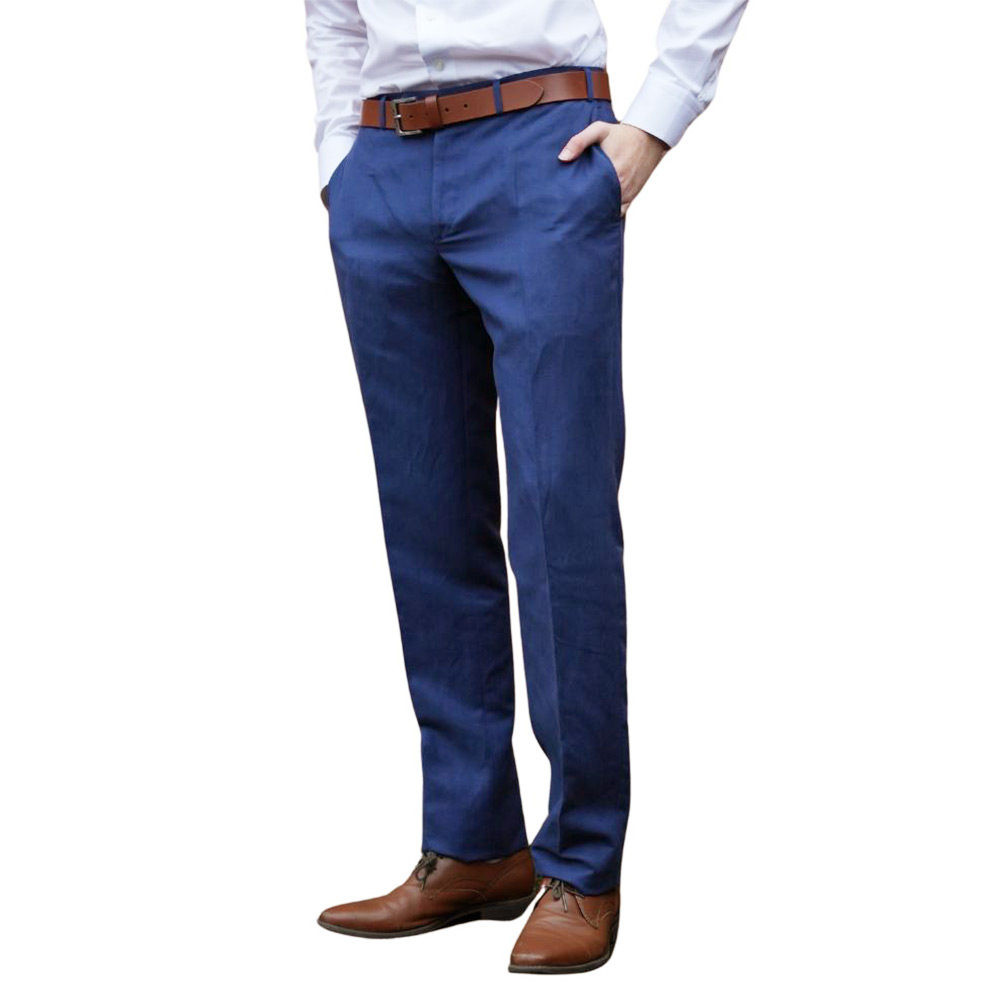
Rise refers to the distance from the crotch seam to the waistband. Mid-rise trousers sit at the natural waist and offer the most flattering line. Low-rise can look dated and uncomfortable over time.
Pleats vs flat front: Pleated trousers offer more room and a classic silhouette. Flat front trousers are cleaner and more modern.
Break is how much the trouser leg rests on your shoe. No break (just touching) is modern and sharp. A half break is versatile. A full break is traditional.
Turn-ups (cuffs): Add weight to the hem, helping the trouser hang cleanly. More formal; particularly suited to heavier fabrics.
2. Fabric Guide: What Your Suit Is Made Of Matters
Fabric determines how your suit looks, breathes, travels, and lasts. Don’t overlook it.
Wool
Wool is the gold standard. It breathes, it drapes, it resists creasing, and it recovers its shape after being worn. Almost all premium suits are wool or wool-blend.
- Super 100s–120s: The everyday workhorse. Durable, holds its shape well, suitable for regular wear.
- Super 130s–150s: Finer yarns, softer handle, more lustrous. Better for occasions than daily office wear.
- Super 150s+: Exceptionally fine. Beautiful for special occasions; less hardwearing day to day.
Wool Flannel
Heavier, brushed wool with a matte finish. Excellent for autumn and winter. Comfortable, warm, and slightly relaxed in tone – works beautifully for British countryside weddings or business.
Tweed
A robust, textured wool fabric. Associated with heritage British tailoring. Herringbone and houndstooth patterns are classic. Wear it for autumn weddings, country events, and smart-casual occasions.
Linen
Light, breathable, and ideal for summer. Linen wrinkles heavily – but many men wear that as part of its charm. Pure linen can look crumpled by lunchtime; linen-wool blends offer the best of both.
Mohair
A wool-mohair blend produces a distinctive sheen, making it a traditional choice for morning suits and weddings. It holds a crease exceptionally well.
Polyester & Synthetic Blends
Much cheaper, less breathable, and prone to shining at the elbows and seat over time. A small percentage of polyester in a wool-blend can add durability; a suit that’s mostly synthetic will look and feel like it.
Suit fabric guide
| Fabric | Best season | Warmth | Formality |
|---|---|---|---|
|
Wool
Super 100–150s
year-round |
All year |
|
|
|
Flannel
Brushed wool
matte finish |
Autumn / Winter |
|
|
|
Linen
Breathable
natural crisp |
Spring / Summer |
|
|
|
Tweed
Textured wool
heritage weave |
Autumn / Winter |
|
|
|
Mohair
Lustrous blend
holds crease |
All year (formal) |
|
|
Not sure which fabric suits your occasion or climate? Our specialists at Warwicks Windsor, Weir Rhodes Guildford, and Wakefields Horsham will help you choose the right cloth for the right event. Book a free fitting.
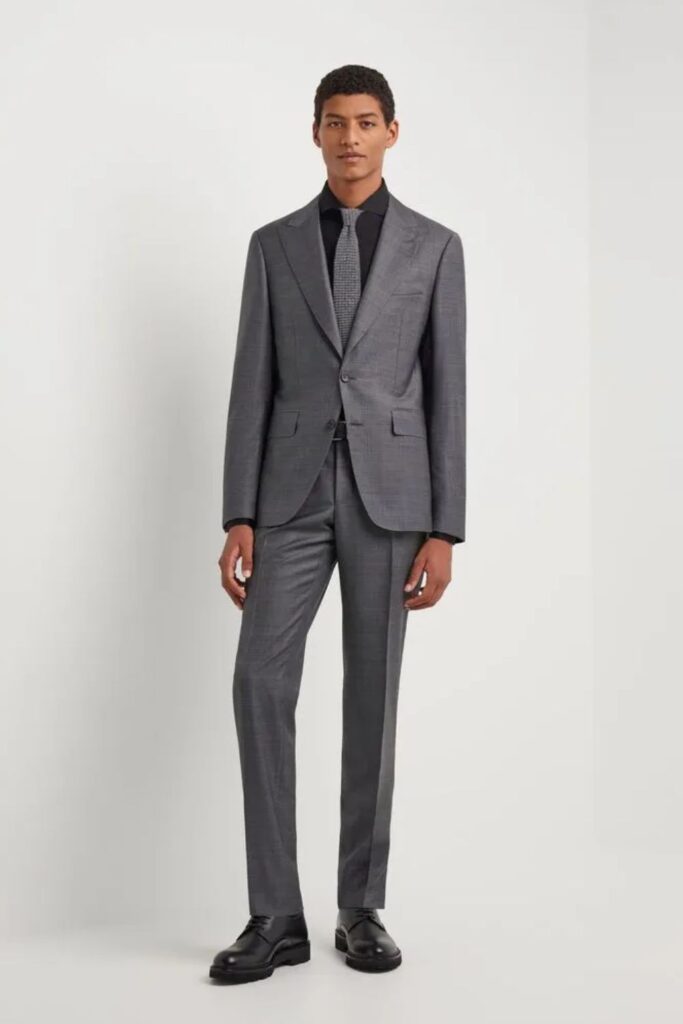
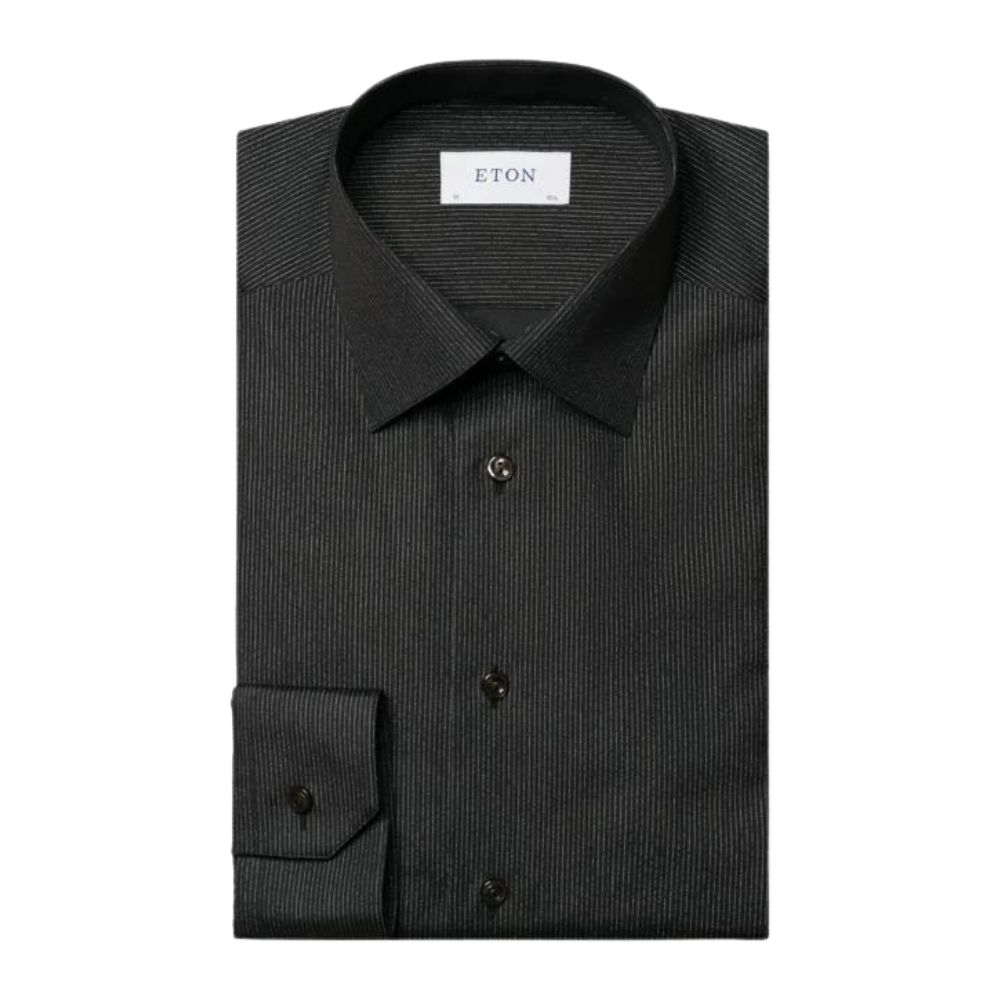
recreate the looks
3. The Fit Philosophy: Slim, Regular & Tailored Explained
Fit is everything. A £500 suit that fits perfectly will look better than a £2,000 suit that doesn’t.
Regular Fit
More room through the chest, waist, and seat. Comfortable for larger builds or those who prefer ease of movement. Can look boxy if the suit has no suppression at the waist.
Tailored Fit
The middle ground – and the most popular choice. Follows the natural shape of the body with a gentle waist suppression, without being tight. Works for most body types.
Slim Fit
Closer to the body throughout. Works best for lean, athletic builds. Can restrict movement if cut too tight or worn on a broader frame.
What Actually Matters Most
No label – slim, regular, tailored – tells the whole story. What matters is:
Shoulders: The seam must sit exactly at the edge of your shoulder. Nothing else can be altered properly if this is wrong.
Chest: You should be able to slip a flat hand inside the jacket, but no more.
Waist suppression: The jacket should follow your torso without pulling.
Jacket length: The hem should cover your seat and the sleeves should show approximately 1.5cm of shirt cuff.
Trouser seat: No pulling, no excess fabric.
Trouser length: Agreed with your tailor based on the break you want.
Most off-the-peg suits need some alteration to fit correctly. That’s entirely normal.
Recreate the looks
4. Off the Peg vs Made to Measure vs Bespoke
Understanding the options helps you choose the right approach for your budget and occasion.
Off the Peg (Ready to Wear)
A suit made to a standard size pattern, available immediately. The most affordable option. Suits most men after minor alterations (shortening sleeves, taking in the waist).
Best for: Everyday work suits, first suits, buyers on a budget, those with standard proportions.
Made to Measure
Your measurements are taken and applied to an existing base pattern, which is then adjusted before the suit is cut and constructed. You choose the fabric, lining, buttons, and details. Lead time is typically 6–10 weeks.
Best for: Men who struggle with standard sizing, grooms, those wanting something personal without full bespoke cost.
Bespoke
A pattern is drafted from scratch to your measurements. Multiple fittings are involved. The most labour-intensive and expensive option – but the results are extraordinary.
Best for: Special occasions, discerning buyers who wear suits regularly, men with non-standard proportions.
Choosing how to buy your suit
+ alterations
applied to base pattern
multiple fittings
5. Work Suits vs Wedding Suits: Key Differences
The suit you wear to the office and the suit you wear to the altar have different jobs. Here’s how to think about each.
The Work Suit
A work suit needs to earn its keep across weeks, months, and years of wear. Key priorities:
- Durability: Choose Super 100s–120s wool. Tougher weaves like twill or fresco hold up to regular wear.
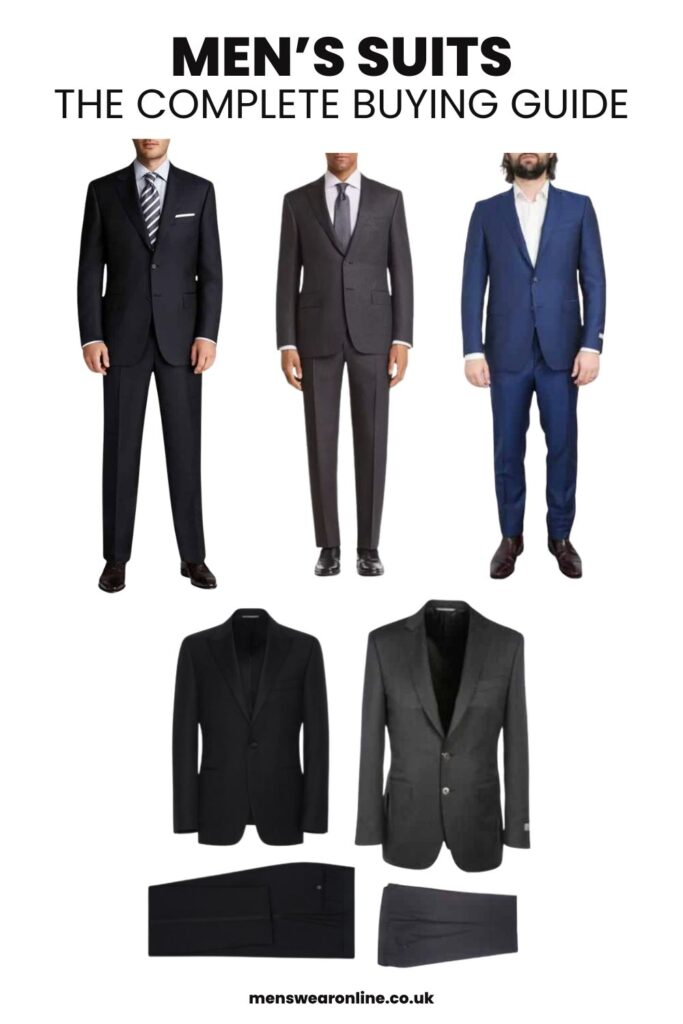
- Colour: Navy and mid-grey are the most versatile. Both work with a wide range of shirts and ties.
- Pattern: Solid colours or subtle textures are safest for most professional environments. Fine chalk stripe or pin-stripe adds formality.
- Cut: Tailored or regular fit works well for office environments.
- Practicality: Consider internal pockets, sturdy button attachment, and quality lining.
Related: What to Wear to a Job Interview The Premium Menswear Guide
The Wedding Suit
A wedding suit is worn for a specific day – meaning durability matters less and appearance matters most. Key priorities:
- Fabric: Finer wools, mohair blends, or a quality linen suit for summer weddings.
- Colour: Light grey, morning blue, and navy are perennially popular for grooms. Darker tones for guests.
- Style: Peak lapels, double-breasted cuts, and more expressive details are appropriate here.
- Occasion type: A church wedding calls for more formality than a barn conversion in July. A destination wedding in Italy needs a lighter touch than a Scottish castle in November.
- Coordination: If you’re a groom, consider how your suit works with your wedding party’s attire.
Related reading:
Work suits vs wedding suits
Different jobs. Different priorities. Same non-negotiable: the fit.
Work suit
Built to earn its keep
Wedding suit
Built for one perfect day
weaves that last for years
appearance over longevity
pairs with most shirts
for summer celebrations
Practical internal pockets
Waistcoat for formality
full working day
flannel for winter church
shirts, ties & accessories
party colours & theme
Both suit types need the right fit — the one rule that never changes, whatever the occasion.
6. Suit Styles & Occasions
Business / Lounge Suit
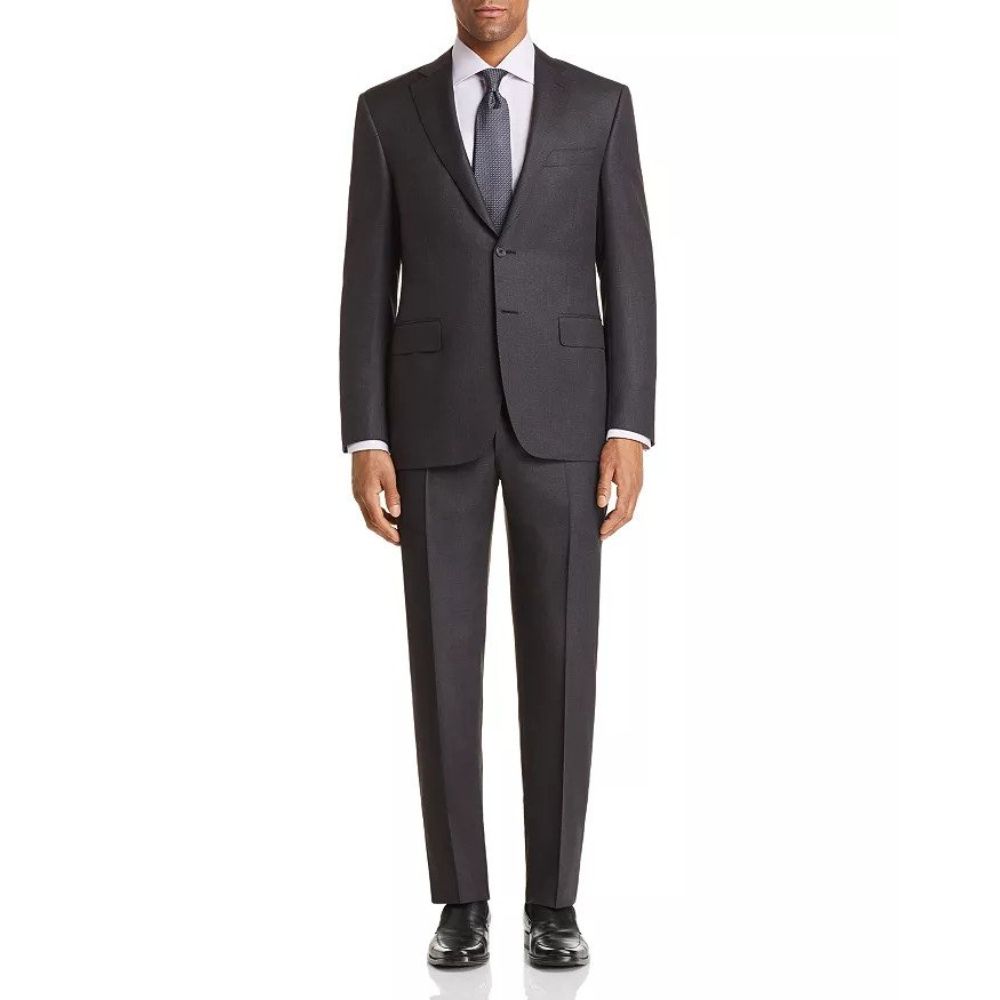
The standard suit worn in professional environments and at most formal non-black-tie events. Typically single-breasted, two-button, notch lapel.
Morning Dress
The formal choice for traditional British weddings, Royal Ascot, and formal daytime occasions. Comprises a morning coat (tail coat), waistcoat, striped trousers, and top hat.
Black Tie (Dinner Suit / Tuxedo)
Required for black tie events: awards dinners, charity galas, certain weddings. A black or midnight blue suit with satin lapels (notch or shawl), usually worn with a white dress shirt, black bow tie, and patent leather shoes.
Three-Piece Suit
A jacket, matching trousers, and a waistcoat cut from the same cloth. Adds formality and versatility – you can remove the jacket but still look dressed. Particularly popular for weddings.
Double-Breasted
A statement choice that suits confident dressers. More formal, more structured, and notably less forgiving in terms of fit. Peak lapels are almost universal on double-breasted suits.
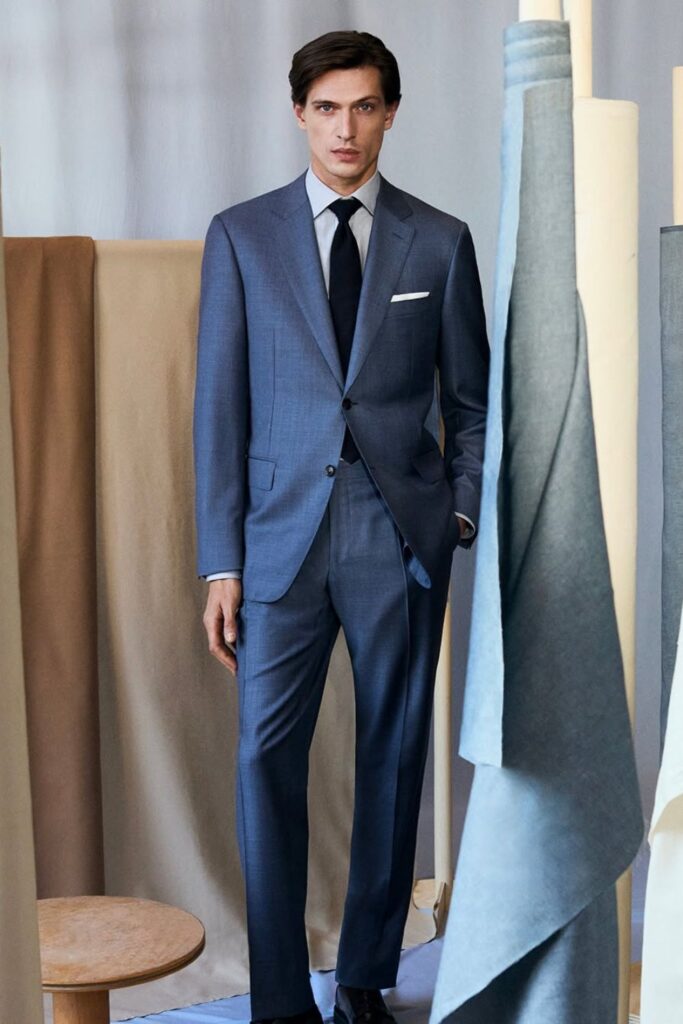
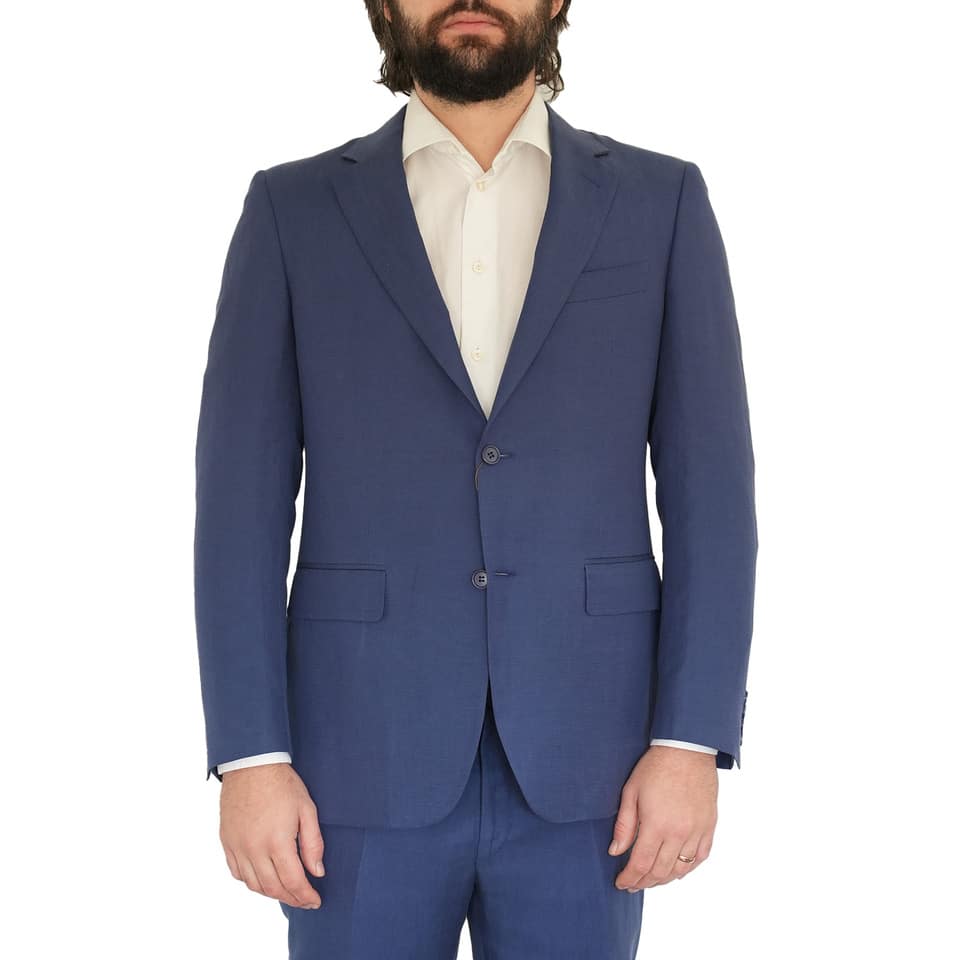
Canali Exclusive Silk and Linen Royal Blue Suit
7. Brand Guide: Canali, Roy Robson & BOSS
Canali
An Italian family-owned brand founded in 1934, Canali represents the pinnacle of what ready-to-wear tailoring can achieve. Their suits are made in Italy using fabrics sourced from mills including Loro Piana, Vitale Barberis Canonico, and their own in-house production – some of the finest cloths available at this level.
Best for: Men who want exceptional quality and are prepared to invest accordingly. An outstanding choice for wedding suits, special occasions, and anyone who wears suits and understands the difference craftsmanship makes.
Signature: Soft Italian construction, beautiful drape, and an understated elegance that improves with every wearing.
Roy Robson
Founded in Berlin in 1922, Roy Robson is a premium European menswear brand with over a century of tailoring heritage. Their suits are built on precision German engineering principles – sharp silhouettes, consistent construction, and a focus on fit that reflects their manufacturing roots. Fabrics range from Super 100s Italian wools to their flagship PRIMUS cloth, a Super 140s new wool developed exclusively for the brand by Italian mill Reda 1865. Their premium 1922 collection uses fabrics from Biella Valley mills including Vitale Barberis Canonico and Loro Piana.
Best for: The man who wears suits regularly and wants dependability alongside style. Roy Robson’s slim and regular fits cover a wide range of builds, and the practical features – stretch fabrics, travel-friendly constructions, wrinkle resistance – make them ideal for busy professionals.
Signature: German precision, modern silhouette, practical innovation. Suits that work hard without looking like they do.
BOSS
Hugo Boss’s premium mainline, BOSS suits occupy an important space: genuinely good construction, contemporary cuts, and wide availability. Their suits use quality fabrics and are made to a consistent standard that rewards regular wearers.
Best for: Those who want reliability, brand recognition, and a clean contemporary look at a fair price point. The range of fits covers most body types.
Signature: Sharp, contemporary, and versatile. A natural choice for the office.
8. How to Care for Your Suit
A quality suit, properly cared for, can last twenty years. Most men under-maintain theirs.
After Every Wear
- Hang it immediately on a shaped wooden hanger — never a wire hanger. A proper hanger maintains the shoulder shape.
- Use a clothes brush to remove dust, lint, and surface dirt before it works into the fibres.
- Let it rest. Don’t wear the same suit two days in a row. Wool needs time to recover its shape and release moisture.
Storing Your Suit
- Use a breathable garment bag, not plastic – wool needs air.
- Store in a cool, dry wardrobe away from direct sunlight.
- Cedar blocks or sachets deter moths without the chemical smell of mothballs.
Pressing & Steaming
- Avoid ironing wool directly – it can flatten the fibres and create shine. Use a pressing cloth, or better, a steamer.
- A good steam will remove most creases without risk.
Dry Cleaning
Dry cleaning uses chemicals that, over time, break down fibres. Clean your suit only when necessary – usually two or three times a year at most. Spot-clean minor marks between cleans.
Trouser Care
- Hang trousers from the cuffs on a proper trouser hanger to maintain the crease naturally.
- Press along the existing crease, not against it.
How to care for your suit
A well-cared suit can last twenty years. Most men under-maintain theirs.
9. The Most Common Suit-Buying Mistakes
Buying too early – or too late. For a wedding or important event, six to eight weeks is the ideal lead time. That gives time for orders, fittings, and alterations without panic.
Ignoring the shoulders. The shoulder seam position is the one thing that cannot be altered affordably or easily. Everything else can be fixed; this cannot.
Assuming fit labels mean something consistent. “Slim fit” at one brand is “tailored fit” at another. Try it on – don’t go by the label.
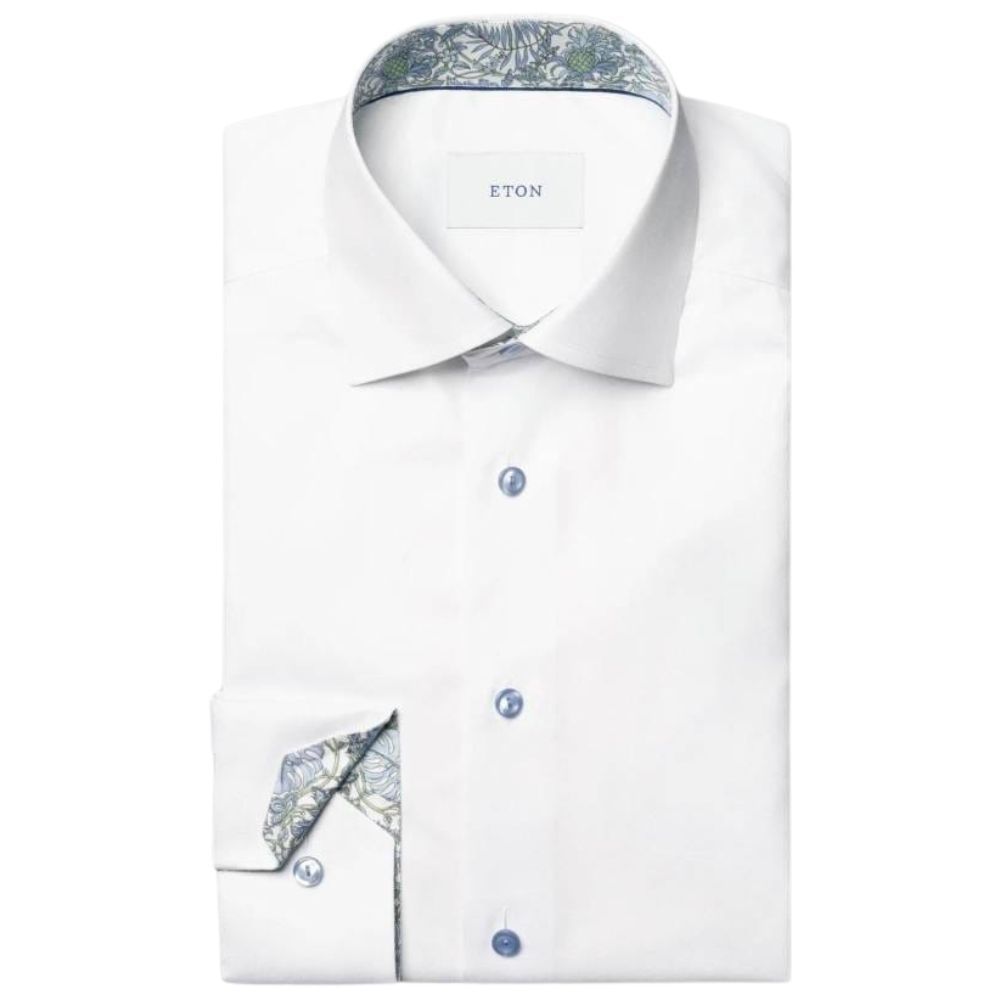
Skimping on the shirt and shoes. A great suit with a poor shirt and cheap shoes looks worse than a middling suit with quality accessories. The whole outfit matters.
Dry cleaning too often. Over-cleaning breaks down fibres. Use a clothes brush and steamer first.
Not budgeting for alterations. Most off-the-peg suits need some tailoring. Factor that into your total spend.
10. ACCESSORIES
The right accessories should whisper quality.
Recommended:
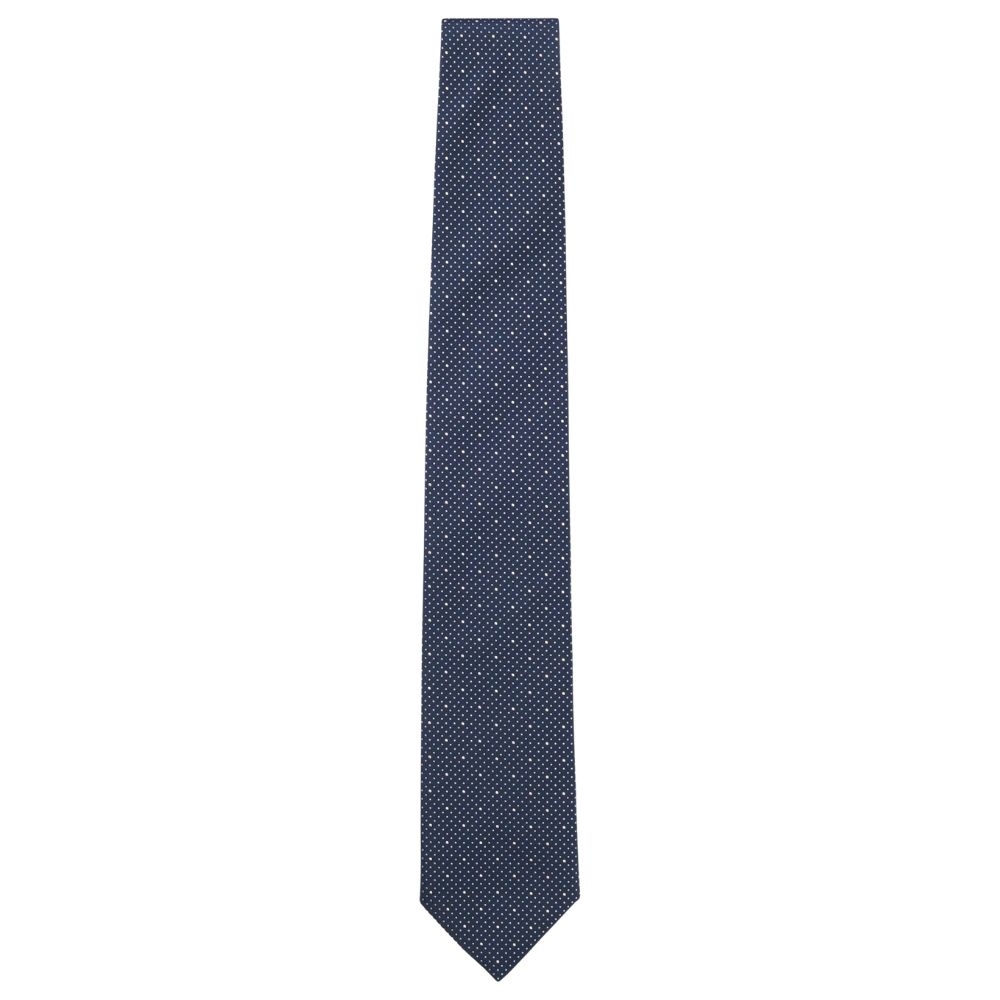
- Silk tie
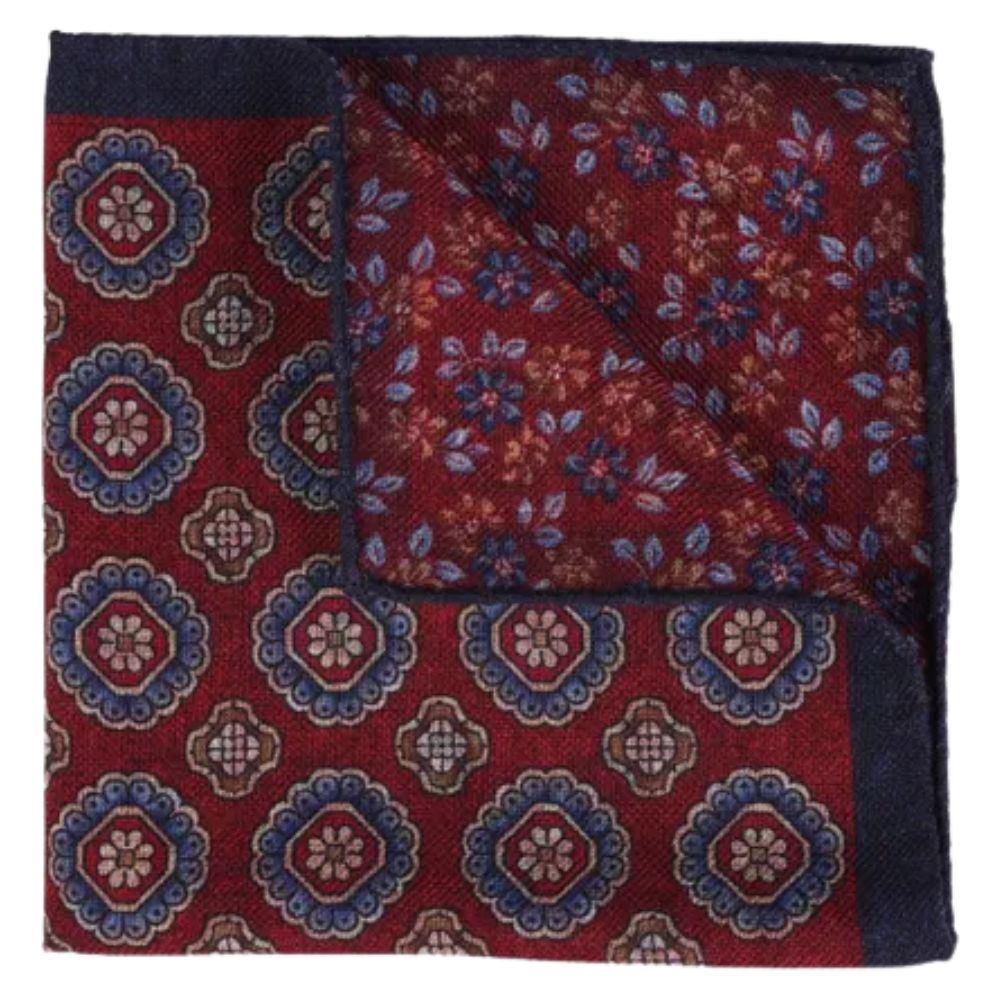
- Pocket square
- Elegant watch
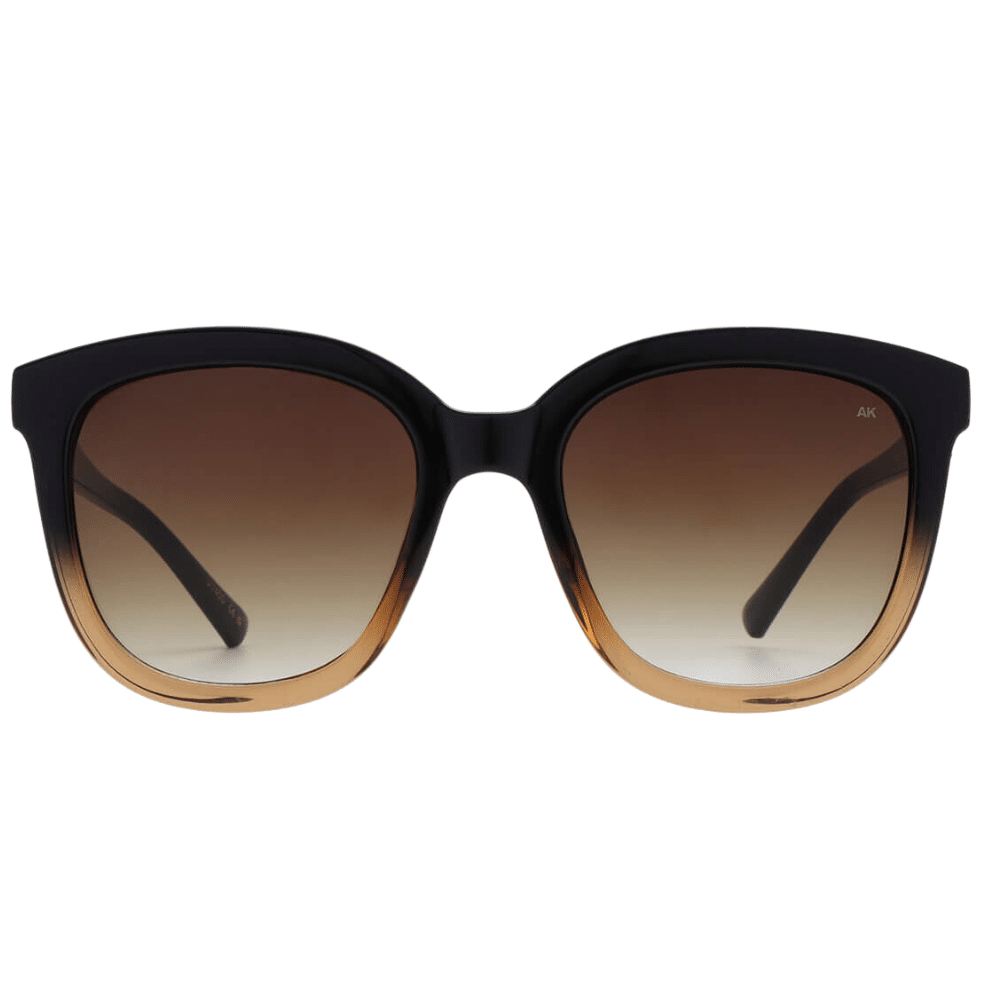
- Sunglasses with classic frames
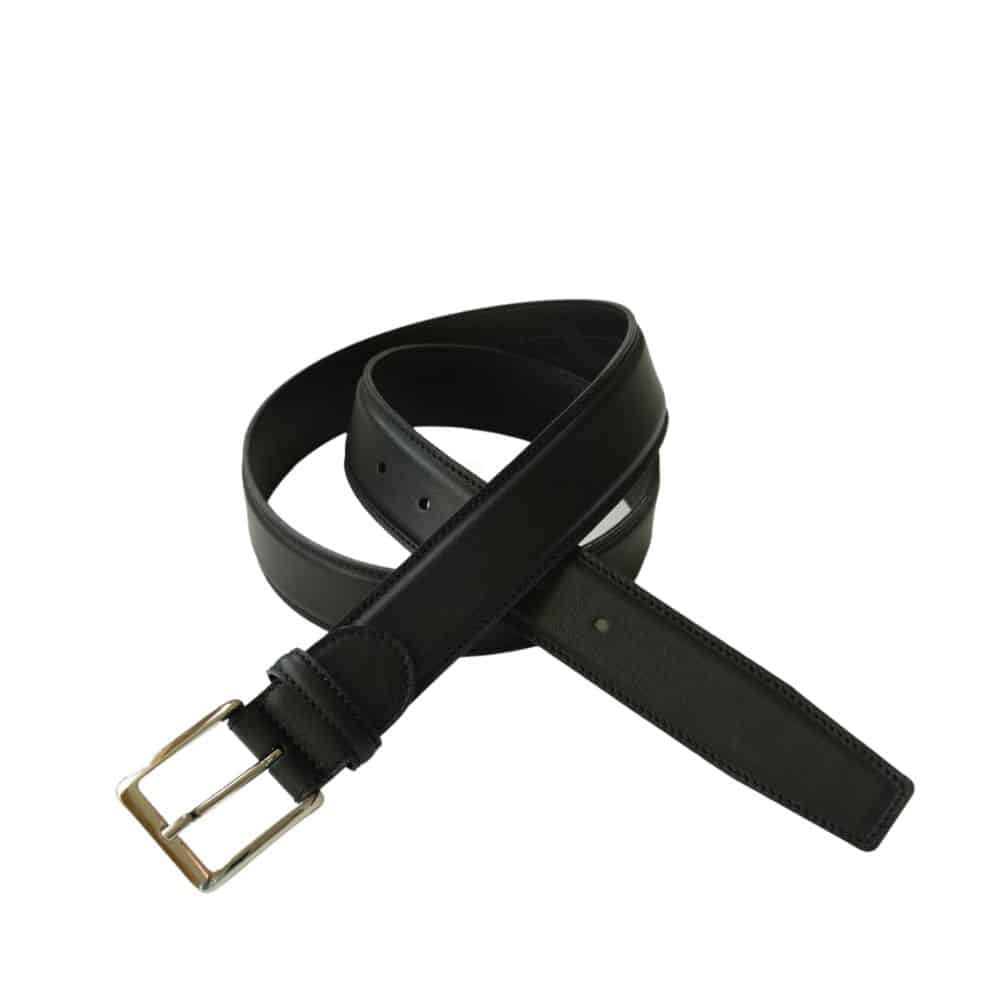
- Quality belt if needed
- Amanda Christensen ties and pocket squares are ideal for adding sophistication without excess.
Avoid:
- Novelty cufflinks
- Loud socks
- Oversized logos
- Fancy dress energy
FAQS: men’s suits
For a quality suit that will last and look good, £500–£1,000 is the range where construction and fabrics improve meaningfully. Our brand range covers this and beyond. Budget separately for a quality shirt, tie, and shoes.
If you wear suits regularly for work, three to five good suits allows you to rotate them properly and extend their life significantly. One exceptional suit is better than three mediocre ones.
For a two-button jacket: button the top button only. Never button the bottom. For a three-button: button the middle only, or the top two. A double-breasted jacket is always kept buttoned.
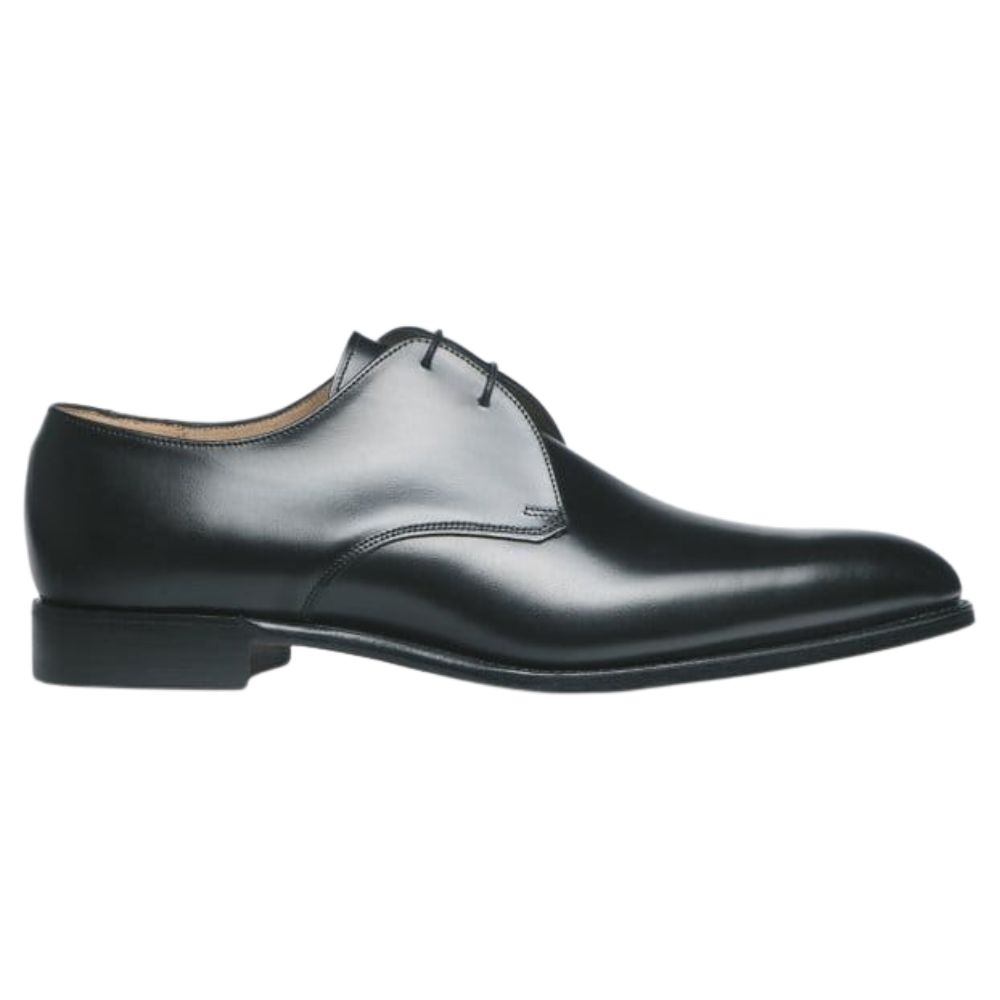
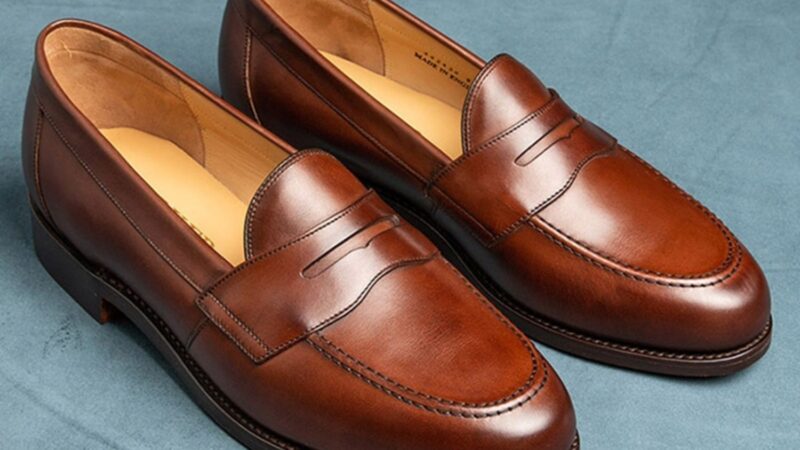
Oxford shoes (closed lacing) are the most formal and work with everything. Derby shoes (open lacing) are more relaxed. Loafers are smart-casual and excellent with lighter summer suits. Match leather colour to the occasion: black for formal, brown, tan or tan suede for everything else.
Yes. An open collar works for smart-casual events and increasingly in business environments. For formal occasions, a tie or pocket square adds the required polish.
A suit jacket and matching trousers are cut from the same cloth. A blazer is a jacket worn with non-matching trousers – a smart-casual combination.
Typically 6–10 weeks from measurement to delivery. Plan accordingly for weddings and events.
a few final words
Buying a suit well isn’t complicated – but it does require knowing what to look for. Understand the basics of construction and fabric, prioritise fit above everything else, and choose a brand whose philosophy matches what you need from the suit. A work suit and a wedding suit have different jobs; the fabric, cut, and care that serves one won’t always serve the other.
The single biggest mistake men make is buying in a hurry, from the wrong place, without trying things on properly. A suit is one of the few things in a man’s wardrobe that genuinely rewards patience and expertise – and the difference between a suit that’s merely worn and one that’s truly yours is almost always a good fitting.
That’s what we’re here for. Across our three stores in Warwicks Windsor, Weir Rhodes Guildford, and Wakefields Horsham our specialists have helped thousands of men find suits that fit their body, their occasion, and their life. There’s no pressure, no obligation, and no substitute for seeing it in person.
explore more articles
Currently studying Marketing. I love spending time reading books, savouring coffee, and exploring new places.
- Yelyzaveta Тymchenko



No Comments