26 Aug How to Wash a Polo Shirt Without Shrinking It – The Right Method
Few items of clothing are as versatile as the polo shirt. It’s the middle ground between casual and smart – a step up from a t-shirt, but easier to wear than a button-down.
Yet, because of its unique fabric and design details, the polo shirt is also one of the easiest garments to ruin if not cared for properly. Collars that curl, fabric that loses its shape, mysterious odours that linger – we’ve all been there.
The good news? With the right care, your polo shirts can stay crisp, comfortable and stylish for years. Here’s how to do it, without relying on the same old “wash at 30°C” advice you already know.
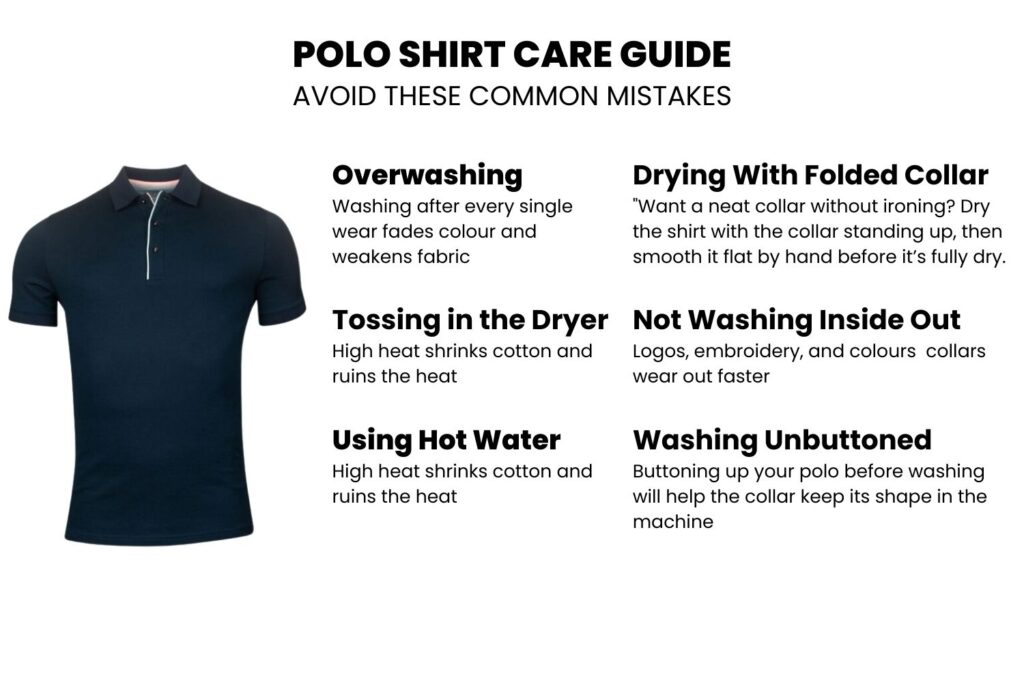
polo shirt care guide
1. KNOW YOUR FABRIC
Not all polos are created equal.
– Piqué cotton (the textured, waffle-like weave) is breathable and durable, but prone to shrinking if overheated.
– Jersey cotton is smoother, like a t-shirt, but more likely to stretch out.
– Performance blends (polyester, elastane mixes) hold shape well but can trap odours.
💡 TIP: Always turn polos inside out before washing. It protects the weave, embroidery and keeps colours rich.
Polo shirt care guide — by fabric type
| Fabric | Wash temp | Spin speed | Tumble dry? | Iron? |
|---|---|---|---|---|
| Piqué cotton | 30°C | 800 rpm | No | Low (inside out) |
| Jersey cotton | 30–40°C | 800 rpm | No | Low |
| Performance blend | 30°C | 600 rpm | No | Avoid |
| Merino wool polo | 30°C (wool cycle) | 400 rpm | Never | Steam only |
| Linen blend | 30°C | 600 rpm | No | Medium (damp) |
2. Protect the Collar and Shape
The collar is the first part of a polo to give away its age. Curling collars instantly make an otherwise sharp shirt look tired.
– Button up the top button before washing – this helps the collar keep its shape in the machine.
– After washing, flip the collar up while drying, then press it down by hand before it’s completely dry.
– For extra crispness, roll a small towel inside the collar while it air-dries.
3. Wash Smarter, Not Just Colder
Yes, cooler washes are gentler – but here are some lesser-known tricks:
– Use a mesh laundry bag to stop your polo from snagging on zips or twisting out of shape.
– Don’t overload the machine. Polos need space to move or they’ll come out creased and misshapen.
– Every so often, add a splash of vinegar or baking soda to the wash – it helps neutralise odours in performance fabrics.
4. Drying: The Make-or-Break Step
If you care about your polos, the tumble dryer is the enemy.
– Never hang them straight out of the wash – wet fabric stretches and ruins the shoulders.
– Instead, lay polos flat on a clean towel or fold them over a drying rack.
– Want a neat collar without ironing? Dry the shirt with the collar standing up, then smooth it flat by hand before it’s fully dry.
5. Ironing & Storage Hacks
– Iron inside out on a low setting to avoid shiny heat marks.
– Steam works wonders on collars and plackets where creases are stubborn.
– Store polos folded rather than hung, unless you have wide hangers – slim ones stretch the shoulders.
6. Beat Odours and Extend Lifespan
Polos, especially performance or sport versions, can hold onto smells.
– Freeze them overnight (in a sealed bag) to kill odour-causing bacteria without overwashing.
– Rotate your polos – avoid wearing the same one multiple days in a row.
– Spot clean the problem areas (collar and underarms) instead of machine washing after every wear.
7. Quick Fixes & Travel Tricks
Polos, especially performance or sport versions, can hold onto smells.
– Collar curling beyond repair? Use a starch spray and iron or even a hair straightener for a sharp finish.
– Minor pilling? A fabric shaver or even a gentle swipe with a safety razor works wonders.
– Packing for a trip? Roll polos instead of folding – no harsh crease lines on the placket.
instantly
elevate your style
with the power of layering
Have you ever looked at someone and thought:
“Wow! Their outfit just WORKS!” That’s the power of layering for you.
In this FREE E-book we’ll teach you the skill of layering with a few simple rules and give you lots of examples for inspiration.
*by signing up you agree to our terms & privacy policy
How to Read Your Polo Shirt's Care Label
Before you touch the washing machine dial, check the care label inside your polo. It tells you exactly how that specific shirt should be treated — and ignoring it is the number one reason polos shrink, fade, or lose their shape.
| Symbol | Name | What it means | Pro tip |
|---|---|---|---|
| Wash | Wash tub | The number inside is the maximum wash temperature. Common values are 30°C, 40°C, and 60°C. Never exceed the number shown — even by a few degrees. | Most polo shirts are 30°C or 40°C. When unsure, always go cooler — you can rewash, but you can't un-shrink. |
| Hand wash | Hand wash | A hand inside the tub means hand wash only — the fabric is too delicate for a machine. Use cool water and handle gently. | Merino wool and fine knit polos often carry this symbol. Fill a basin, submerge briefly, rinse — don't rub or wring. |
| No bleach | Crossed-out triangle | A crossed-out triangle means no bleach of any kind — not even colour-safe bleach. This applies to the vast majority of polo shirts. | Bleach weakens cotton fibres and permanently strips dye from coloured polos. Avoid entirely unless the label explicitly permits it. |
| No tumble dry | Crossed-out square & circle | A cross through the square and circle means do not tumble dry. Heat from a dryer causes shrinkage and collar distortion on most polo shirts. | This is the most commonly ignored symbol. Even a "low heat" dryer cycle can permanently shrink a cotton polo by one full size. |
| Low heat dry | Square & circle with dot | One dot inside the circle means tumble dry on low heat only. Two dots mean medium heat is permitted. Three dots mean high heat is safe. | Even when low heat drying is permitted, air drying flat will always preserve the polo's shape and lifespan better. |
| Low iron | Iron (one dot) | One dot means low heat only. Two dots = medium heat. Three dots = high heat safe. The dots correspond roughly to the synthetic, wool, and cotton settings on most irons. | Always iron polo shirts inside out. This protects the outer surface from sheen marks and heat damage, especially on piqué cotton and performance blends. |
| Do not iron | Crossed-out iron | Do not iron at all. Usually found on performance, technical, or synthetic blend polos. Direct heat will scorch the fabric or leave a permanent shiny mark. | If your performance polo is creased, hang it in the bathroom while running a hot shower — the steam will relax the fabric without any risk of heat damage. |
| Dry clean | Circle (letter inside) | A plain circle means dry clean only. The letter inside tells the dry cleaner which solvents to use. Do not attempt to machine or hand wash. | Rare on polo shirts, but you may see it on luxury blends such as silk-cotton or fine merino. Take it to a dry cleaner — attempting to wash it will ruin the fabric. |
When in doubt: default to a cold gentle wash and air dry flat. You'll never go wrong — and your polo will thank you for it.
8. Care Tips by Brand
Not all polo shirts wash the same way – and the brand matters. Here’s what to know for the labels we stock:
Lacoste
- Their classic piqué cotton polos can handle up to 40°C
- Always button up and turn inside out to protect the iconic ribbed collar weave
- Gentle cycle only – the collar construction is more delicate than it looks
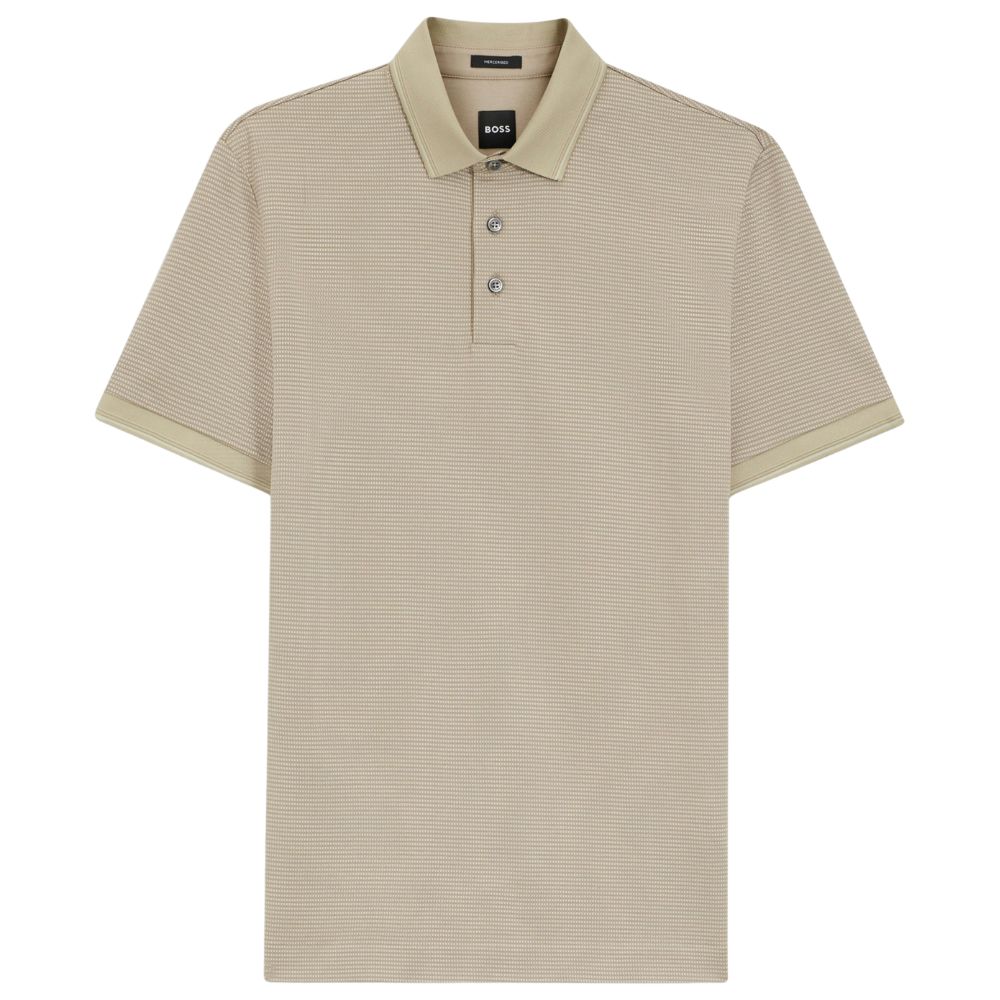
BOSS
- Mercerised cotton styles (the ones with a subtle sheen) are more delicate than they appear
- Stick to 30°C on a gentle cycle – hot water strips the mercerised finish and you won’t get it back
- Avoid high spin speeds, which distort the fabric structure
Ralph Lauren
- Classic mesh piqué handles a 30–40°C wash well
- Any Ralph Lauren polo with stretch or elastane content needs a cold wash and low spin
- Check the label – the range varies significantly across their lines
Paul & Shark
- Often use technical performance fabrics with water-resistant treatments
- Wash at 30°C with a sports-specific detergent
- Never tumble dry – heat permanently degrades the technical fabric properties
For all of the above, air drying flat is always the safest finish.
9. How to Unshrink a Polo Shirt
Good news – a shrunken polo is not always a ruined one. Cotton and cotton-blend polos can usually be brought back close to their original size using this method:
What you need:
- A basin or sink
- Lukewarm water
- One tablespoon of hair conditioner or baby shampoo
- Two clean dry towels
Step by step:
- Fill the basin with lukewarm water and mix in the conditioner. The conditioner relaxes the cotton fibres and makes them pliable again.
- Submerge the polo and leave it to soak for 20 minutes.
- Remove the shirt – do not wring it.
- Lay it flat on a dry towel and roll the towel up with the polo inside to press out excess water.
- Unroll and gently stretch the fabric back to shape by hand – focus on the length, chest width, and collar.
- Lay flat to dry, reshaping every hour as it dries.
Important caveats:
- This works well for cotton polos that have tightened by one size
- It will not fix severe shrinkage
- It will not work on wool polos that have felted – those are unfortunately gone
- Prevention is always better: check the label before washing and never tumble dry a polo you care about
10. What Detergent to Use – and What to Avoid
Use a mild detergent” is advice you’ve seen everywhere. Here’s what it actually means by fabric type:
For cotton and piqué polos:
- Use a colour-safe liquid detergent – liquid dissolves more easily than powder in cool water
- Avoid detergents with added bleach or optical brighteners if washing dark or mid-tone colours, as these gradually fade the fabric
- Use half the recommended dose – more detergent means more residue left in the fabric, not a cleaner shirt
For performance and synthetic blend polos:
- Use a sports-specific detergent such as Nikwax Tech Wash or similar
- Standard detergents leave residue in synthetic fibres that traps odour over time – this is why performance polos can smell even fresh out of the wash
- Enzyme-free formulas only
For merino wool polos:
- Use a dedicated wool wash that is pH-neutral and enzyme-free
- Enzymes digest the protein structure of wool fibres and will permanently damage the fabric
- Never use standard laundry detergent on a merino polo
What to avoid for all polo shirts:
- Fabric softener – it coats the fibres, dulls piqué texture, reduces breathability, and blocks moisture-wicking in performance fabrics
- Bleach of any kind unless the label specifically permits it
- Washing at a higher temperature than the label states, even if the shirt looks dirty
11. How Often Should You Wash a Polo Shirt?
Overwashing is one of the main reasons polo shirts fade, lose their shape, and wear out before their time. Here’s a simple guide:
Cotton and piqué polos (office, casual, smart-casual wear):
- Every 1–2 wears is sufficient
- Hang the polo to air after wearing rather than folding it straight back into a drawer
- Spot-clean the collar and underarms between washes to extend wear time
Performance and sport polos:
- Wash after every single wear – synthetic fibres hold bacteria more readily than cotton
- Use a sports detergent and cold water
Signs it definitely needs a wash:
- Visible marks or staining
- Odour that doesn’t air out after an hour
- You’ve been active or sweated heavily while wearing it
Tips to extend the life of every polo:
- Rotate between several shirts rather than relying on one or two – giving each polo time to rest between wears makes a significant difference to how long it lasts
- Never leave a polo unwashed for more than a week if it’s been worn – odour-causing bacteria continue to break down fabric fibres even when the shirt is stored
- The collar and underarm areas deteriorate fastest – these are the areas worth checking and spot-cleaning regularly
Polo shirts are wardrobe workhorses, but they’re also style icons. Treat them well and they’ll return the favour, keeping you looking polished whether you’re at the office, on the golf course, or out for a weekend lunch.
A polo isn’t just a t-shirt with a collar. Care for it properly, and it’ll stay sharp, crisp and reliable – season after season.
Polo shirt care guide FAQs
Unbutton them before washing to reduce stress on the placket. Button them again for storage to help retain shape.
Shrinkage is usually caused by high temperatures – either in the wash or tumble dryer. Stick to cold or lukewarm water and always air dry.
Fading often comes from frequent hot washes, harsh detergents, or drying in direct sunlight. Turning polos inside out before washing also helps protect colour.
Wash on gentle cycles, use mild detergent, air dry, and store them properly. Avoid unnecessary washing and rotate your collection.
Stick to 30°C or 40°C. Higher heat may shrink cotton and damage fibres.
It’s best to air-dry, but if needed, use a low-heat setting to avoid shrinkage.
Yes – soak in lukewarm water with hair conditioner, gently stretch, and air-dry flat.
Piqué and jersey refer to the weave of the fabric, and the difference is easy to spot once you know what to look for.
- Piqué cotton has a textured, waffle-like surface – run your finger across it and you can feel the raised pattern. It’s more structured, holds its shape better, and is the fabric used in most classic polo shirts including Lacoste’s iconic L.12.12. It’s breathable, durable, and slightly more formal in appearance.
- Jersey cotton is smooth to the touch, more like a t-shirt fabric. It’s softer against the skin, has more stretch, and drapes more casually. It’s less structured than piqué but more comfortable for everyday and relaxed wear.
From a care perspective, piqué is more prone to shrinking if overheated, while jersey is more likely to stretch out of shape if spun too fast or hung while wet. Both should be washed at 30–40°C and air dried flat.
Yes, but with a few important rules:
- Sort by colour – always wash pale and white polos separately from dark clothing, especially on the first few washes. Dark garments, particularly new ones, can bleed dye onto lighter fabrics permanently.
- Avoid items with metal hardware – washing a polo alongside jeans with metal zips, hooks, or studs can snag the fabric or damage the weave. Use a mesh laundry bag for your polo if washing mixed loads.
- Avoid heavy items – washing a polo with bulky items like towels or jeans means the polo gets beaten around the drum more aggressively. Lighter mixed loads are fine.
- Turn your polo inside out regardless of what else is in the wash – this protects the outer surface and colour from friction with other garments.
When in doubt, washing polos together as a separate light load is always the safest approach.
Collar curl is caused by a combination of heat, incorrect drying, and fabric stress during washing. Here is how to prevent it and fix it:
To prevent curling:
- Button the top button before putting the polo in the wash – this holds the collar in its correct shape during the cycle
- Never tumble dry – heat is the main cause of collar distortion
- After washing, flip the collar up while the shirt is still damp and smooth it flat by hand before it dries fully
- Roll a small dry towel inside the collar while air drying to help it hold its shape
To fix a collar that has already curled:
- Dampen the collar with a spray bottle or damp cloth
- Place a pressing cloth over it and iron on a low setting, working from the collar points inward
- Hold the collar flat by hand for a minute after ironing while it cools – this sets the shape
- For a quick fix without an iron, a hair straightener on its lowest setting works well on cotton collars
Yes – always wash a new polo before the first wear. Here is why:
- New garments are treated with finishing chemicals during manufacturing to keep them looking crisp on the shelf. These can irritate sensitive skin and should be washed out before the shirt touches your body.
- Excess dye in new fabric, particularly in darker colours, can transfer onto skin or other clothing. A first wash alone removes the majority of this.
- Wash the polo separately or with similarly coloured items on the first wash in case of any dye bleed.
- Use a gentle cycle at 30°C – there is no need for anything hotter on a brand new shirt.
The one thing to note is that some pre-shrinkage happens on the first wash, so if the polo fits perfectly in the shop, wash it before wearing so that if it does tighten slightly, you know before you rely on it.

The golden rule with any stain on a polo shirt is to act immediately – the longer a stain sits, the harder it is to remove without aggressive treatment that risks damaging the fabric.
The basic process:
- Blot the stain with a clean cloth – never rub, as rubbing pushes the stain deeper into the fibres and spreads it
- Rinse the affected area with cold water from the back of the fabric, pushing the stain outward rather than through the weave
- Apply a small amount of liquid detergent or a dedicated stain remover directly to the area and leave it for five to ten minutes
- Wash the polo as normal following the care label
Stain-specific tips:
- Sweat and deodorant marks – white vinegar applied directly before washing works well
- Food and oil-based stains – a small amount of washing up liquid is highly effective before washing
- Grass stains – a paste of bicarbonate of soda and cold water left on the stain for 30 minutes before washing
- Red wine or coffee – cold water immediately, then treat with salt to absorb the liquid before washing
What to avoid:
- Hot water on any fresh stain – heat sets stains permanently into fabric
- Bleach on coloured polos – it will remove the stain and the colour with it
- Scrubbing aggressively – always blot and work gently
explore more articles
Currently studying Marketing. I love spending time reading books, savouring coffee, and exploring new places.
- Yelyzaveta Тymchenko


No Comments